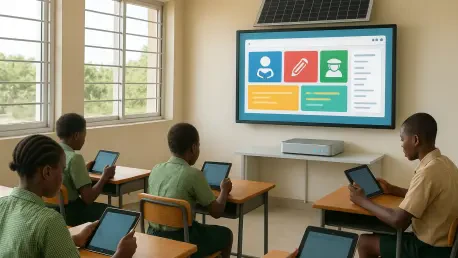

A landmark public consultation has unified diverse stakeholders around the goal of deepening digital inclusion through zero-rated academic content across the country. As Nigeria navigates the complexities of 2026, the disparity between urban connectivity and rural isolation remains a significant hurdle for millions of learners. While fiber-optic backbones have expanded across major hubs like Lagos, the last-mile delivery to remote schools often falls short due to high data costs. This economic barrier effectively locks out talented youth from the global knowledge economy, creating a tiered education system based on financial capability rather than merit. The proposed zero-rating initiative seeks to address this by allowing students to access approved educational portals without depleting their personal or family data balances. By removing the cost variable from the learning equation, the government and private telecommunications providers aim to create a more equitable landscape where information is a right. This strategy represents a fundamental shift in how digital resources are categorized within the national infrastructure framework, treating educational traffic as a public utility essential for growth.
The Infrastructure Challenge: Deploying Affordable Connectivity
Telecommunications operators in Nigeria have historically faced high operational expenditures, ranging from diesel-powered base stations to erratic power grids, which translate into high consumer prices. In 2026, the shift toward sustainable energy solutions and shared infrastructure models has started to stabilize these costs, yet the retail price of data still consumes a disproportionate share of the average household income. Zero-rating educational content requires a sophisticated traffic management system that can distinguish between high-bandwidth entertainment and low-latency academic resources. This technical distinction is crucial for maintaining network integrity while ensuring that students can access video lectures and interactive textbooks without interruption. Network providers like MTN Nigeria are exploring deep packet inspection and dedicated APNs to facilitate this targeted access. However, the successful rollout depends on consistent government subsidies or tax incentives to offset the lost revenue from free data consumption. Without these financial mechanisms, the burden on operators could lead to degraded service quality for other sectors, potentially stifling the broader digital economy.
The expansion of 5G and satellite-based internet services, such as Starlink’s terrestrial footprint, offers a new avenue for bridging the connectivity gap in underserved regions. While these technologies provide the necessary bandwidth for modern educational tools, the cost of equipment and monthly subscriptions remains prohibitive for the typical rural community center or public school. Zero-rating serves as a bridge, allowing these high-tech pipelines to be utilized by those who need them most without the fear of data exhaustion. Educational institutions are increasingly looking at hybrid models where local caching servers store frequently accessed content, reducing the reliance on constant external connectivity. This local storage, combined with zero-rated access for updates and interactive features, creates a resilient learning environment that can withstand intermittent network fluctuations. If successfully implemented, this model could transform libraries into digital hubs that empower neighborhoods. The goal is to move beyond simple connectivity toward an ecosystem where the cost of the “bits” does not prevent the acquisition of knowledge or the development of critical thinking skills.
Policy Frameworks: Ensuring Regulatory Transparency
The Nigerian Communications Commission (NCC) has been tasked with creating a regulatory framework that protects net neutrality while allowing for these specialized zero-rated exemptions. There is a legitimate concern among industry watchdogs that zero-rating could give an unfair advantage to specific content providers, potentially monopolizing the educational market. To prevent this, the policy must ensure that any educational resource meeting established quality standards can qualify for zero-rated status. This inclusive approach encourages local ed-tech startups to innovate, knowing they can compete on a level playing field with international giants. Furthermore, the regulatory body must establish clear guidelines for data privacy and security, ensuring that students’ personal information is not harvested or sold under the guise of providing free access. A transparent auditing process would help maintain public trust and ensure that the benefits of the program are reaching the intended recipients. By fostering a competitive environment, the government can stimulate domestic content creation while providing students with a diverse range of learning materials that reflect the local context and curriculum needs.
Financing these initiatives involves a complex interplay between the Universal Service Provision Fund (USPF) and international development grants aimed at digital literacy. In 2026, the focus has shifted toward a “social contract” model where telecommunications companies contribute a percentage of their spectrum usage fees toward the maintenance of zero-rated educational lanes. This model not only funds the data costs but also supports the procurement of low-cost hardware for students in impoverished districts. Critics of the plan argue that zero-rating is merely a temporary fix for a larger infrastructure problem, yet proponents suggest it is a necessary immediate intervention for a generation that cannot afford to wait for universal broadband. The policy also includes provisions for teacher training, recognizing that hardware and free data are ineffective if educators lack the skills to integrate digital tools into their pedagogy. By addressing both the financial and human capital aspects of the digital divide, Nigeria is positioning itself as a leader in African ed-tech policy. The success of this regulatory experiment could serve as a blueprint for other emerging economies facing similar socio-economic challenges.
Strategic Recommendations: Path to Sustainable Implementation
Stakeholders recognized that zero-rated data was not a standalone solution but a critical component of a broader educational reform strategy. To ensure longevity, the government prioritized the establishment of a centralized educational cloud that hosted standardized curriculum materials, reducing the complexity of zero-rating across multiple platforms. Private sector partners were encouraged to develop “lightweight” versions of their applications that consumed less bandwidth, thereby maximizing the impact of the free data allocations. Furthermore, local governments invested in communal solar-powered charging stations to address the persistent issue of device energy requirements in off-grid areas. The focus turned toward rigorous monitoring and evaluation to track student performance and engagement levels, allowing for data-driven adjustments to the program in real-time. By fostering a sense of shared ownership among communities, educators, and service providers, the initiative moved beyond a top-down mandate to a grassroots movement for digital equity. These collective actions demonstrated that bridging the education gap required a holistic approach that addressed infrastructure, policy, and local capacity simultaneously.
Future considerations focused on expanding the zero-rating model to include vocational training and adult literacy programs, recognizing that lifelong learning was essential for economic resilience in a digital world. The government established a revolving fund to support the local manufacturing of tablets and laptops, ensuring that the hardware gap did not negate the benefits of free data access. Public-private partnerships evolved to include non-traditional actors, such as non-governmental organizations and philanthropic foundations, which provided the localized support necessary for school-level implementation. Technical standards for zero-rated content were periodically updated to reflect advancements in immersive technologies like augmented reality, ensuring that Nigerian students remained competitive with their international peers. Ultimately, the transition to a permanent zero-rated educational tier for all verified learners was seen as the most effective way to democratize knowledge. This commitment to digital inclusion underscored a national belief that the cost of connectivity should never be an obstacle to intellectual growth or professional development. The resulting ecosystem provided a robust foundation for a more prosperous and equitable society.