
Camille Faivre is a seasoned navigator of the shifting tides in American higher education policy and institutional management. With a career dedicated to the intersection of public administration and educational equity, she has become a leading voice in reimagining how we deliver knowledge in an era defined by economic volatility and digital transformation. Currently, she is at the forefront of a movement to move away from the “market-based” chaos of the last decade toward a stabilized, federally supported framework designed to rescue the middle class and restore the public mission of our colleges.
Our conversation explores a bold proposal to bypass the traditional pitfalls of state budget volatility and federal loan dependence. We delve into the mechanics of a “radically simple” system of voluntary federal subsidies that incentivize low tuition, the integration of private nonprofits into the public safety net, the eradication of the “hidden tax” on credit transfers, and the urgent need for a robust research infrastructure to ensure students don’t just enroll, but actually graduate with meaningful credentials.
Public universities have increasingly relied on high tuition to offset state budget cuts, leading to what some call a “garbage pile” of fiscal neglect. How did we reach this state of abandonment, and what has been the immediate cost to the current generation of students?
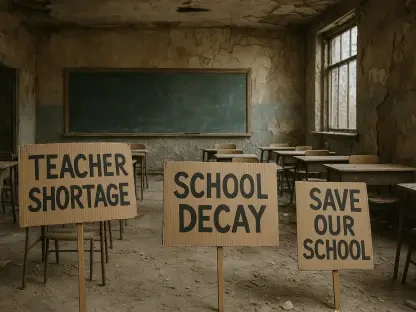
The reality we face today is the result of a long, painful retreat from the post-war promise of affordable learning. For decades, the system got by on sheer macroeconomic luck, but once the blue-collar manufacturing economy collapsed, people were left with no choice but to borrow whatever price colleges set. It’s a heartbreaking sight to see the fiscal neglect left by previous generations who benefited from low-price systems only to pull the ladder up behind them. Consequently, cash-starved colleges have jacked up tuition, saddling younger Americans with more than a trillion dollars in student loans that hang over their heads like a dark cloud. This isn’t just a financial burden; it’s an existential threat that has forced institutions to pivot away from their mission of serving everyone to competing in a winner-takes-all market for the ruling class.
You have advocated for a “third leg” of funding to stabilize the system through direct federal subsidies. How would a fixed $10,000 payment per student fundamentally change the relationship between the government and individual colleges?
The current arrangement is dangerously unstable because the mammoth federal aid system, which tops $150 billion annually, comes with almost no strings attached regarding costs or outcomes. By introducing a fixed federal subsidy of $10,000 for every student, we create a stabilizing force that doesn’t fluctuate with every state budget crisis. This subsidy acts as a powerful incentive for colleges—both public and private nonprofit—to adopt transparent, affordable pricing models rather than chasing the highest bidder. It shifts the focus from an unregulated market where colleges charge whatever they please to a shared-purpose model where institutions are rewarded for serving the public interest. We are essentially saying to these schools: here is the foundational support you need to thrive, provided you commit to making education accessible to the people who need it most.
One of the most striking parts of your proposal is the uniform tuition schedule tied to median household income. How would this $80,000 threshold work in practice to eliminate the “sticker shock” that keeps many families away from higher education?
The goal is to make the “sticker price” of a degree honest, predictable, and manageable, much like how a federally mandated window sticker works for a car. Under this plan, college would be completely free for students from families earning at or below the median household income, which is currently about $80,000. For families earning more, tuition would gradually scale up, but it would be capped at $10,000, which is still significantly lower than what the average public university charges today and a fraction of the cost at elite private schools. This creates a “public option” across the board where in-state and out-of-state students pay the same price, removing the geographical penalties that currently punish mobile students. It’s about restoring the American middle class by ensuring that financial opportunity isn’t just reserved for the wealthiest tier of society.
Many “free college” plans focus strictly on public institutions, but your framework includes private nonprofit colleges. Why is it vital to support these specific institutions, and how does your plan prevent rewarding states that have historically skimped on education funding?
Excluding private nonprofits would be a catastrophic mistake because these institutions, including about half of our historically Black colleges, are often the cultural and economic anchors of their local communities. They aren’t the wealthy “Ivy League” types; they serve middle- and working-class undergraduates and are currently being driven toward bankruptcy by demographic pressures. Furthermore, if we simply replaced all tuition with federal money, we would perversely reward “stingy” states that have kept their own subsidies low while penalizing those that have done the right thing. This is why our plan is voluntary and uses a fixed subsidy—it allows individual colleges to decide if the $10,000 per student is a better deal than their current high-tuition/low-enrollment model. It keeps the decision local and avoids the “Obamacare problem” where states might feel unconstitutionally compelled to participate.
The loss of transfer credits has been described as a “hidden tax” on students. How does requiring participating colleges to accept all transfer credits from one another address the modern reality of the student experience?
Today, the majority of four-year graduates earn credits from more than one college, yet our bureaucratic silos mean those credits are often discounted or lost entirely when a student moves. This “hidden tax” steals both time and money from students who have very little of either to spare, often forcing them to retake the same foundational courses. By making universal credit transfer a requirement for receiving federal subsidies, we create a seamless network of institutions that finally mirrors how students actually live and learn. It turns a fragmented collection of schools into a coherent “public option” ecosystem where a student can blend in-person and online classes without the fear of their hard work being vaporized by a registrar’s office. This level of cooperation is essential if we want to move toward a truly modern, student-centric system.
You mentioned that the federal government spends pennies on education research compared to health care research. Why is it necessary for participating colleges to “open their books and classrooms” for federal study?
We currently have a staggering 37 million working-age people who are labeled as having “some college, no credential,” which is a profound failure of the current system. We are essentially flying blind because the lack of research on best practices means many students enroll but never find the support they need to succeed. Crucially, our plan requires participating colleges to open their classrooms and financial records to the federal Institute of Education Sciences so we can finally understand what works. We need to know which teaching methods, which student support services, and which administrative structures lead to graduation rather than dropouts. If we are going to invest tens of billions of public dollars, we must treat education with the same scientific rigor we apply to medical breakthroughs, ensuring that our interventions are evidence-based and effective.
There has been significant debate regarding student loan forgiveness, with some calling recent efforts “deranged public policy.” How does your plan offer a more sustainable path forward for affordability than the “borrow-and-cancel” model?
The problem with the recent loan forgiveness approach was that it became a confusing, all-encompassing substitute for a real affordability policy. It created a “byzantine” cycle where we allowed colleges to charge whatever they wanted, gave students massive loans, and then relied on mountain-high paperwork to tell them they might not have to pay it back. That’s not a system; it’s a mess that taxpayers will never recover from. Our plan stops the bleeding at the source by lowering the actual price of the education rather than trying to fix the debt after the damage is done. While we must still help those victimized by predatory for-profit schools or decades-old balances, we have to transition to a smart, targeted strategy that issues good debt—or no debt at all—rather than running on a haphazard autopilot of bad loans.
Many community colleges are already low-cost, yet they struggle with graduation rates. How does this plan address the “capacity” issue rather than just the “affordability” issue for these critical institutions?
This is a point that often gets lost: free college isn’t worth much if the education isn’t any good or if the school can’t provide the classes students need. For many regional public four-year universities and community colleges, the primary challenge isn’t just affordability—it’s capacity. They lack modern facilities, updated laboratory equipment, and the funds to pay faculty a fair wage. Because this $10,000 federal subsidy would actually represent a net increase in revenue for many of these institutions, it gives them the resources to actually succeed in their mission. It’s about giving the schools that do the hardest work—training our nurses, teachers, and local workforce—the financial muscle to provide research-proven support services that help students thrive and earn their degrees.
If this plan were adopted and a significant number of institutions signed up, what would the landscape of American online and in-person learning look like for the average student?
We would see the emergence of a massive, high-quality “public option” for the online ecosystem that has been dominated for too long by for-profit colleges of ruinous price and dubious quality. Students would have access to a huge array of classes across hundreds of institutions, all protected by a uniform tuition schedule and guaranteed credit mobility. The weight of our public resources would shift away from the elite sports powerhouses—like the $60,000-a-year programs in Michigan or Alabama—and toward the “normal” and local colleges that actually educate the vast majority of Americans. It would be a system where your zip code or your family’s income doesn’t determine your potential, but rather your willingness to engage with a network of schools designed to serve the public good.
What is your forecast for the future of higher education if we continue to ignore the need for this type of radical simplification and federal stabilization?
If we remain on our current path, we are looking at the slow-motion collapse of the institutions that hold our social fabric together. We will see more regional private colleges going bankrupt, leaving “educational deserts” in their wake, while elite universities continue to act as gated communities for social capital. The choice isn’t whether we pay—because we are already paying through bad debt and lost human potential—it’s whether we pay in a way that is smart or a way that is dumb. If we neglect these essential institutions, they won’t be replaced by anything better; they will be replaced by chaos. My forecast is that without a simplified, federally backed compact, we will lose a generation of teachers and nurses who simply cannot afford the price of entry into their own professions, further deepening the cultural and economic divide in this country.