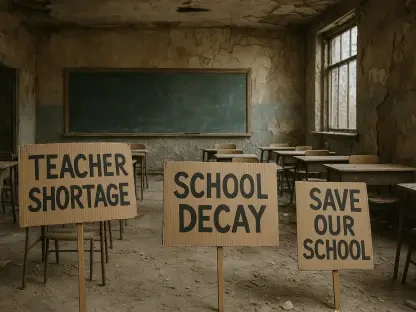

School administrators are being forced to choose between paying rising utility bills and retaining essential staff members under current fiscal constraints. This stark reality serves as the backdrop for the latest $2 billion budget request submitted by State Superintendent Chris Reykdal for the upcoming biennial cycle. As the state moves toward the 2027 and 2028 academic years, the proposal emphasizes that the current funding model no longer aligns with the actual costs of operating a modern school system. With more than one million students relying on these institutions, the Superintendent argues that the state is failing its constitutional mandate to provide an ample education. The request is not merely a proposal for expansion but a call for stabilizing a foundation that has been eroding under the pressure of historic inflation and shifting economic demands. Without a significant injection of capital, the gap between the legal requirements and the practical resources will continue to widen dangerously for districts across the state.
The Constitutional Mandate for Basic Education
A central component of this massive fiscal request is the $1.2 billion specifically designated to satisfy the state’s legal obligations to its citizens. This figure is rooted in the long-standing precedent of the McCleary decision, which established that Washington has a paramount duty to fund basic education amply. Despite several years of increased investment following that landmark ruling, school officials contend that the definition of basic education has not kept pace with the needs of contemporary classrooms. The Superintendent posits that the current funding levels have effectively fallen below the constitutional threshold required by law because inflation has outstripped previous gains. By focusing on this specific $1.2 billion allocation, the proposal seeks to ensure that core academic programs are not sacrificed to cover administrative shortfalls. This funding is essential for maintaining the integrity of the educational experience for every student in the state, regardless of their local tax base.
Beyond the broad constitutional requirements, the budget specifically targets $27 million for the restoration of the Transition to Kindergarten program. This initiative recently faced significant budget cuts, yet it remains a critical entry point for many young learners, particularly those from historically underserved communities. Restoration of these funds represents a commitment to early intervention, which research consistently shows leads to better long-term academic outcomes and reduced costs for special education later in life. Furthermore, the broader request addresses the widening disparity between state-provided funding and the actual cost of specialized services across diverse regions. As the state moves through the current 2026 fiscal year and into the next biennium, the pressure to maintain high standards while managing fewer resources has reached a fever pitch. By addressing these core gaps now, the state aims to prevent more expensive legal interventions in the future while protecting the quality of instruction.
Operational Pressures: Fiscal Distress and Political Strategy
The logistical burden of running a school district has become significantly more expensive due to external economic factors, leading to a request for $872 million for supplies and operations. Some school districts are currently grappling with electricity rate hikes of up to 45 percent, while insurance premiums have skyrocketed across the Pacific Northwest. These overhead costs are mandatory expenses that must be paid before a single teacher enters a classroom, yet the state’s current funding formulas do not account for these sudden spikes. When utility and insurance bills consume a larger portion of the general fund, there is less money available for books, technology, and facility maintenance. This financial strain was evidenced by the record eleven districts operating under binding conditions, where the state oversaw their finances. Staffing was also a priority, with $325 million requested to boost wages for paraeducators and cover the rising costs of substitute teachers, ensuring that the labor force remained stable.
This budget proposal also revealed a strategic divergence between the Superintendent and Governor Bob Ferguson regarding the best use of limited state revenues. While the Governor advocated for universal free school lunches, the Superintendent focused the request on core academic stability and essential staffing needs. The logic behind this decision was pragmatic; because school meals were not classified as part of basic education under the state constitution, the Superintendent believed core programs had to be prioritized to prevent system collapse. Lawmakers weighed these competing visions as they entered the legislative session to determine the path forward for the 2026 to 2028 period. In the end, the focus remained on stabilizing the foundational aspects of the school system to prevent further erosion of services. These actions provided a necessary blueprint for long-term fiscal recovery, suggesting that structural tax reform was the next logical step to ensure that basic education remained amply funded.