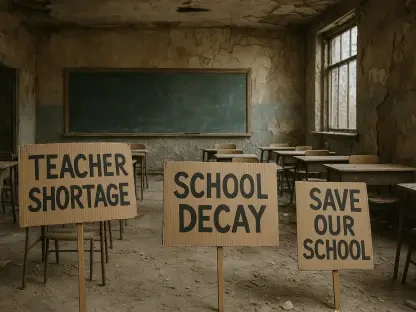

The quiet brick-and-mortar foundations of traditional American higher education are currently trembling under the weight of a demographic shift that threatens the very existence of small, private liberal arts institutions. While elite universities with multi-billion-dollar endowments remain insulated from the harshest economic realities, hundreds of regional colleges are finding themselves caught in a vice between rising operational costs and a shrinking pool of prospective students. This phenomenon, often referred to as the enrollment cliff, is no longer a looming theoretical threat but an active crisis that has already forced several notable closures and mergers across the Northeast and Midwest. For these schools, the business model of the twentieth century is proving increasingly incompatible with the realities of 2026, where a declining birth rate following the Great Recession has finally translated into a smaller high school graduating class. As administrators struggle to balance budgets, the ripple effects are felt throughout campus life, creating a precarious environment where every dollar saved through cost-cutting measures risks further damaging the institution’s long-term reputation and its ability to attract the next generation of learners.
The Human Impact of Institutional Erosion
When a college begins to struggle financially, the first visible signs often appear in the very heart of the academic experience: the curriculum itself. For students who enrolled with the promise of specialized interdisciplinary programs, the sudden elimination of niche majors or the “gutting” of entire departments can feel like a profound breach of contract. This curricular retrenchment is not merely a bureaucratic adjustment but a disruptive event that leaves upperclassmen scrambling to find equivalent credits or finishing degrees in departments that have become ghosts of their former selves. The erosion of faculty depth means that a student might find their senior capstone led by a temporary instructor rather than the renowned expert who initially attracted them to the school. This lack of transparency between institutional marketing and the operational reality creates a sense of betrayal, as students realize the “unique educational journey” they were promised is being dismantled in real-time to satisfy a balance sheet that remains stubbornly in the red.
Beyond the classroom, the administrative infrastructure of a failing college often begins to fray, placing unforeseen emotional and financial burdens on the student body. In many instances, the push for survival leads to a significant decline in instructional quality as institutions lean more heavily on part-time adjuncts to cover diverse subjects outside their primary expertise. A social science major might find themselves in a mandatory statistics course taught by a computer science instructor who treats the subject as a coding exercise rather than a research tool, leading to a fundamental misalignment of educational standards. Simultaneously, administrative dysfunction can manifest as clerical errors or sudden financial demands, such as a student receiving a text message notification of an unexpected balance required just weeks before graduation. This atmosphere of instability overshadows the traditional college experience, replacing the sense of an academic sanctuary with a constant anxiety about whether the institution will remain functional long enough to grant a degree that still holds market value.
Leadership Challenges and Labor Unrest
The ability of a small college to navigate these turbulent waters is frequently undermined by a significant leadership vacuum that occurs when financial outlooks turn grim. Long-tenured presidents, often sensing the approaching insolvency, may depart for more stable roles, leaving the institution in the hands of “lame duck” leaders or interim successors who lack the political capital to implement radical reforms. Without a permanent and authoritative vision from the top, these schools often drift aimlessly, unable to reassure nervous donors or convince prospective families that a viable recovery plan is in place. This lack of continuity is particularly damaging during a time when bold, structural changes—such as selling off underutilized real estate or aggressively consolidating academic departments—are most needed. A leadership team that is merely managing a decline rather than spearheading a reinvention effectively ensures that the college remains stuck in a reactive cycle, falling further behind competitors who have more stable and decisive governance structures.
This instability at the executive level almost inevitably spills over into labor relations, creating a toxic environment of mistrust between the administration and the educators who form the backbone of the campus. When a “sustainable” business model is used as a euphemism for layoffs and benefit cuts, faculty and staff are often forced onto the picket lines to fight for their professional survival. For a student, witnessing multiple strikes during a four-year tenure is a jarring experience that fractures the sense of campus community and disrupts the academic calendar. These labor disputes serve as a public signal that the institution is in a state of internal collapse, making it nearly impossible to recruit high-quality new faculty or retain the talented staff members who handle everything from financial aid to psychological counseling. The resulting fracture in the campus social fabric further diminishes the institution’s appeal, as the vibrant, supportive environment promised in the brochure is replaced by a reality of cancelled classes, empty offices, and an overriding sense of professional desperation.
The Demographic Cliff and Economic Divide
The root of this systemic crisis is a precipitous demographic shift that has created a fierce competition for a shrinking number of college-aged residents. In regions like the Northeast, where the concentration of small private colleges is highest, the number of traditional high school graduates has plummeted, leading to enrollment drops of as much as 50% over the last decade for some regional players. Unlike the “Ivy Plus” institutions that can rely on massive endowments to weather any storm, these smaller schools are almost entirely dependent on tuition revenue to pay the bills. This financial vulnerability means that even a minor dip in freshman enrollment can trigger a catastrophic shortfall, forcing the school to increase its “discount rate”—the amount of financial aid it provides—just to fill seats. This creates a “race to the bottom” where colleges are essentially paying students to attend, further depleting the very reserves they need to invest in new programs or modernize their aging facilities.
This demographic pressure has accelerated a widening chasm between the “haves” and “have-nots” in the American higher education landscape. Students and their families, increasingly aware of the risk of institutional closure, are exhibiting a “flight to scale,” gravitating toward larger, more prestigious, or better-funded universities that offer a perceived sense of long-term security. This trend leaves smaller, tuition-dependent colleges at a severe disadvantage, as they struggle to compete with the brand value and resource depth of larger rivals. The economic divide is not just about the size of the library or the quality of the dorms; it is about the long-term value of the degree itself in a market where the name of the granting institution serves as a critical credential. As regional private schools continue to trim staff and consolidate departments, the perceived value of their education declines in the eyes of the public, creating a self-fulfilling prophecy of obsolescence that is difficult to reverse without a massive infusion of capital that few of these institutions can secure.
Radical Reinvention and the Future of the Sector
Industry analysts suggest that a significant portion of the private, nonprofit college sector—potentially more than 25%—is at risk of closure or forced merger within the next decade if they do not adopt radical changes. Some institutions are currently operating on a “last man standing” philosophy, hoping that by cutting costs and outlasting their neighbors, they will eventually capture the remaining market share left behind by closed competitors. However, this strategy is inherently risky and often results in a “revenue matching” trap where budget cuts lead to a diminished student experience, which then leads to even lower enrollment. To truly survive, these colleges must move beyond corporate rhetoric and fundamentally rethink their mission, perhaps by pivoting away from the traditional 18-to-22-year-old demographic. This might involve targeting “stop-out” students who have accumulated credits but never finished their degrees, or developing highly specialized, professionally-oriented programs that offer a direct and transparent path to employment in high-demand local industries.
Moving forward, the survival of the small private college will likely depend on its ability to transition from a generalist liberal arts model to a more focused, high-value proposition that can be clearly defended to skeptical consumers. This evolution will require a new level of transparency and state oversight to ensure that students are protected from “bait-and-switch” scenarios where programs are eliminated after they have already committed their time and money. Accrediting bodies and state regulators must play a more active role in monitoring the financial health of these institutions, providing early warnings to the public before a school reaches the point of no return. For the institutions that manage to navigate this transition, the reward will be a leaner, more resilient identity that prioritizes student outcomes over tradition. Ultimately, the successful colleges of the future will be those that proved their worth not through their history, but through their ability to adapt their academic offerings to meet the specific, practical needs of a diverse and increasingly discerning workforce.