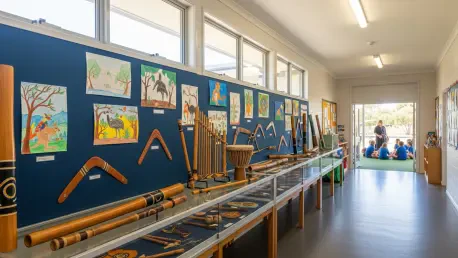

The integration of First Nations perspectives into the early childhood curriculum represents a significant shift from standardized educational models toward holistic student development. A collaborative study by Edith Cowan University and the University of Melbourne analyzed the impact of the “Deadly Arts Early Years” program in Western Australian schools. This initiative engages children between the ages of three and seven in immersive experiences involving Noongar language, dance, and storytelling to foster what researchers call “well-being literacy.” Rather than treating emotional health as a separate subject, the program embeds social and emotional understanding within a cultural framework. By participating in these traditions, young learners develop the vocabulary and conceptual tools needed to navigate their inner worlds while building a profound sense of belonging. This methodology highlights how deep community connections can serve as a foundation for mental and emotional resilience in the earliest stages of life.
Redefining Research: Creative Expression
To capture the nuanced emotional landscapes of very young children, researchers intentionally moved away from traditional quantitative surveys and formal interview techniques that often fail to reflect the complexity of a child’s mind. Instead, the study employed a methodology deeply rooted in Indigenous traditions of knowledge sharing, focusing on artistic expression as a primary communication tool. Children were encouraged to draw their personal experiences and narrate the stories behind their artwork, allowing them to articulate abstract concepts such as happiness, safety, and stability. This narrative-driven approach provided a window into how children perceive their environment and their relationships, offering insights that data-heavy assessment tools often miss. By prioritizing the child’s voice through creative outputs, the research team established a platform where emotional intelligence could be observed in its most natural form, revealing a direct link between cultural engagement and security.
Aligning the research methods with the specific cultural practices being studied created a space for more authentic emotional responses and allowed the participants to feel a sense of ownership over their contributions. This alignment reflects the belief that creativity and land connection are not merely extracurricular but essential components of a person’s overall health and identity. The children were encouraged to link their evolving sense of self directly to their creative work, illustrating how traditional practices can ground a child in a turbulent world. Through these artistic exercises, the boundaries between the classroom and the community began to dissolve, allowing the students to see themselves as part of a larger, historical continuum. This process underscored the fact that well-being is often a collective experience, nurtured by the stories we tell and the cultural foundations upon which we stand. By integrating these values, the program proved that emotional growth is most effective when tied to heritage.
Pillars of Knowledge: Cultural Connection
The study identified themes showing how Noongar culture supports emotional well-being through the implementation of traditional song and dance. These cultural activities serve as vital carriers of historical and ecological data, helping children understand the natural world and their specific place within it. The program emphasizes the concept of intergenerational custodianship, where professional Indigenous teaching artists mentor young students to become the future guardians of these ancient narratives. This role-playing and active participation provide children with a strong sense of purpose and responsibility, which are key drivers of psychological health. As children learn the rhythms of the land, they develop a connection to their surroundings that transcends traditional classroom learning. This engagement with ancestral knowledge ensures that the children are not just passive recipients of information but active participants in the preservation of a living cultural identity and the maintenance of their personal mental health.
Participation in these cultural arts serves to strengthen the social bonds between students, teachers, and the broader school community. Sharing these immersive experiences fosters a collective sense of belonging that is essential for a supportive learning environment, effectively transforming the concept of reconciliation into a lived, relational practice. For the Indigenous artists involved, the program offers a vital space for cultural reclamation and the professional validation of their specialized knowledge. Simultaneously, non-Indigenous students and faculty members gain a firsthand understanding of the history of the land. This mutual exchange of respect and knowledge helps to dismantle barriers and build a more inclusive atmosphere where every child feels valued. Centering Noongar culture created a bridge between diverse backgrounds, demonstrating that cultural connectivity can act as a catalyst for social cohesion and long-term community stability.
Systemic Reform: Language and Policy
The Noongar language acts as a pathway to emotional flourishing, providing a linguistic framework that connects children to the environment in ways generic programs cannot replicate. When children sing or speak in Noongar, they are participating in a complex system of relationality that informs how they interact with others and the natural world. This linguistic immersion provides a holistic understanding of the universe, which is foundational for long-term social and emotional stability. Words in the Noongar language often carry deep philosophical meanings related to care, respect, and stewardship, which help children internalize positive social values from a very early age. By moving beyond simple vocabulary lists and into the realm of meaningful communication, the program allowed students to experience the world through a different cultural lens. This shift encouraged an empathetic worldview, proving that language is a vehicle for emotional and spiritual development.
The transition toward a permanent integration of cultural practices allowed for the development of longitudinal relationships between artists and students, which was critical for deep learning. As schools moved toward these systemic reforms, they discovered that prioritizing cultural immersion led to better engagement and improved well-being across the entire student body. This proactive approach replaced reactive mental health strategies with a preventative, culture-led model that prepared young learners for the complexities of modern life with confidence and a clear sense of identity. Authorities shifted their focus to sustained institutional support, recognizing that community health depended on the cultural strength of its youngest members. This transformation established a new standard for early childhood education where Indigenous wisdom was not merely an addition but the core foundation of the curriculum. These steps ensured cultural immersion was accessible to all children, fostering a resilient generation.