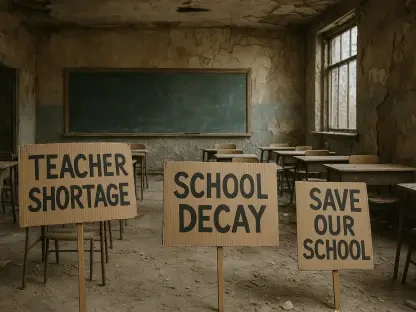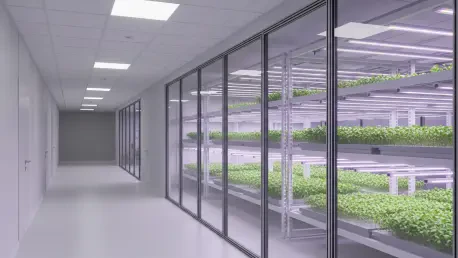

The gleaming glass and steel of a modern laboratory might seem worlds away from the muddy rows of a traditional cornfield, yet these sterile environments are exactly where the next century of American food security is being forged. While the United States remains a global powerhouse in agricultural output, the laboratories fueling that success are often decades out of date. A critical pivot is now underway to revitalize the physical foundations of domestic science through a $121 million investment by the USDA and the Department of Education. This initiative addresses the reality that 21st-century breakthroughs in climate resilience and sustainable yields cannot happen in mid-century facilities. By injecting capital into the Research Facilities Act, the federal government is attempting to close the widening gap between aging infrastructure and the state-of-the-art environments required for modern inquiry.
Modernization is no longer a luxury but a requirement for the reliability of the domestic food supply. Sophisticated research into genomic editing and precision agriculture demands environments with specific humidity controls and advanced air filtration that older buildings simply cannot provide. This movement represents a shift toward the long-term viability of the agricultural sector, replacing temporary fixes with permanent, high-tech infrastructure.
Beyond the Red Barn: The Urgent Call for Scientific Modernization
The necessity for this capital injection stems from the limitations of architecture designed for an era before biotechnology became the standard. High-functioning laboratories require stable power grids to support sensitive equipment that did not exist when many campus structures were first built. When researchers are forced to work in crumbling facilities, the risk of data loss or contamination increases, potentially undermining years of scientific effort. By targeting the Research Facilities Act, the government seeks to ensure that scientists have the tools they need to protect the nation against emerging environmental threats.
Furthermore, the quality of research environments is directly tied to the ability to recruit and retain the brightest minds in the field. To produce groundbreaking results, institutions must offer spaces that facilitate collaboration and support the digital integration of modern scientific practices. Revitalizing these spaces ensures that the American agricultural industry remains a leader in innovation rather than just a follower of global trends.
Bridging the Gap Between Legacy Facilities and Global Competition
The legislative framework for this modernization push is rooted in the Research Facilities Act of 1963, though its contemporary energy comes from the “One Big Beautiful Bill” passed last year. This legislation recognizes that the strength of the national economy is inextricably linked to the quality of land-grant and agricultural institutions. As global competitors ramp up their own research capabilities, the U.S. faces the challenge of maintaining its lead while working within laboratories that often lack the specialized ventilation and climate controls necessary for sophisticated modern testing.
This effort is about reclaiming a position of undisputed leadership in a competitive international landscape. Legacy facilities often struggle to accommodate the automated systems and data-heavy workflows that define current agricultural science. By addressing these physical deficiencies, the government provides the necessary resources for institutions to maintain a robust research pipeline that is as modern as the commercial farms it serves.
A Multi-Tiered Framework for Rebuilding Research Capacity
The federal grant program is designed with a tiered financial structure to accommodate institutions at different stages of development. Initial Project Planning grants provide up to $200,000 for feasibility studies and architectural designs, ensuring large-scale projects are viable before ground is broken. Small-Facility Upgrades focus on modernization, such as updating laboratory equipment or safety systems, with funding up to $2 million. Meanwhile, Mid-Scale and Large-Scale grants, ranging from $2 million to $30 million, fund the construction of entirely new research complexes and climate-controlled centers.
A central pillar of this strategy is the one-to-one matching requirement, which ensures that institutions demonstrate local skin in the game by providing non-federal funds equal to the government’s contribution. This policy fosters a sense of stewardship and ensures that taxpayer dollars are leveraged against strong local investment. This collaborative funding model creates a sustainable path for growth, ensuring that new facilities are supported by both federal resources and the communities they serve.
Expert Perspectives and Real-World Applications of Specialized Infrastructure
USDA Chief Scientist Scott Hutchins emphasizes that researchers must be empowered with cutting-edge tools that can only function in modern, high-functioning environments. This vision is already taking shape in projects like the University of Kentucky’s swine facility modernization, where grants funded complex attic plenums and automated ventilation systems to solve technical deficiencies. Such specialized infrastructure is essential for the precision required in modern livestock and crop research.
Beyond physical buildings, the funding focuses on strategic outcomes such as improving soil health, protecting crops from invasive species, and enhancing the nutritional value of the American food supply. These case studies illustrate that the investment is not just in bricks and mortar, but in the long-term scientific resilience of the agricultural sector. When scientists have access to modern labs, they can more effectively develop the solutions needed to protect the economy from environmental volatility.
Navigating the Federal Application and Funding Lifecycle
Eligible land-grant and non-land-grant agricultural schools must follow a specific roadmap to secure these resources. Applications are funneled through Grants.gov, with strict adherence to a mid-July deadline. Institutions must account for the one award at a time rule, which prevents schools from applying for construction funds while they are still utilizing a planning grant for the same project. This ensures a disciplined project lifecycle and encourages institutions to move through development phases in a fiscally responsible manner.
To ensure taxpayer dollars were spent wisely, applicants also provided a clear financial pathway for the long-term operations and maintenance of the facilities. The strategic overhaul of these laboratories provided a blueprint for how infrastructure could drive economic growth. Legislative bodies worked in tandem with educators to replace decaying structures with facilities that reflected the high stakes of global food security. These efforts established a baseline for sustainability, moving the focus toward precision and technological integration. Moving forward, the focus shifted toward expanding these modernization efforts to include smaller regional institutions and digital infrastructure upgrades.