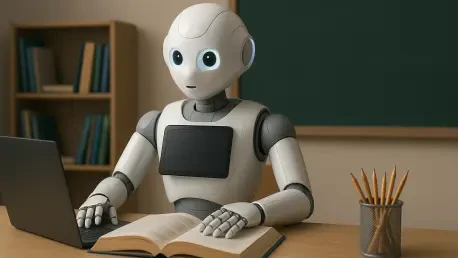

Automated homework reminders are now capable of detecting prompts intended to bypass critical thinking, such as requests to generate an entire essay at once. This functionality marks a significant shift in how artificial intelligence interacts with the younger demographic, moving away from a tool of convenience toward a rigorous academic partner. OpenAI has introduced ChatGPT for Teens, a specialized environment designed to serve as a sophisticated educational tutor rather than a simple shortcut. By integrating robust oversight mechanisms for guardians and pedagogical strategies for students, the platform aims to foster genuine intellectual growth. This initiative acknowledges the concern among educators that generative models might inadvertently stifle the development of essential writing skills. Instead of providing the final output, the system now encourages the creation of outlines. This structured approach ensures that students remain in control of their education while utilizing technology to improve.
Pedagogical Innovation: The Socratic Study Mode
Central to this evolution is the introduction of Study Mode, a feature that fundamentally alters the conversational logic of the AI. Unlike the standard interface that prioritizes speed and direct answers, Study Mode utilizes a Socratic approach to instruction. It offers incremental hints and identifies errors in a student’s reasoning without immediately revealing the correct response. This method forces students to engage with the material on a deeper level, asking guiding questions that lead them to discover the solution independently. By prioritizing the process over the result, the platform mimics the interaction of a human tutor who understands when to push a student and when to provide support. This pedagogical shift addresses the core criticism of AI in schools—that it provides answers without understanding. Now, the system acts as a mirror for the student’s thought process, highlighting logical fallacies and encouraging an iterative approach to problem-solving.
To complement these verbal interactions, the platform has integrated interactive Learning Visualizations that cover over seventy core concepts in mathematics and science. These tools allow students to manipulate variables within digital environments to observe real-time changes in graphs, formulas, and chemical reactions. Moving beyond rote memorization, these visualizations help students grasp conceptual underpinnings that are often difficult to visualize in traditional textbooks. For instance, when a student adjusts a variable in a quadratic equation, the corresponding parabola shifts instantly, providing immediate visual feedback on the relationship between numbers and geometry. This interactive component transforms the AI from a text-based chatbot into a multifaceted laboratory. By providing these dynamic resources, the system helps students bridge the gap between abstract theory and concrete understanding. It empowers learners to experiment with scientific principles in a safe digital space.
Safety Architecture: Balancing Privacy and Parental Oversight
Recognizing the complexities of digital safety, the platform has rolled out a comprehensive suite of parental controls that facilitate oversight without infringing on student privacy. Guardians can now link their accounts to their children’s profiles to manage usage patterns effectively. Key features include the ability to enforce Study Hours, which mandate the activation of Study Mode during designated homework times, and Quiet Hours, which restrict access during late-night periods to ensure healthy sleep hygiene. Parents also maintain the authority to toggle specific functionalities, such as voice mode and image generation, ensuring that the experience remains age-appropriate and focused on academic tasks. This middle-ground approach allows teenagers to explore the capabilities of artificial intelligence while remaining within a framework of parental guidance. It effectively bridges the gap between total autonomy and restrictive monitoring, fostering a relationship of trust between users.
The implementation of an emergency notification system provided an essential safety net by identifying high-risk language related to serious self-harm or mental health crises. While the system protected student privacy by preventing parents from reading every chat transcript, it was programmed to trigger immediate alerts to guardians when specific safety thresholds were met. This balance of autonomy and protection demonstrated a refined understanding of the risks associated with adolescent digital use. Moving forward, educational institutions and families considered how to further integrate these tools into standard curricula to maximize their efficacy. Stakeholders focused on developing even more nuanced feedback loops between AI tutors and human teachers to ensure that digital interventions remained aligned with classroom goals. The transition toward structured AI tutoring represented a pivotal step in redefining the role of technology in the home. Stakeholders established a sustainable model for support.