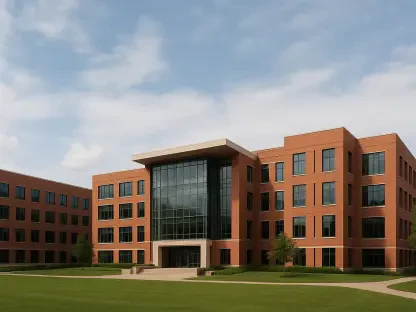

The crumbling corridors of California’s most neglected schools have become the focal point of a seismic legal confrontation that threatens to halt billions of dollars in state infrastructure spending. This lawsuit, known as Rodriguez v. the State of California, represents a collective outcry from a coalition of parents, students, and dedicated advocacy groups who contend that the current system for financing school construction is fundamentally broken and discriminatory. As the legal teams prepare to present their case in court, they are specifically targeting a preliminary injunction designed to freeze approximately $3.2 billion in voter-approved funds. The plaintiffs argue that allowing these funds to be disbursed under the existing first-come, first-served model would only deepen the divide between affluent and impoverished communities. While the state has made significant strides in balancing daily per-pupil operating costs, the physical structures where children learn remain a glaring exception to the promise of equity.
The Financial Disparity of Local Matching Requirements
At the very core of this heated dispute lies the intricate relationship between state-level grant allocations and the localized property tax bases that vary wildly across the region. Under California’s established framework, the state typically agrees to cover between 50 and 60 percent of school modernization or construction costs, provided that the local district can raise the remaining balance. This matching requirement creates an insurmountable barrier for districts situated in low-property-wealth areas where even high tax rates generate minimal revenue. For a wealthy coastal district, passing a bond to meet the state match is often a routine administrative task that places a negligible burden on its residents. Conversely, a rural or inland district with a depressed tax base may find it impossible to secure the necessary millions, even if their residents vote for the highest allowable tax rates. This dynamic ensures that state resources flow primarily toward the communities that already possess significant wealth.
Beyond the obvious financial hurdles, a profound administrative gap persists, further tilting the playing field in favor of the state’s most affluent educational agencies. Large and wealthy districts frequently employ full-time departments of specialized facility planners, architects, and legal consultants whose sole responsibility is to navigate the Byzantine application process for state aid. These experts are adept at preparing complex documentation and submitting applications the moment funding windows open, effectively securing a place at the front of the line. Small or struggling districts, however, often rely on overworked principals or general administrators who lack the specialized training required to compete in this high-stakes race. By the time a resource-strapped district manages to compile the necessary paperwork and prove its local match, the available state funds have often been exhausted by those who were simply faster. This system rewards institutional capacity rather than physical need, leaving the most dilapidated schools waiting indefinitely for relief.
Physical Realities of the Modernization Gap
The physical ramifications of this systemic neglect are both visible and dangerous, manifesting in environments that no child should be expected to inhabit for their daily education. Plaintiffs in the lawsuit have provided harrowing accounts of schools suffering from chronic roof leaks, pervasive mold growth, and failing HVAC systems that leave classrooms stifling in the summer and freezing in the winter. In many instances, students must navigate restrooms with malfunctioning plumbing or attend classes in portable buildings that have long outlived their intended lifespan. These conditions are not merely inconveniences; they are significant environmental hazards that directly impede a student’s ability to focus and maintain good health. Furthermore, these deteriorating facilities make it exceedingly difficult for impoverished districts to recruit and retain high-quality teachers, who understandably prefer to work in modern, safe environments. The result is a compounding cycle of disadvantage where the building itself becomes a silent barrier to academic achievement.
While California does maintain a hardship funding program designed to assist districts that cannot meet the standard matching requirements, critics argue the initiative is woefully inadequate. The criteria for qualifying as a financial hardship are notoriously narrow, often excluding districts that are objectively struggling but fail to meet specific, rigid metrics. Even for those that do qualify, the pool of funds allocated for this purpose represents a tiny fraction of the multi-billion-dollar backlog of repairs facing the state. Legal experts and advocates contend that these programs are little more than a band-aid on a systemic wound, failing to address the fundamental inequities inherent in the primary funding formula. Instead of retooling the system to prioritize the most urgent repairs, the state has relied on these marginal efforts to deflect criticism while continuing to favor the first-come, first-served approach. This reliance on a secondary, underfunded safety net ensures that the vast majority of infrastructure spending continues to bypass the schools with the greatest needs.
Historical Precedents and Statistical Evidence
Data compiled by the Center for Cities+Schools at UC Berkeley provides a stark statistical validation of the claims being made by the plaintiffs in this landmark case. Their research indicates that in recent decades, the wealthiest quintile of California school districts received roughly 2.5 times more state modernization aid per student than the poorest quintile. This disparity persists despite the passage of major bond measures, including the 2024 Proposition 2, which was intended to revitalize public education infrastructure. Early analysis of the distribution patterns for these funds suggests that the money is largely following the path of least resistance, flowing toward districts with ready-made plans and secured local matching funds. This trend highlights a fundamental flaw in the state’s logic: assuming that equal access to an application portal equates to equal opportunity for funding. The research suggests that without a shift toward needs-based allocation, state investment will continue to reinforce existing socioeconomic divides.
The legal foundation of the current challenge is deeply rooted in the historic Serrano v. Priest rulings, which fundamentally reshaped the landscape of California’s educational funding in the 1970s. Those landmark decisions established a clear constitutional principle that the quality of a child’s public education should not be a function of the wealth of their family or their immediate neighbors. While those cases successfully equalized the distribution of general operating funds, which cover teacher salaries and classroom supplies, school facility funding was largely omitted from the resulting reforms. The Rodriguez litigation seeks to rectify this oversight by asserting that a safe, functional, and modern physical environment is an essential component of a constitutional education. Advocates argue that providing equal funding for textbooks is meaningless if the students using them are sitting in classrooms with collapsing ceilings or lead-contaminated water. By bridging the gap between operations and facilities, the lawsuit aims to finally fulfill the promise of educational equity.
Strategic Litigation and State Opposition
Seeking a preliminary injunction to freeze $3.2 billion in funding is a high-risk tactical maneuver designed to force a rapid legislative or administrative response. By halting the distribution of these funds, the plaintiffs are effectively creating a state of emergency that compels the California Department of Education and state leadership to come to the negotiating table. The strategy acknowledges that traditional litigation can take years to wind through the court system, during which time the current pool of bond money could be entirely depleted by wealthier districts. If the money is allowed to flow while the case is pending, the plaintiffs might eventually win a moral or legal victory only to find that there are no resources left to address their clients’ crumbling schools. This aggressive legal stance is intended to disrupt the status quo and signal that the continuation of a discriminatory funding model is no longer politically or legally tenable. It places the immediate future of state-funded school construction directly in the hands of the judiciary.
In response to these claims, attorneys representing the state have argued that an injunction would be an overly broad and potentially catastrophic remedy for the entire public school system. They contend that freezing billions of dollars would cause a massive bottleneck in the state’s capital flow, delaying essential projects and potentially increasing costs due to inflation and work stoppages. The state’s defense emphasizes that the current system is technically fair because the application process is open to every district on an equal basis, regardless of their demographic makeup. From this perspective, the disparities in funding are seen as an administrative reality resulting from varying levels of local initiative and voter support rather than a constitutional violation. State officials maintain that they have a responsibility to distribute funds efficiently to shovel-ready projects to ensure that tax dollars are put to work as quickly as possible. They warn that upending this established process would harm all students, including those in the very districts the lawsuit purports to help.
Collaborative Solutions for Educational Equity
Addressing these systemic inequities required a fundamental rethink of how California prioritizes its investment in the next generation of students and workers. One promising solution involved replacing the current matching system with a sliding scale that adjusted the state’s contribution based on a district’s local property wealth and total student need. This approach ensured that the most impoverished areas received the highest percentage of state support, thereby eliminating the matching fund trap that had previously excluded them from modernization efforts. Policymakers also moved to simplify the application process and provided dedicated technical assistance to help smaller districts compete for grants on an even footing. Rather than rewarding speed, the updated criteria placed a heavy emphasis on physical safety and the actual condition of existing structures. This shift reflected a growing consensus that state funding must serve as a tool for leveling the playing field rather than a reward for districts that already possessed the administrative and financial capital to succeed.
The resolution of the legal challenge ultimately pushed the state toward a more transparent and needs-based framework for all future facility bonds. Legislators recognized that the long-term health of the economy depended on a workforce that was educated in safe, modern, and high-tech environments, regardless of their zip code. By decoupling facility quality from local property taxes, the state took a significant step toward eradicating the geographic lottery that had determined the quality of school buildings for over half a century. Community leaders and educational advocates monitored the implementation of these reforms to ensure that the new funding formulas lived up to their promise of genuine equity. The focus shifted toward sustainable maintenance and proactive upgrades, preventing the kind of structural decay that sparked the initial lawsuit. This period of transition underscored the necessity of viewing school infrastructure not as a local luxury, but as a critical state asset that required centralized oversight and fair distribution to ensure that every student had an equal opportunity to thrive.