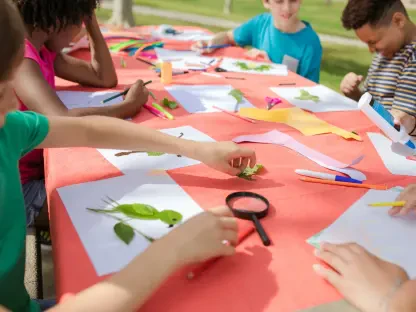

Crowds gathered for bubbles, science tinkering, and a scrimmage hosted by LA Galaxy coaches on April 18, yet the strongest current running through the open house was a quiet one: a community marking 120 years of early learning grounded in care, curiosity, and research. Framed as “120 Years of Lighting the Way: Honoring the Past and Inspiring the Future,” the celebration unfolded steps from college quads, timed to coincide with Whittier College’s Admitted Students’ Day so incoming families could see a preschool thriving on a higher-ed campus. Food trucks and swag stations set a festive tone, but the real showcase sat in classrooms and courtyards where teachers and children collaborated on inquiry-driven play. That location mattered. As a demonstration laboratory school embedded in a college, Broadoaks used the milestone to illustrate a model that treats early education as both joyful practice and living research, not as a silo.
A Campus Laboratory With Community Roots
Broadoaks operates with dual purpose: it serves preschool, transitional kindergarten, and kindergarten learners while functioning as a working lab for research-informed practice, mentorship, and observation. Executive Director Nicole Baitx-Kennedy described the center of gravity plainly, calling Broadoaks “rooted in community,” a theme visible in alumni strolling the grounds with toddlers and partners co-hosting activities. Aligning the celebration with Admitted Students’ Day was more than good timing; it spotlighted a preschool–college symbiosis where prospective undergraduates encountered a campus that treats early learning as a core civic function. Before- and after-school care signaled responsiveness to family schedules, while the LA Galaxy clinics made movement part of the narrative of learning. The cumulative message positioned the school as a civic space, not just a service.
That civic stance extended to inclusion. Classrooms reflected the surrounding region’s socioeconomic, ethnic, and cultural diversity and welcomed children with learning disabilities, behavioral challenges, and high-risk family circumstances. Supports were concrete: calm corners for sensory regulation, visual schedules, peer buddy routines, and teacher–family check-ins that built predictability around transitions. Exploration took structured forms—loose-parts engineering, garden-based science, and story workshops where collaboration drove language growth—yet retained play’s spark. Documentation panels captured hypotheses, missteps, and revisions, making learning visible to children and adults. This blend of warmth and rigor formed the school’s signature. Over its long history, that approach created continuity; when grandparents who once attended recognized familiar values in today’s practice, the institution’s claim to stability sounded less like branding and more like inheritance.
Lasting Imprints and Next Moves
Stories from families across Southern California—touchpoints at Maryvale, Foothill Oaks Academy (formerly Anita Oaks), Arcadia Friends School, and Holy Angels School—converged on a single trait shared with Broadoaks: teachers who tuned into each child with a mix of empathy and gentle challenge. One caregiver recalled a preschooler who dreaded drop-off until a teacher built a two-step ritual—joke, job, then join—and tracked progress with a simple smile chart the child filled. Another family described a serious child coaxed into play by a teacher who framed math as a scavenger hunt, counting shadows and measuring puddles after rain. Outcomes echoed developmental research: secure relationships predicted more exploration; playful inquiry strengthened attention, language, and executive function. At Broadoaks, those principles translated into daily choices—teachers kneeling to meet gaze, questions that probed thinking, and peers encouraged to negotiate roles—so social and academic growth advanced together.
The anniversary also offered a template for action. For families evaluating preschools, the most reliable signals included observing teacher–child exchanges at eye level, asking how inclusion plans were co-written with caregivers, and scanning for evidence of learning—children’s questions posted, drafts saved, and outdoor play designed as a lab, not recess filler. For institutions, the lab-school model suggested practical steps: co-locate preschools on campuses to link theory and practice; fund educator residencies that cycle candidates through inclusive classrooms; and publish open-access snapshots of effective routines, from sensory supports to bilingual storytelling. Partnerships like the LA Galaxy clinics worked best when tied to curriculum goals, turning movement into data for science journals or narrative prompts. Looking ahead from this milestone, the path forward included educator exchanges across regional lab schools from 2026 to 2028, small grants that tested play-based assessments at scale, and public events that demystified early learning through hands-on design challenges. In short, the celebration had mapped doable next moves that sustained momentum rather than simply marking time.