
Seconds represent the thin margin between safety and tragedy when a security breach occurs within the sprawling corridors of a modern educational institution. As educational facilities expand in size and complexity, traditional surveillance and manual lockdowns are proving insufficient to counter the sheer speed of modern threats. The transition toward autonomous tactical systems reflects a growing realization that human-led responses are often limited by physical constraints and travel times. By integrating sophisticated aerial robotics into the core of campus safety protocols, administrators are looking to fundamentally alter the timeline of emergency intervention. This paradigm shift does not merely add another layer of surveillance but introduces a dynamic, proactive element capable of moving faster than any ground-based responder. The objective is to create an environment where the window of opportunity for an intruder is effectively closed before law enforcement can arrive.
1. Analyzing the Limitations of Existing Security Infrastructure
Traditional security measures often fail because they are reactive, relying on manual alarms that trigger after an event has already escalated significantly. The primary obstacle facing school safety today is latency, defined as the critical duration between the start of an incident and the arrival of professional responders. Statistics indicate that the most violent phases of campus attacks frequently reach their peak within the first two minutes, a window that most external law enforcement agencies cannot meet. While on-site resource officers provide a valuable deterrent, they cannot be everywhere at once, especially in multi-building campuses with complex internal layouts. Consequently, the reliance on human movement through crowded hallways creates a dangerous delay. Drones are being tested specifically to bridge this temporal gap, offering a way to engage with a threat long before any officer can physically step through the school entrance.
Autonomous aerial systems offer a unique solution by operating in the vertical and horizontal planes of a building without the physical limitations of ground personnel. These aircraft are designed to remain in a state of constant readiness, housed in discreet ceiling or wall compartments that open the instant a threat is detected. By bypassing the need for human navigation and decision-making during the initial flight path, the system ensures that the response begins the millisecond an alarm is verified. This speed is essential for disrupting the focus of an intruder, as it forces them to shift from an offensive posture to a defensive one. Early testing has shown that reducing the response time to under thirty seconds can fundamentally change the outcome of an emergency by preventing the perpetrator from moving deeper into the facility. This proactive approach aims to stabilize the situation until police can take over the tactical operation.
2. Executing the Multi-Phased Tactical Intervention Sequence
The deployment of these drones follows a rigorous three-step operational sequence designed to neutralize threats while minimizing the risk to innocent bystanders. The first stage focuses on rapid interior access, where drones launch from strategic locations to reach the intruder in less than fifteen seconds. Moving at high speeds through hallways, these aircraft use advanced lidar and thermal imaging to navigate complex paths that would slow down a human responder. Once the target is acquired, the second stage initiates a barrage of sensory overload and disorientation. High-intensity strobe lights and ultrasonic noise generators are activated to overwhelm the vision and hearing of the attacker. In some configurations, the drones also deploy concentrated pepper spray to create a localized environment that is nearly impossible to navigate. These non-lethal measures are intended to paralyze the intruder’s decision-making process and block their line of sight.
If the sensory disorientation proves insufficient and the intruder continues their aggressive actions, the third stage moves toward direct physical intervention. Tactical drones are constructed with reinforced frames that allow them to physically ram into an attacker at high velocities to knock them off balance. This kinetic engagement is a last resort meant to physically separate the intruder from their weapon or to prevent them from entering a classroom. Furthermore, the drones are engineered to break through interior glass partitions, allowing them to pursue suspects who may try to hide behind locked doors or windows. This capability ensures that no area of the school remains inaccessible to the defense system, providing a continuous presence that follows the threat throughout the building. By combining these three stages, the system creates a comprehensive barrier that prioritizes the safety of students by actively hindering the progress of any malicious actor.
3. Managing Financial Constraints and Operational Vulnerabilities
Implementing a drone-based defense network involves substantial financial commitments that go far beyond the initial purchase of the aerial hardware and software. Each project often requires an investment exceeding half a million dollars to ensure that the density of equipment is sufficient to cover every hallway and common area. Schools must install dozens of specialized docking stations and reinforced charging ports throughout the infrastructure to maintain the necessary response times. Beyond the equipment, significant costs are associated with the continuous upkeep and maintenance of the fleet. Hardware components like rotors and sensors require frequent inspection and replacement due to the high-performance nature of the aircraft. Additionally, software licenses for the autonomous navigation and threat detection algorithms represent a recurring expense that districts must budget for annually. These financial realities mean that such systems are currently limited to schools.
Alongside the financial burden, administrators must navigate the serious risks associated with introducing high-speed robotics and connected networks into a school. One of the most significant concerns is the potential for identification mistakes where the system might misinterpret a teacher or a police officer for an intruder. To prevent these errors, remote operators are often required to monitor the video feeds 24/7, adding another layer of labor costs to the security budget. Furthermore, any device connected to a school’s wireless network is a potential target for cyberattacks or signal jamming. If a malicious actor gains control of the drone network, they could theoretically turn the defense system against the very people it was designed to protect. There are also physical safety concerns regarding the storage of high-speed equipment in student areas. Risks of accidental activation or vandalism must be addressed through strict physical and digital safeguards.
4. Establishing a Robust Framework for Strategic Integration
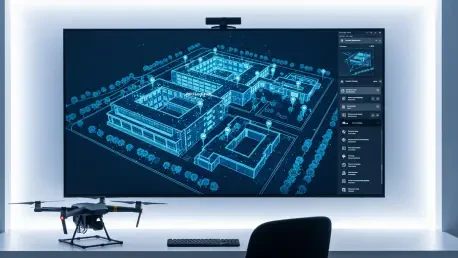
To successfully integrate autonomous drones, schools must follow a strategic deployment plan that begins with a detailed analysis of their current security. Administrators first need to measure the actual response times of on-site resource officers to ensure that the aerial system provides a genuine advantage. If manual response times to the farthest points of the campus exceed ninety seconds, the investment in drone technology becomes much easier to justify. Once the need is established, the school’s interior must be digitally mapped in three dimensions to allow the drones to navigate obstacles without human intervention. This mapping process includes the identification of all blind spots and the reinforcement of wireless signals to prevent dead zones that could disable the aircraft. A multi-step activation protocol is also essential, requiring confirmation from at least two authorized personnel before the drones are released, which prevents accidental launches.
The final stage of a successful rollout involved the integration of the drone’s data streams directly with local law enforcement and emergency dispatchers. This connection ensured that arriving officers possessed real-time intelligence regarding the intruder’s exact location and the current state of the building. Stakeholders prioritized the establishment of clear ethical guidelines and rigorous testing cycles to ensure that the drones remained assets rather than liabilities. By focusing on the intersection of rapid response and human oversight, schools moved closer to achieving a comprehensive safety net that adapted to the nature of modern threats. Decision-makers evaluated the trade-offs between cost and capability, eventually settling on configurations that maximized protection while maintaining the primary mission of the facility. These steps provided a blueprint for how high-speed robotics could be safely and effectively woven into the fabric of public safety.