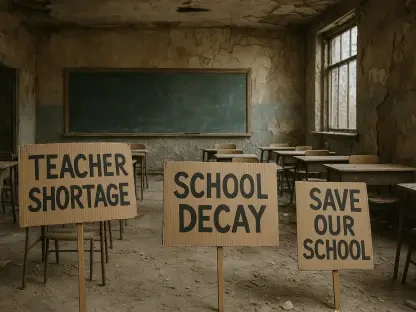

Public perception remains a major barrier as many parents still view vocational training as a secondary option despite its high return on investment. The skyrocketing costs of traditional four-year degrees have pushed public university graduates into an average debt of over $27,000, creating a massive financial hurdle that takes decades to clear. As artificial intelligence begins to automate entry-level roles, the stability once promised by a liberal arts degree feels increasingly tenuous. Young people are no longer content with the status quo, and the shift toward alternative educational models is gaining traction. This transition represents more than just a financial decision; it is a fundamental redesign of the American dream to prioritize skill mastery over institutional prestige. By re-evaluating the definition of a successful career path, society can begin to bridge the gap between academic theory and the practical demands of the 2026 economy. This evolution ensures the next generation is gainfully employed in roles that provide growth.
Modern Apprenticeships: The Evolution of Work-Based Learning
Registered apprenticeships have moved far beyond their historical roots in the construction and building trades, signaling a new era for professional development. Today, the “earn and learn” model is expanding rapidly into high-growth sectors such as information technology, healthcare, and advanced manufacturing. This expansion is reflected in an 80 percent increase in the number of apprentices over the last decade, proving that students are eager for programs that provide immediate wages while they build their resumes. These programs allow individuals to master specific competencies on the job while receiving subsidized classroom instruction, ensuring they are productive from day one. Federal and state investments have successfully pushed these models into nontraditional sectors, providing a structured environment where learning is directly tied to a paycheck. This methodology addresses the immediate financial needs of students who cannot afford to spend years out of the labor force.
A common misconception is that choosing an apprenticeship means closing the door on higher education, but the reality is quite different in the current landscape. On the contrary, modern programs often utilize a “stackable” credential system where apprenticeships culminate in a recognized associate degree. This approach allows students to enter the workforce without debt while retaining the flexible option to transfer their earned credits toward a four-year degree later in their careers. By integrating work and study, these programs offer a sustainable middle ground that serves both the student’s bank account and their long-term professional aspirations. Institutions like Harper College have pioneered these pathways, demonstrating that academic rigor and vocational training are not mutually exclusive but rather complementary forces. As the workforce continues to evolve, the ability to layer education on top of professional experience provides a significant competitive advantage in the global market.
Industry Alignment: Bridging the Skills Gap in Manufacturing
Sector-based training programs offer another powerful alternative by partnering directly with local employers to meet specific labor market demands. These initiatives ensure that the skills being taught are exactly what companies need, creating a direct pipeline from the classroom to a high-demand career. For instance, in states with heavy manufacturing footprints, community colleges are transforming into high-tech hubs that prepare students for critical roles in aerospace and defense. This direct alignment reduces the risk of unemployment and ensures that the credentials earned have immediate market value in a way that traditional degrees often struggle to match. When educational curricula are developed in tandem with industry leaders, the transition from student to professional becomes seamless. This strategy minimizes the skills gap that currently plagues many technical industries, allowing businesses to thrive with a steady supply of qualified local talent for the future.
To attract the next generation of workers, educators are also working to dispel outdated myths about technical industries through immersive experiences. Modern manufacturing and vocational roles are no longer defined by manual labor in grit-covered shops, but by the operation of 3D printers, robotics, and sophisticated computer systems. By showcasing these high-tech environments to students and their parents, schools can rebrand technical education as a sophisticated, high-wage career path. When families see the precision and technology involved in these roles, the stigma surrounding vocational training begins to dissolve and is replaced by genuine interest. This shift in narrative is essential for filling the thousands of high-paying roles that remain vacant due to a lack of skilled applicants. Changing the visual landscape of these professions involves bringing people into labs and showing them the work. Advanced manufacturing today is about clean environments and digital mastery.
Economic Outcomes: Measuring the Impact of Practical Education
The financial case for alternative pathways is supported by compelling data regarding post-program earnings that should not be overlooked by policymakers. Participants in structured apprenticeship programs often see significant wage increases within the first year of completion, frequently outperforming their peers who pursued general liberal arts degrees. Programs like Year Up and Project QUEST have demonstrated that short-term, intensive training can lead to substantial boosts in quarterly earnings that persist over time. These outcomes suggest that for many, these pathways are not a secondary choice, but a strategically superior option that prioritizes financial independence. When a program can provide a 49 percent increase in earnings within just one year, it becomes difficult to justify the risk of a traditional four-year degree for every student. The economic reality is that the labor market rewards specific skill sets that can be deployed immediately in technical fields.
Beyond individual gains, these models offer a systemic solution to the student debt crisis by providing a debt-free entry point into the labor market. When students can earn a living wage while they learn, the need for predatory private loans disappears, allowing them to contribute more effectively to the economy sooner. Furthermore, as the economy adapts to an AI-driven landscape, the hands-on experience gained through work-based learning provides a level of job security that theoretical knowledge alone cannot match. Investing in these alternative routes creates a more resilient workforce capable of navigating the shifting demands of the modern economy with confidence. This resilience is vital as traditional career paths are disrupted by technological advancement and shifting corporate priorities. By fostering an environment where multiple pathways to success are validated and funded, the nation can ensure a more equitable distribution of wealth and a middle-class lifestyle.
Strategic Policy: Implementing Sustainable Educational Solutions
Policymakers eventually shifted their focus toward long-term sustainability by prioritizing the integration of technical skills into high school curricula. This proactive measure allowed students to explore various career paths before making significant financial commitments to higher education. By establishing national standards for apprenticeship programs, the government ensured that credentials remained portable across state lines, enhancing labor mobility for the next generation of workers. These initiatives were supported by tax incentives for companies that invested in their own internal training pipelines, creating a symbiotic relationship between the public and private sectors. The success of these programs depended on the collaboration between community colleges and local industries, which together designed courses that reflected the actual needs of the economy. This systemic change empowered students to take control of their financial futures while filling critical gaps.
Educational leaders and government officials recognized that the “college-for-all” narrative needed to be replaced with a more inclusive framework. They advocated for expanded funding through initiatives like Workforce Pell Grants, which supported short-term career training and the acquisition of stackable credentials. California served as a primary model for proactive policy, aiming for hundreds of thousands of registered apprentices by providing significant financial investment in employer-led programs. States focused on building a robust infrastructure for registered apprenticeships and sector-based training to validate these paths through rigorous data. This transition required providing families with clear, evidence-based information regarding the earnings and stability associated with alternative routes. By integrating work and higher education rather than forcing a choice between them, the system allowed students to earn a living. These actions provided a practical response to the crisis.