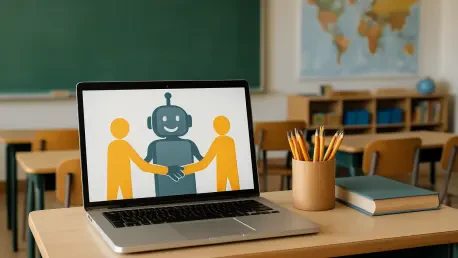

The landscape of American education has undergone a profound metamorphosis as schools across the country finalize their strategic plans for the 2026–2027 academic year, prioritizing the cultivation of deep student relationships over the mere delivery of information. This transition represents a significant milestone in the integration of artificial intelligence, moving beyond the reactionary fears of the early decade toward a stable, relationship-focused pedagogy. Educators are no longer asking if technology belongs in the classroom; instead, they are investigating how these sophisticated systems can serve as a bridge to a more personalized and human-centered instructional model.
The Shift: From Automated Classrooms to Relational Excellence
As the 2026–2027 school year begins, the conversation has matured from basic adoption to a focus on relational excellence. For many years, the educational community grappled with the possibility of technology replacing the teacher, yet current trends reveal that the most effective implementations are those that amplify the teacher’s presence. This evolution is vital because it directly addresses the chronic burnout and administrative saturation that have historically degraded the quality of the student-teacher bond. By removing the logistical obstacles that often distance educators from their students, schools are rediscovering the core of the profession.
The prevailing sentiment among school administrators is that AI acts as a professional catalyst. Rather than a substitute for the expert in the room, it functions as a support system that handles the repetitive, low-value tasks that once consumed hours of a teacher’s day. This allows for a shift in focus from merely completing the curriculum to genuinely connecting with the learner. The collective goal is to use automation not to reduce human input, but to enhance the quality of human engagement throughout the learning day. By exploring how these tools function as a bridge to personalized instruction, the educational community is witnessing a future where technology makes the classroom feel more human.
Reimagining the Educator’s Role: The Age of Generative Intelligence
In this age of generative intelligence, the educator’s role is being redefined as a facilitator of inquiry rather than a source of facts. This transition requires a departure from traditional lecturing and a move toward mentorship, where the teacher guides students through the complexities of a digital world. There is a broad recognition that while a machine can provide an answer, only a human can provide the context, empathy, and moral guidance necessary for holistic development. This shift ensures that the human element remains the most influential factor in a student’s academic journey.
This reimagined role places a premium on professional judgment and the ability to weave technological assistance into a larger pedagogical narrative. Schools are increasingly seeing teachers as intellectual architects who design environments where students feel safe to explore and fail. The focus is no longer on the output alone but on the cognitive and emotional growth that occurs during the process. Consequently, the teacher’s expertise is now focused on the high-level decision-making that algorithms cannot replicate, such as sensing the mood of a room or adjusting a lesson based on a student’s personal trauma or joy.
Transforming Administrative Burdens into Strategic Pedagogical Workflows
Modern educators have moved past the scattered toolbox approach, where various apps were used in isolation, and have instead embraced cohesive professional ecosystems. These strategic workflows allow teachers to automate the drafting of family newsletters and the translation of instructional materials into dozens of languages simultaneously. By handling these logistical burdens with precision, the technology ensures that the lines of communication between school and home are always open, regardless of linguistic or time barriers. This evolution allows for the logistical side of teaching to be handled with incredible precision.
Furthermore, these workflows enable the instant creation of diverse assessment designs and lesson hooks that capture student interest from the first minute of class. By using specific cognitive levers to solve instructional challenges, teachers can devote their energy to analyzing student data and adjusting their strategies in real time. This move toward strategic automation represents a significant leap in professional efficacy, allowing for a more organized and responsive classroom environment. However, this transition requires a critical eye, as educators must balance the efficiency of automated output with the need for professional oversight to maintain integrity.
Democratizing Personalized Learning through Scalable Differentiation
One of the most profound shifts in recent years is the ability of artificial intelligence to make high-quality differentiation accessible to every student regardless of their starting point. Historically, tailoring a single lesson for multiple reading levels or linguistic backgrounds was a grueling, hours-long process that led to significant teacher fatigue. Today, AI-driven platforms allow teachers to adjust text complexity and create scaffolded supports in seconds, effectively lowering the floor of accessibility while maintaining high academic expectations for everyone in the room.
While this presents an opportunity for greater equity, schools must navigate the risk of over-relying on algorithmic suggestions. It is essential that the teacher’s intuition remains the final judge of a student’s true needs, as data alone cannot capture the full picture of a child’s potential. By providing multiple entry points to a single lesson, technology ensures that students with diverse learning profiles can engage with the same rigorous content as their peers. This democratization of support is a cornerstone of the modern inclusive classroom, ensuring that no child is excluded due to a lack of resources.
Cultivating Metacognitive Growth through AI-Scaffolded Inquiry
The pedagogical focus is shifting from what students produce to how they think, moving technology usage from a product-oriented model to a process-oriented one. Students are increasingly encouraged to use generative tools as thought partners to identify gaps in their own logic or to refine their writing through iterative feedback. This approach challenges the common assumption that these tools are merely for academic dishonesty, instead positioning them as cognitive assistants that promote self-reflection. This transition ensures that digital tools serve to deepen inquiry rather than bypass the hard work of thinking.
As this trend matures, the challenge for districts involves implementing robust literacy programs that teach students how to evaluate algorithmic bias and recognize inaccuracies. By teaching students to engage with AI in a dialectical manner, educators are fostering a deeper level of critical thinking. Students learn to question the source of information and to use the technology as a mirror for their own reasoning. This metacognitive approach transforms the classroom into a space where the development of the mind is the primary objective, and the tool is simply a means to reach that goal.
Prioritizing the Belonging Before Behavior Philosophy
The most impactful result of this integration is the time back philosophy, which suggests that the primary value of automation is the capacity it creates for human connection. When the mechanics of teaching—such as drafting rubrics or organizing lesson hooks—are streamlined, educators can reinvest that energy into the social and emotional well-being of their students. This theme emphasizes that while technology can grade a quiz or level a text, it cannot provide the empathy, encouragement, or intuitive support a child needs to feel a sense of belonging in their community.
The success of a modern school is measured not by the volume of content delivered, but by the depth of the trust established between teachers and learners. Educators who utilize these systems to reclaim their minutes are able to focus on the unique needs of every child, ensuring that the human connection remains the heart of the educational experience. This philosophy recognizes that a student who feels a sense of belonging is more likely to succeed academically and socially. Ultimately, the purpose of every digital advancement is to clear the path for these essential human interactions to occur more frequently and with greater depth.
Strategic Frameworks: Modern Instructional Leaders
To successfully navigate this transition, educational leaders are moving away from temporary toolboxes and toward sustainable, ethical implementation strategies. Impactful insights from current implementations suggest that schools must prioritize explicit literacy training, focusing on prompt engineering and the critical evaluation of digital content. Actionable recommendations include establishing clear frameworks for ethical attribution and encouraging educators to select cognitive levers that solve specific instructional challenges. By focusing on mindset over mechanics, districts ensure that technology remains an invisible facilitator of the teacher’s presence rather than a distraction.
Furthermore, successful leadership involves fostering a culture where experimentation is encouraged and failure is seen as a step toward mastery. Districts that provide consistent support and professional development are seeing the highest rates of teacher satisfaction and student engagement. These frameworks are designed to be flexible, allowing schools to adapt as technology continues to evolve while keeping their core values intact. By leading with purpose and a focus on human-centered learning, the educational community can ensure that the future of school is defined by deeper connections, greater equity, and the irreplaceable power of mentorship.
The Enduring Vitality: The Human Mentor in a Digital World
The integration of artificial intelligence represented a fundamental paradigm shift in how professional time was valued in the classroom. As these tools became more ubiquitous, the role of the teacher became more vital as a mentor, a guide, and a source of emotional stability in an increasingly complex world. Ultimately, the effectiveness of any digital tool was measured by the degree to which it allowed an educator to be the person their students needed them to be. The community recognized that the most successful schools were those that used the efficiency of the machine to protect the sanctity of the human relationship.
By leading with purpose and a focus on the unique needs of the individual, educators ensured that the school environment remained a place of growth and discovery. The transition toward a relationship-centered model proved that the true power of technology was its ability to make the educational experience feel more personal. Moving forward, the focus remained on refining the balance between algorithmic precision and the irreplaceable warmth of human connection. The journey ahead involved continuing to prioritize the emotional and social development of students, ensuring that the heart of education remained firmly rooted in the presence of the human mentor.