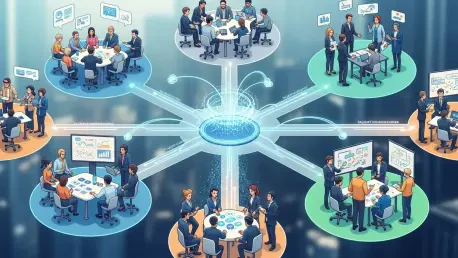

The global corporate landscape has moved decisively beyond the logistical disputes regarding remote work and hybrid schedules to confront a far more existential crisis concerning the fundamental availability of human capability. For years, executive discussions were dominated by the logistics of where people sat, but those debates have become secondary to a more pressing structural reality that suggests the traditional labor market has reached its functional limit. We are entering an era where the primary challenge is no longer about recruitment volume or office occupancy, but whether an organization is fundamentally prepared for a world where labor is no longer a fluid, acquirable commodity. The legendary “War for Talent” that defined the early part of the century has reached a definitive conclusion, and for many enterprises, the outcome was not a victory. Success in the current economic environment is no longer determined by a company’s ability to hire at scale or offer the most attractive perks. Instead, a new divide has emerged between firms that view labor as a transactional resource and those that treat talent as a strategic capability to be designed, nurtured, and continuously evolved from within the organization. This shift requires a total reimagining of corporate strategy that prioritizes organizational readiness over mere headcount.
Navigating the Illusion of Workforce Stability
While global employment rates currently appear resilient and participation levels remain high, this surface-level stability hides a brewing internal crisis that threatens the viability of traditional business models. Many organizations are struggling with widening skills gaps and a persistent inability to drive meaningful productivity gains despite having a full headcount and robust digital tools. This disconnect suggests that the legacy talent model—which assumes that competitive salaries and a strong employer brand are enough to maintain a balanced workforce—is no longer sufficient to meet modern demands. The current labor market is characterized by a “hidden shortage” where roles are filled, but the individuals in those roles lack the specific, high-level capabilities required to navigate a rapidly changing technological landscape. This creates a state of organizational paralysis where businesses have the people but not the performance, leading to a stagnation that no amount of traditional hiring can fix.
The competitive advantage in today’s market is reserved for learning organizations that can bridge capability gaps internally through a rigorous and systematic approach to human development. It is becoming increasingly clear that the future belongs to those who stop focusing on being the best recruiters and start focusing on being the most effective developers of human potential. When the roles themselves evolve faster than the people occupying them, the burden of adaptation shifts from the individual to the organizational strategy, making continuous reskilling a core business function rather than an optional benefit. Firms that have successfully navigated this transition treat every project as a learning opportunity and every role as a dynamic set of capabilities that must be updated in real-time. By fostering an environment where growth is synonymous with daily work, these organizations insulate themselves from the volatility of the external labor market and create a self-sustaining ecosystem of expertise that competitors cannot easily replicate.
Addressing the Global Skills Mismatch
Data from leading global institutions indicates that the primary obstacle to business transformation is no longer a lack of technology, but a profound mismatch between existing worker skills and the requirements of the coming years. This is a qualitative labor shortage rather than a quantitative one; there may be plenty of people looking for work, but there is a scarcity of relevant capability that can drive innovation in complex systems. This mismatch explains why many firms feel “stuck” even when their recruitment pipelines are active and their offices are full of well-intentioned employees. The speed of technological advancement has outpaced the traditional educational and vocational training pipelines, leaving businesses to fend for themselves in the pursuit of specialized knowledge. Consequently, the ability to identify and cultivate latent talent has become a more valuable skill for leadership than the ability to negotiate a high-salary contract for a pre-vetted external hire.
To overcome this hurdle, leadership teams must move away from reactive training and toward an integrated architecture of employability that views every employee as a long-term asset. This means creating systems where learning is not an occasional event but a constant, integrated part of the workflow, supported by robust internal mobility programs and mentorship networks. When an organization treats skill development as a strategic infrastructure, it ensures that its workforce remains relevant even as market volatility and technological advancements reshape the industry overnight. This approach requires a significant investment in internal data analytics to track skill progression and predict future needs before they become critical failures. By proactively building these internal bridges, companies can bypass the bottlenecks of the external labor market and ensure that their strategic ambitions are never limited by a lack of human capability or the slow pace of external educational institutions.
The Critical Role of Middle Management
While work flexibility has become a baseline expectation for the modern workforce, flexibility alone does not guarantee high performance or organizational cohesion. Without a framework of clarity and strong leadership, flexibility can lead to organizational drift, where employee convenience fails to translate into successful execution or shared mission. This highlights the indispensable role of middle managers, who serve as the human infrastructure of execution and the primary conduit for turning corporate strategy into tangible action across diverse and often distributed teams. They are the ones responsible for maintaining culture in a hybrid world, ensuring that accountability remains high even when direct supervision is physically impossible. In many ways, the success of a modern enterprise rests entirely on the shoulders of this middle tier, yet they are often the most overlooked and under-resourced group in the corporate hierarchy.
However, this vital layer of the organization is currently under immense strain, facing unprecedented levels of fatigue and burnout as they attempt to balance executive demands with employee expectations. When managers are disconnected or underprepared for the complexities of modern leadership—such as managing through digital interfaces or navigating the nuances of mental health in the workplace—the negative effects cascade throughout the entire company. This results in slower decision-making, diminished retention, and an overall erosion of trust that can take years to rebuild. Organizations must reinvest in their managerial tier, recognizing that the health and competence of this group are directly tied to the commercial success and operational resilience of the enterprise. Providing managers with the tools, training, and authority they need to lead effectively is not just a human resources initiative; it is a critical strategic imperative for maintaining the “human infrastructure” that makes execution possible in a volatile economy.
Integrating AI Through Work Redesign
The rise of Artificial Intelligence represents a total reconfiguration of labor rather than a simple replacement of human workers through automation or algorithmic oversight. Forward-thinking leaders avoid the shallow perspective of using AI solely for headcount reduction, focusing instead on how it can redistribute tasks and amplify human judgment in high-stakes environments. The goal is to use automation to bolster productivity and increase the speed of operations without diluting individual accountability or losing the human element that drives creative innovation and complex problem-solving. This requires a fundamental redesign of workflows, where AI handles the data-intensive, repetitive aspects of a role, leaving humans to focus on strategy, empathy, and nuanced decision-making. Such a reconfiguration does not happen by accident; it requires a deliberate effort to map out processes and identify where human-machine collaboration can provide the most significant competitive advantage.
There is also a significant social and ethical responsibility involved in the transition to an AI-driven workplace that goes beyond simple compliance or public relations. Because the impact of technology varies across different sectors and demographics, there is a risk of deepening existing economic inequalities if the transition is not managed with a focus on inclusivity and fairness. Responsible leadership involves ensuring that technological integration expands the scope of human contribution, making work more meaningful rather than merely reducing labor to a cost line on a financial statement. This includes providing pathways for workers whose roles are most affected by automation to transition into new, higher-value positions within the company. By prioritizing the “augmentation” of the workforce rather than its “depletion,” organizations can build a more resilient and loyal employee base that is prepared to work alongside AI rather than in fear of it, ultimately driving higher levels of long-term value.
Strengthening Regional Talent Pipelines
In regions like Ibero-America, the challenge of labor strategy is complicated by structural issues such as high informality and a persistent disconnect between educational systems and market needs. To unlock the immense entrepreneurial potential in these areas, there must be a focus on building a robust “architecture of employability” that addresses the unique socioeconomic hurdles faced by local workforces. This involves creating formal bridges between education and the professional world, such as apprenticeships and work-based learning programs that prepare the younger generation for high-value roles in the digital economy. These initiatives must be collaborative, involving governments, educational institutions, and private enterprises to ensure that the skills being taught are those that are actually in demand. Without this coordinated effort, regional talent will continue to be underutilized, leading to a loss of economic potential that affects the global supply chain and market stability.
For small and medium-sized enterprises, building sustainable talent pipelines is not just a matter of corporate social responsibility; it is a fundamental requirement for economic resilience in an era of globalization. By treating employability as a strategic asset, these regions can prevent the waste of productive potential and foster a new generation of skilled workers who are capable of competing on the global stage. In a technologically accelerating global economy, the ability to integrate youth and marginalized workers into the formal economy is the difference between long-term growth and systemic stagnation. Successful regional strategies have focused on lowering the barriers to entry for formal employment while providing continuous upskilling opportunities that keep the workforce competitive. This approach not only benefits the individual workers but also strengthens the local business ecosystem, creating a more stable and prosperous environment for all participants in the market.
Understanding the New Drivers of Attraction
The criteria that top-tier talent use to evaluate potential employers have undergone a significant shift as the balance of power in specialized fields continues to favor the worker. While fair compensation remains a non-negotiable baseline, the most elite workers are now looking for an environment that guarantees their future relevance in an increasingly automated world. They prioritize organizations that offer high learning velocity, quality leadership, and clear pathways for internal mobility that allow them to reinvent themselves as the market evolves. They want to know that their employer is invested in their long-term employability and will provide the resources necessary to stay at the cutting edge of their profession. This shift in priorities means that traditional recruitment tactics, which focus heavily on current perks and starting salaries, are becoming less effective at attracting the kind of talent that can drive long-term strategic growth.
Beyond professional growth, these workers are drawn to cultures that successfully balance high performance standards with a genuine focus on human well-being and psychological safety. They are seeking workplaces where their contributions are valued, their autonomy is respected, and their personal lives are not sacrificed on the altar of corporate productivity. Organizations that can provide this multifaceted commitment are beginning to separate themselves from the rest of the market, creating a virtuous cycle of attraction and retention. By offering a “future” rather than just a job, these companies become magnets for the individuals who are most capable of navigating the complexities of a tech-integrated, volatile world. This holistic approach to talent attraction requires a deep understanding of what motivates the modern worker and a willingness to adapt organizational culture to meet those evolving needs without compromising on execution or excellence.
Moving Toward Structural Maturity
The current period marks a turning point where superficial fixes to talent problems are no longer effective; the market has entered an era of “structural maturity” that demands a more sophisticated approach. The companies that thrived in this transition were those that completely abandoned the recruitment-heavy mindset of the past in favor of a design-centric approach to human capital. These successful organizations focused on reskilling their people faster than the market changed, integrating technology to enhance human judgment, and supporting their managers as vital strategic assets. They understood that the “War for Talent” was not about who could hire the most people, but about who could build the most resilient and adaptable workforce from within. This realization led to a radical decentralization of learning and a more purposeful integration of human and artificial intelligence across all levels of the business hierarchy.
Leadership teams ultimately achieved success by implementing concrete frameworks that prioritized internal mobility and continuous capability mapping over external searches. They recognized that talent was no longer a commodity to be acquired on the open market but a capability to be designed and continuously evolved within the organizational framework itself. These winners invested heavily in managerial training and employee well-being, creating an environment where high standards and human humanity were not mutually exclusive. By 2027, the gap between companies that mastered this internal design and those still fighting losing recruitment battles became an unbridgeable chasm, defining the ultimate winners and losers of the modern era. The strategic takeaway for any organization remaining competitive was clear: build the architecture of employability today, or face obsolescence in a market that has no more human capacity to spare for those who fail to evolve.