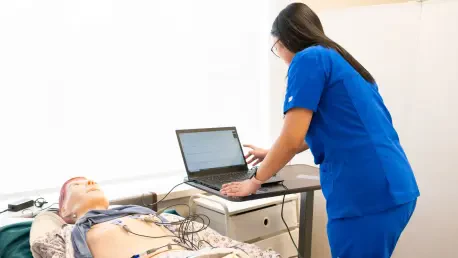

Future expansions of the platform will include complex diagnostic scenarios for bacterial, viral, and respiratory infections in patients with underlying health conditions. This strategic evolution of digital pedagogy is currently being spearheaded by the Faculty of Allied Health Sciences at Chulalongkorn University, which recently unveiled the Metaverse Lab-XR as a definitive bridge between theoretical learning and the rigorous demands of professional medical practice. Developed under the leadership of Assistant Professor Dr. Navaporn Worasilchai, the initiative creates a high-fidelity virtual environment where medical technology students can refine their diagnostic capabilities without the constraints of physical space or immediate biological risk. The platform has already garnered significant national attention, securing the Outstanding Innovation in Student Development award from the Ministry of Higher Education, Science, Research, and Innovation. By integrating immersive technology into the core curriculum, the university is addressing a critical gap in traditional clinical education, ensuring that the next generation of healthcare professionals enters the workforce with a level of technical proficiency that was previously difficult to achieve within the confines of a standard classroom setting.
Resolving Constraints in Conventional Laboratory Instruction
The development of the Metaverse Lab-XR was largely driven by the practical limitations inherent in traditional medical laboratory education, where rigid schedules and high student-to-instructor ratios often impede personalized learning. In a typical three-hour physical laboratory session, students are expected to master intricate diagnostic procedures while adhering to a uniform pace, which rarely accounts for individual learning curves. This synchronized approach frequently results in significant gaps in proficiency, as students who require additional time to grasp specific techniques are often forced to move forward prematurely. The virtual platform effectively dismantles this “one-size-fits-all” model by providing a flexible digital space where students can engage in self-paced, independent study. By decoupling learning from the physical laboratory’s operating hours, the system empowers students to revisit complex modules as many times as necessary, ensuring that every participant achieves a mastery of foundational protocols before they are required to apply them in a real-world clinical environment.
Furthermore, the implementation of this virtual laboratory solves the logistical challenge of providing equitable access to high-quality training materials for large student cohorts. In a physical setting, the availability of specialized equipment and rare specimens is often limited, meaning that only a fraction of a class might get hands-on experience with specific diagnostic tools during a single session. Metaverse Lab-XR eliminates these bottlenecks by digitizing the entire laboratory experience, allowing hundreds of students to simultaneously interact with high-resolution virtual representations of microscopes, centrifuges, and biochemical analyzers. This democratization of clinical training ensures that geographic or institutional resource limitations do not dictate the quality of education a student receives. By enabling unlimited repetition of essential lab protocols, the platform guarantees that every student reaches a standardized level of clinical competence, which is vital for maintaining the integrity of diagnostic services in the broader healthcare system.
Strengthening Biosafety Standards and Operational Efficiency
Safety remains a primary concern in medical technology education, especially when training involves the handling of potentially infectious agents or hazardous chemicals. Conventional microbiology training requires students to work with live cultures and pathogenic fungi, creating an environment where a single procedural error can lead to laboratory-acquired infections or environmental contamination. Metaverse Lab-XR addresses these safety concerns by establishing a “virtual-first” training strategy. In this digital environment, students are required to master strict biosafety levels and containment protocols before they are ever permitted to handle physical biological materials. This preparatory phase allows students to familiarize themselves with the nuances of personal protective equipment and biohazard disposal in a setting where mistakes carry no biological consequences. Consequently, when students eventually transition to a physical laboratory, they possess a heightened awareness of safety standards, which significantly reduces the incidence of accidental exposure and enhances the overall security of the academic institution.
In addition to safety improvements, the virtual laboratory introduces a new era of resource efficiency for educational institutions. The reagents and biological samples required for medical diagnostics are often prohibitively expensive and frequently have short shelf lives, leading to substantial financial waste when used by inexperienced students. Traditional trial-and-error learning in a physical lab consumes these precious resources with every mistake, placing a heavy financial burden on universities. The Metaverse Lab-XR mitigates this issue by allowing students to perform complex experiments and correct their errors in a simulated environment that requires zero physical consumables. This approach ensures that physical reagents are reserved for final competency assessments rather than initial practice. By the time students utilize actual laboratory materials, they do so with a degree of precision and confidence that maximizes the value of every drop of reagent. This shift in methodology not only reduces the carbon footprint of medical training but also allows institutions to reallocate saved funds toward further research and technological expansion.
Navigating the Complexity of Clinical Diagnostics
The current iteration of the Metaverse Lab-XR focuses extensively on the diagnosis of fungal infections, placing students within a sophisticated hospital simulation that mirrors the chaotic reality of clinical pathology. Within this module, students are not merely looking through a virtual lens; they are tasked with navigating the entire diagnostic pathway, from receiving a specimen to interpreting results against a patient’s medical history. The simulation is intentionally designed to be difficult, incorporating realistic disruptions such as administrative clerical errors, mismatched barcodes, and clinical discrepancies where laboratory findings do not align with the patient’s reported symptoms. These programmed obstacles force students to look beyond the technical aspects of the test and consider the broader context of clinical decision-making. By practicing in a space that simulates the high-stakes pressure of a functioning hospital, students learn how to remain methodical and accurate even when faced with the various stressors that define a modern healthcare environment.
To ensure that the virtual experience translates into long-term professional growth, each simulation session is followed by a structured debriefing conducted by an expert facilitator. This reflective phase is essential for cultivating what many in the field call “professional instinct.” During these sessions, students analyze their virtual performance, identifying exactly where a workflow was compromised or where a diagnostic clue was overlooked. The facilitator helps students understand the potential real-world consequences of their laboratory decisions, such as how a delayed result or an incorrect identification of a fungal strain could directly impact a patient’s treatment plan. This level of critical analysis transforms a simple technical exercise into a profound lesson in medical ethics and responsibility. By training students to recognize the patterns of their own errors in a safe environment, the Metaverse Lab-XR prepares them to handle the complexities of clinical pathology with a level of diligence that protects patient lives from the moment they enter professional service.
Fostering Interdisciplinary Communication and Critical Thinking
Beyond technical mastery, the Metaverse Lab-XR places a heavy emphasis on the development of soft skills and interdisciplinary collaboration, which are increasingly recognized as vital components of a medical technologist’s role. Effective communication between the laboratory and other hospital departments is often the difference between a successful patient outcome and a medical error. The virtual platform encourages students to practice the professional relay of critical findings to simulated doctors and nurses. This includes learning how to prioritize urgent “stat” cases based on the severity of a patient’s condition rather than simply following a chronological queue of samples. By simulating these interactions, the platform helps students understand how their specific technical tasks fit into the larger machinery of patient care. This focus on workload management and communication ensures that laboratory professionals are not just technicians working in isolation, but active participants in the clinical team who can effectively advocate for patient needs.
Furthermore, the platform is designed to produce “guardians of safety” who possess a proactive mindset toward error prevention across all stages of the diagnostic process. Students are trained to critically evaluate the integrity of the pre-analytical phase, questioning whether a sample was collected or transported correctly before they even begin their analysis. By training students to be skeptical of results that seem inconsistent with a patient’s documented clinical history, the Metaverse Lab-XR develops the critical thinking skills necessary to prevent diagnostic delays or unnecessary treatments. This holistic training approach ensures that graduates are capable of identifying the root causes of laboratory errors, whether they are technical, administrative, or communicative in nature. By prioritizing this comprehensive view of healthcare, the university is producing well-rounded professionals who are equipped to navigate the ethical and operational challenges of a rapidly evolving medical landscape, ultimately improving the safety and reliability of the entire healthcare ecosystem.
Evaluating Educational Impact and Global Implementation
The integration of Metaverse Lab-XR into the medical technology curriculum yielded significant improvements in academic performance, with internal data showing a twenty percent increase in student learning outcomes. One of the most impactful findings from recent assessments was the high level of “psychological safety” reported by students using the virtual platform. In a traditional classroom setting, many students often felt a paralyzing fear of making mistakes in front of their peers or instructors, which frequently hindered their ability to experiment and learn from failure. The private nature of the virtual lab provided a judgment-free zone where students could fail repeatedly without embarrassment, allowing them to gain confidence through persistence. This psychological comfort proved to be a major catalyst for deeper engagement with the material, as students were more willing to explore complex diagnostic scenarios that they might have avoided in a physical setting. This shift in the educational environment fundamentally changed how students approached their own professional development.
As the success of the initial modules became evident, the focus shifted toward the global scalability of the technology and its potential to set new international standards for medical training. Educational institutions across different regions began looking at the platform as a blueprint for modernizing their own clinical programs. The move toward a digitized, metaverse-based curriculum allowed for unprecedented collaboration between universities, enabling students from diverse backgrounds to share virtual laboratory spaces and engage in joint diagnostic exercises. This transition broke down the traditional silos of medical education, facilitating a more globalized approach to healthcare training that prioritized standardized excellence. By the time the platform reached full implementation, it had already begun to reshape the expectations for clinical readiness, proving that digital simulation was no longer just a supplement to education, but a necessary component of professional certification. The legacy of this innovation established a sustainable model for training the next generation of healthcare providers to be resilient, accurate, and collaborative in an increasingly complex world.