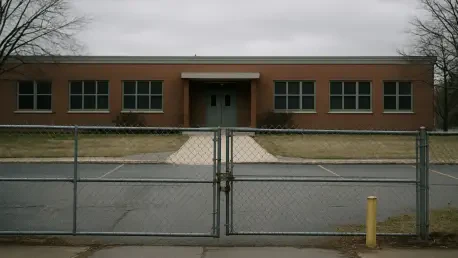

Superintendent Rubén Aurelio is moving to rightsize his district by closing underutilized buildings that were operating at less than half of their intended student capacity. This aggressive maneuver in Vallejo, California, is a microcosm of a nationwide contraction hitting public education from coast to coast. For students like Penny Núñez-Brandão, a fifth grader navigating a new campus after her neighborhood school shuttered, the administrative shift translates into a loss of familiar faces and community anchors. In the last academic year alone, 1,156 schools across the United States ceased operations, marking a post-pandemic peak that signals a fundamental realignment of the American educational landscape. These closures are not mere administrative adjustments but are the direct response to a “perfect storm” where dwindling birth rates intersect with the expiration of emergency federal aid. Education researchers from institutions like Stanford University and the University of Chicago suggest that the current wave of closures is actually lagging behind the rapid decline in student enrollment, indicating that even more significant financial and structural pain lies ahead for the American education system. This nearly 50% decline in specific regions has created staggering deficits that force administrators to prioritize survival over tradition, as seen in districts where a quarter of all campuses have already been slated for closure to prevent complete insolvency.
Identifying the Drivers of Enrollment Decline
Demographic Shifts and National Migration Patterns
The primary engine behind the current enrollment crisis is a sustained and systemic decrease in birth rates across the United States. This “baby bust” has led to a consistent year-over-year decline in the number of kindergartners entering the system, creating a hollowed-out effect that is now moving through elementary and middle school grades. In districts like Vallejo, which once served nearly 18,000 students, the population has plummeted to roughly 9,300, leaving thousands of desks empty and facilities underoccupied. This demographic shift is compounded by changing migration patterns; a federal crackdown on immigration has notably slowed the influx of new families who historically bolstered enrollment numbers in urban and working-class districts. As fewer families move into these areas and existing residents have fewer children, the traditional growth model for public schools has effectively collapsed. The resulting “rightsizing” efforts are a desperate attempt to align 20th-century infrastructure with 21st-century demographic realities, though the process often leaves local neighborhoods feeling abandoned and destabilized.
Furthermore, the geographic distribution of students is shifting away from traditional urban centers toward suburban and rural fringes, though even these areas are not immune to the broader birth rate trends. The economic pressure of rising housing costs in metropolitan areas has pushed many young families out of districts that were once thriving hubs of education. This exodus creates a secondary financial hit, as state funding is typically tied directly to average daily attendance. When a family moves across a district line, they take their per-pupil allocation with them, leaving the original district with the same fixed costs for building maintenance and utility bills but significantly less revenue to cover them. This imbalance makes the maintenance of older, half-empty campuses mathematically impossible for most school boards to justify. Consequently, the decision to close schools is often less about educational strategy and more about the cold reality of a shrinking tax base and a disappearing student population that shows no signs of returning to previous levels.
The Fiscal Cliff and Pandemic Funding
Beyond the demographic challenges, school districts are currently grappling with the abrupt expiration of pandemic-era financial relief. During the peak of the global health crisis, the federal government provided substantial one-time funding through the Elementary and Secondary School Emergency Relief program. While this funding was intended for temporary measures like ventilation upgrades and learning loss recovery, many districts used the money to stabilize their general operating budgets or to cover recurring costs such as staff salaries and benefits. As these federal lifelines evaporated in early 2024, they left behind massive budget holes that many districts had failed to plan for adequately. This “fiscal cliff” has forced administrators to make immediate and drastic cuts to bridge deficits that, in some cases, exceed tens of millions of dollars. The loss of these funds acts as a catalyst, accelerating closure timelines that might have otherwise been spread out over a decade.
The financial vacuum created by the end of emergency aid is projected to lead to a staggering loss of approximately $11.5 billion in annual state revenue for schools nationwide by the 2030-2031 academic year. This reduction in cash flow is expected to trigger widespread layoffs and the elimination of essential academic programs, further diminishing the appeal of traditional public schools. Many research groups, including WestEd, highlight that this revenue loss creates a self-perpetuating cycle of decline. As programs are cut and schools are consolidated, families who have the means to do so often opt for private or charter alternatives, which further drains the district’s student-based funding. This “flight” of students makes it even harder for districts to regain their footing, turning a temporary budget shortfall into a permanent structural crisis. For districts already struggling with low performance or high poverty rates, the expiration of pandemic aid has effectively removed the last buffer preventing total financial collapse.
The Rise of Modern Educational Alternatives
The post-pandemic educational marketplace has seen a significant expansion in the use of private school vouchers and a historic surge in homeschooling. Families dissatisfied with how traditional districts handled the transition to remote learning, or those seeking more specialized and ideologically aligned environments, are increasingly opting out of the public system entirely. This shift is not merely a temporary reaction; it represents a fundamental change in how American parents view the delivery of education. In several states, new legislation has made it easier for public funds to follow students to private institutions, directly siphoning resources away from local school districts. This competition for market share has forced traditional public schools to brand themselves more aggressively or risk losing their base. When a district closes a neighborhood school, it often provides the final nudge for parents to explore these alternatives, as they view the closure as a sign of institutional instability.
This surge in competition is particularly visible in the growth of charter schools, which often operate with more flexibility and lower overhead than traditional district-managed campuses. Many parents perceive charter schools as being more responsive to student needs, leading to a steady migration of students that leaves traditional districts with a higher concentration of individuals requiring expensive special education or English-language services. This “creaming” effect leaves the remaining public schools with the most challenging student populations and the least amount of flexible funding to support them. As homeschooling pods and micro-schools gain popularity, the concept of the “neighborhood school” as a universal community center is being eroded. For administrators, this means that “right-sizing” is not just about closing buildings; it is a battle to prove the continued relevance and value of a centralized public education system in an increasingly fragmented and consumer-driven educational landscape.
Evaluating the Comprehensive Consequences Resulting from the Systematic Consolidation of Local Educational Institutions
Financial Realities of Campus Closures
The consensus among school administrators is that shuttering buildings is the most effective way to address multimillion-dollar deficits, yet the actual financial relief yielded by these closures is often much lower than initial projections suggest. While a district may save on the immediate costs of electricity, heating, and administrative staff at a specific site, these gains are frequently offset by new, unforeseen expenditures. For instance, the logistical challenge of transporting students to more distant campuses often requires a significant increase in spending on busing contracts, fuel, and driver salaries. In many urban and suburban districts, the cost of expanded transportation networks can consume nearly half of the savings generated by the closure itself. Furthermore, the administrative complexity of managing a larger, consolidated student body at the remaining sites can necessitate the hiring of additional support staff, negating the reduction in personnel costs that was originally intended to balance the books.
Additionally, empty school buildings do not stop costing money once the students depart; they often become liabilities that drain resources. Unoccupied facilities are frequent targets for burglary, arson, and vandalism, forcing districts to invest in increased security, boarding up windows, and ongoing basic upkeep to prevent the properties from becoming neighborhood blights. The process of selling or repurposing these assets is also fraught with legal and political hurdles, often taking years to finalize while the district continues to pay for insurance and minimal maintenance. Research into past waves of closures indicates that the “downward spiral” triggered by these actions can lead to an exodus of families who are frustrated by the instability. Since funding is tied to enrollment, this loss of students can result in a net financial loss for the district, potentially necessitating even more closures in a self-perpetuating cycle of contraction that fails to solve the underlying deficit.
Examining the Comprehensive Social and Academic Consequences that Students Face Within Educational Environments
The impact of school closures extends far beyond the balance sheet, deeply affecting the academic performance and emotional well-being of the students involved. Data from the UChicago Consortium on School Research indicates that displaced students often suffer long-term setbacks in reading and math proficiency, a trend that is particularly pronounced when they are reassigned to other low-performing schools. The trauma of losing a familiar environment, combined with the stress of navigating a new social hierarchy and adapting to different teaching styles, can lead to increased absenteeism and a decline in student engagement. For many children, school is the primary source of stability and community; when that anchor is removed, the resulting “transition trauma” can manifest in behavioral issues and a loss of academic momentum that takes years to recover. These negative outcomes are disproportionately felt by low-income students and students of color, who are statistically more likely to attend schools targeted for closure.
On the campuses that remain open, the effects are visible in the form of increased classroom density and teacher burnout. As students from closed schools are funneled into the remaining buildings, class sizes often swell to 32 or 34 students, making it nearly impossible for educators to provide the individualized attention that struggling learners require. These crowded conditions create a high-pressure environment that accelerates teacher turnover, as experienced educators seek positions in more stable, less congested districts. When a veteran teacher leaves, they are often replaced by long-term substitutes or less experienced educators, leading to lapses in the continuity of instruction and a decline in the quality of student support services. This instability makes it difficult to attract new talent, as potential hires are wary of joining a district in the midst of a contraction. The erosion of the professional teaching corps further compromises the academic integrity of the district, making it even harder to convince families to stay.
Long-Term Planning and Community Stability
School closures frequently leave a physical and social vacuum in the neighborhoods they once served, leading to a decline in local property values and a loss of community identity. In many working-class areas, the local elementary school acts as a hub for social services, after-school programs, and community meetings. When the doors are locked, these vital connections are severed, leaving residents with fewer resources and a sense of abandonment by the local government. The physical presence of a boarded-up building can signal to potential homebuyers that a neighborhood is in decline, further depressing the local economy and reducing the property tax revenue that schools rely on. Administrators who view closures as purely financial decisions often fail to account for these broader socioeconomic impacts, which can have a “boomerang” effect on the district’s long-term health by making the community less attractive to the very families the district needs to recruit.
To mitigate these risks, some forward-thinking districts are attempting to engage in more transparent, multi-year planning processes that involve the community from the outset. Instead of sudden, reactionary closures, these districts use data-driven “right-sizing” strategies that look at demographic trends a decade into the future. By involving parents and local leaders in the decision-making process, administrators can sometimes find creative ways to repurpose underutilized space—such as co-locating senior centers, health clinics, or early childhood education programs within existing school buildings. This approach allows the district to retain ownership of the asset and maintain its role as a community hub while sharing operating costs with other agencies. While this does not eliminate the need for consolidation, it creates a more sustainable and less traumatic transition that prioritizes the long-term stability of the neighborhood over immediate, short-term budget fixes.
Comprehensive and Proactive Strategies are Essential for Ensuring the Long-Term Survival and Operational Stability of the District
Specialized Programming and Modernization Efforts
In an effort to break the cycle of decline, some school districts are moving away from purely defensive cost-cutting and toward proactive strategies designed to attract new families. Vallejo, for example, is attempting to reinvent itself by concentrating its limited resources on a smaller number of modernized campuses that offer specialized programming. One such initiative involves the opening of a Tagalog-language immersion school, designed to appeal to the region’s significant Filipino community. By offering a unique curriculum that parents cannot find in neighboring districts or private schools, the district essentially brands its offerings to compete in the educational marketplace. This strategy treats the district more like a charter network, focusing on niche markets to retain students who might otherwise leave. The goal is to transform the remaining schools into high-value destinations that offer more than just a standard education.
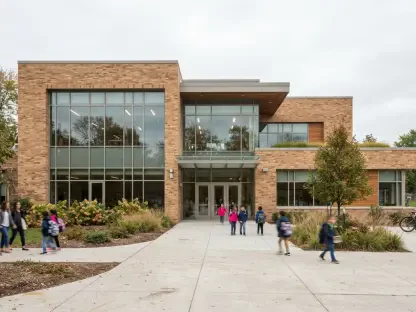
Infrastructure investment is another key component of this survival strategy, even in the face of significant deficits. Many districts are using remaining capital bonds to renovate older campuses, making them more technologically advanced and aesthetically appealing to young parents who are increasingly looking for modern amenities. By creating bright, well-equipped learning environments, districts hope to counter the perception that public schools are decaying relics of a bygone era. These modernization efforts often include the creation of “innovation labs,” updated athletic facilities, and integrated digital learning tools that rival those found in private institutions. While the upfront costs are high, administrators argue that these improvements are necessary to secure the district’s future. The “right-sized” version of the district is envisioned as a leaner, more efficient system that provides a higher quality of service to a smaller, more concentrated student population.
Aggressive Retention and Market Competition
To prevent further student flight, districts are also becoming more aggressive in their retention efforts and administrative policies. Some districts have begun more strictly managing interdistrict transfer requests, making it more difficult for families to take their state funding to neighboring areas. At the same time, they are ramping up their marketing efforts, offering campus tours, student showcases, and community events to highlight the success of their extracurricular and academic programs. This shift toward a “customer service” mindset is a direct response to the rise of vouchers and homeschooling. Administrators are increasingly recognizing that they can no longer take their student base for granted and must actively work to “sell” the value of a public education to their constituents. This involves a more sophisticated use of social media and community outreach to change the narrative surrounding the district’s challenges.
The success of these districts will depend on their ability to convince the remaining community that a “right-sized” system can still provide a path to a high-quality education. This requires a level of transparency and strategic communication that was previously rare in public school administration. By being honest about the necessity of closures and the benefits of consolidation, such as more robust elective offerings and better-funded special education departments at the remaining sites, districts can build a case for the new model. The transition is undeniably painful, but proponents argue that it is the only way to ensure the long-term viability of public education. As the landscape continues to shift, the districts that survive will likely be those that view themselves not just as government entities, but as competitive organizations that must earn the trust and attendance of every family in their community.
Future Considerations for Educational Leadership
The wave of school closures witnessed across the nation was a symptom of a larger structural shift in demographics and the economy. As administrators finalized their rightsizing plans, the focus shifted from managing decline to building a sustainable future. The lessons learned during this period of contraction emphasized that financial stability could not be achieved through cuts alone; it required a fundamental reimagining of what a public school district should be. Moving forward, educational leaders began to prioritize flexible facility use and cross-agency partnerships to ensure that schools remained integrated into the fabric of their communities. The goal was to create a resilient system that could adapt to further demographic fluctuations without resorting to the traumatic, large-scale closures that defined the mid-2020s.
Ultimately, the successful navigation of this crisis depended on a shift in mindset among school boards and local governments. They recognized that the traditional model of a school on every corner was no longer viable and that the path to quality education lay in the concentration of resources. By investing in specialized curricula and modernizing infrastructure, districts were able to stabilize their enrollment numbers and begin the process of rebuilding community trust. While the process of consolidation was difficult for many families, the result was a more efficient and academically robust system. The future of American public education will likely be defined by these “right-sized” districts that have learned to balance the harsh realities of a shrinking population with the enduring mission of providing every child with a world-class education.