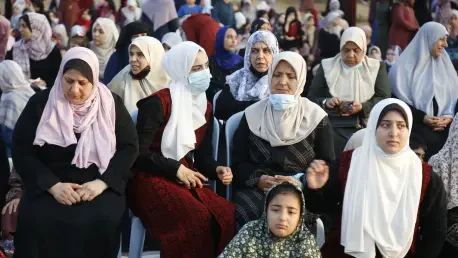

Activists are calling for a comprehensive legal review to determine if the new admission guidelines violate international conventions on non-discrimination and the right to education. This urgent demand follows the release of university entrance criteria for the 2026–2027 academic year, which has introduced significant gender-based restrictions across various departments in Syria. The Syrian interim government’s move to limit specific specializations to male students has ignited a fierce debate concerning the future of gender parity in the region. Civil society groups and feminist activists, such as Maysaa Al-Nabwani, argue that these regulations represent a systematic attempt to push women out of the public sphere and into pre-defined social roles. By centering enrollment on biological sex rather than academic capability, the current administration is perceived as dismantling years of progress toward educational inclusivity. This development has turned the academic landscape into a site of struggle for human rights and equality, as students and educators alike worry about the long-term implications for the nation’s professional workforce and social development.
Institutional Barriers and Social Impacts
Systemic Exclusion and Gender Stereotypes
The administrative framework for the 2026–2027 academic cycle introduced specific hurdles that systematically diverted female applicants away from high-demand specializations. These guidelines did not just appear as suggestions; they functioned as rigid gatekeeping mechanisms within the university registration system. Educators noted that the exclusion of women from technical and vocational institutes was particularly pronounced, reflecting a desire to keep women within traditional domestic or supportive roles. This systemic approach forced many highly qualified young women to reconsider their career paths or settle for degrees that did not align with their personal ambitions or professional scores.
Beyond the administrative technicalities, the enforcement of these restrictions signaled a deeper shift toward the entrenchment of patriarchal norms in Syrian society. Critics pointed out that by preventing women from accessing certain educational tracks, the state was actively participating in the creation of a stratified social structure. This approach not only discouraged female participation in the economy but also reinforced the stereotype that certain fields are inherently unsuitable for women. The psychological impact on students was profound, as many felt that their academic achievements were rendered irrelevant by the new gender-based criteria. This exclusionary mentality threatened to undo decades of social progress by treating gender as a definitive obstacle.
Redefining Professional Competence
The debate regarding professional qualification frequently challenged the government’s assumption that certain high-level roles are naturally suited for men. Activists asserted that the restriction of law, the judiciary, and media programs to male students was a direct assault on the concept of intellectual merit. These fields require analytical thinking, communication skills, and ethical judgment—qualities that are not tied to biological sex. By barring women from these sectors, the educational system deprived the nation of diverse perspectives that are essential for a fair judicial system and a robust media landscape.
This logic extended to technical and vocational fields, such as mechanical engineering and automotive technology, where women have historically faced significant barriers despite their proven capabilities. The interim government’s policy relied on the outdated notion that physical labor or technical complexity makes certain professions unsuitable for female students. However, evidence from recent years demonstrated that women who entered these fields often outperformed their male peers in precision and problem-solving. By codifying these gender restrictions, the government ignored the reality of modern industry, which increasingly values technical skill and innovation over raw physical strength.
Strategies for Reform and National Consequences
Legal Advocacy and Documentation Needs
To counter these discriminatory measures, a multifaceted strategy involving legal and societal pressure became necessary for those advocating for reform. This effort required a coordinated alliance between lawyers, human rights defenders, and civil society organizations to challenge the legality of the new admission guidelines. The primary objective was to conduct a rigorous analysis of these policies in relation to existing Syrian laws and international treaties that mandate equal access to education. By identifying specific legal violations, activists sought to create a formal basis for litigation or administrative appeals.
Simultaneously, the need for empirical documentation became a top priority for activists who wished to ground their advocacy in concrete reality. This involved the systematic collection of data and personal testimonies from female students who were directly impacted by the restrictive admission scores. By documenting cases where high-achieving women were denied entrance to their chosen fields solely because of their gender, civil society groups could illustrate the tangible loss of human potential. This evidence-based approach was essential for building a persuasive case in both the court of law and the court of public opinion. The collection of data provided the fuel for a sustained campaign.
Brain Drain and the Loss of Human Capital
One of the most concerning outcomes of these restrictive policies was the accelerated migration of talented young women seeking opportunities elsewhere. When the domestic educational system closed its doors to their ambitions, many students viewed relocation as the only viable path to professional fulfillment. This forced exodus represented a significant loss of intellectual capital that Syria could ill afford during its period of stabilization. The departure of aspiring doctors, engineers, and lawyers drained the country of the very expertise required to rebuild its infrastructure and social institutions.
Furthermore, the long-term institutional damage caused by this “brain drain” threatened to weaken the overall quality of Syrian higher education. As female students left, the diversity of thought and competitive spirit within universities declined, leading to a more stagnant academic environment. Experts warned that a gender-segregated workforce would be less adaptable to the demands of the global economy, further isolating the nation. The depletion of scientific and professional talent hindered the development of local institutions and weakened the social fabric, making the empowerment of women a critical investment for the future.
Education as a Foundation for Progress
The academic community recognized that the path forward required a radical departure from these exclusionary practices through structured policy reform. Advocates identified several key initiatives that promised to restore educational equity if they were implemented with sufficient political will. They emphasized that the first step involved a formal revocation of all gender-specific quotas in university departments to ensure that merit remained the only criterion for admission. This was accompanied by the proposal for an independent oversight committee composed of educators and legal experts to monitor the registration process for transparency.
The final phase of the reform strategy focused on mitigating the long-term damage caused by previous restrictions through proactive empowerment programs. This involved the creation of specialized scholarship funds and bridging courses that encouraged women to re-enter the technical and legal fields from which they were previously barred. By providing financial and academic support, the community aimed to rebuild the pipeline of female talent that had been disrupted by the discriminatory 2026 guidelines. These next steps were essential for ensuring a diverse and skilled workforce capable of addressing the complex challenges of the coming years. Highlighting these solutions proved that the country’s intellectual wealth depended on total inclusion.