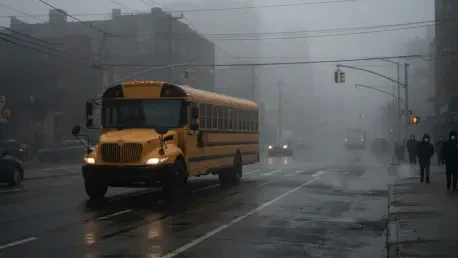

The Delhi Directorate of Education has mandated that all primary schools, including government and private institutions, must provide online alternatives to traditional in-person attendance. This significant directive comes as the National Capital Region faces an unprecedented atmospheric crisis characterized by a dense, toxic smog that has settled over the city following the recent festivities. As of early November, the air quality has plummeted into the “Very Poor” and “Severe” categories, with the Central Pollution Control Board reporting an average Air Quality Index of 376. In localized hotspots like the ITO monitoring station, readings have spiked above 406, creating a hazardous environment for the most vulnerable citizens. This deterioration resulted from a combination of stagnant meteorological conditions and lingering emissions, leaving the skyline obscured and residents struggling with respiratory issues. The government’s move signals a shift toward prioritizing student safety amidst a worsening environmental landscape.
Emergency Measures: The Graded Response Action Plan
To address the escalating health emergency, the Commission for Air Quality Management officially invoked Stage III of the Graded Response Action Plan across the entire Delhi-NCR region. This framework operates as a tiered emergency response system, designed to introduce increasingly restrictive measures as the atmospheric conditions decline. Stage III specifically targets scenarios where the AQI is forecasted to remain within the “Severe” range, necessitating immediate and aggressive interventions. Under these protocols, all non-essential construction and demolition activities have been halted to prevent further dust accumulation, while municipal bodies have ramped up mechanized road sweeping and water sprinkling. These steps are part of a broader legal effort to mitigate the impact of fine particulate matter, which poses a severe risk to long-term lung health. The activation of these measures highlights the severity of the current situation and the urgency of reducing local emission sources.
Beyond the immediate industrial and construction halts, the implementation of these emergency rules empowers educational authorities to fundamentally alter how schooling is conducted during the peak pollution season. The shift from Stage II to Stage III represents a critical threshold where public health concerns begin to outweigh traditional administrative routines. Consequently, the government has focused on minimizing the exposure of children to the toxic outdoor environment by leveraging the legal mandates provided under this framework. This regulatory approach is not merely a suggestion but a binding set of requirements that forces a reevaluation of daily operations across the city. By limiting vehicular movement and restricting polluting activities, the administration hopes to create a window of relief, though the effectiveness of these measures remains highly dependent on shifting wind patterns and regional weather stability. These protocols provide the necessary legal backing to transition thousands of students from physical to digital spaces almost overnight.
Hybrid Learning: Protecting Younger Generations
One of the most tangible outcomes of this policy shift is the transition to a hybrid learning model for students up to Class 5. This mandate applies to all educational entities, ranging from government-aided schools to those managed by the New Delhi Municipal Council and the Delhi Cantonment Board. By offering online alternatives, the city aims to provide parents with the flexibility to keep their children indoors while ensuring that the curriculum proceeds without significant delay. This synthesized approach recognizes that younger children are at a significantly higher physiological risk when inhaling the fine particulate matter characteristic of the winter smog. The transition has required a swift mobilization of digital resources, as teachers adapt their lesson plans to accommodate both remote and potentially in-person learners simultaneously. The goal remains to strike a delicate balance between educational continuity and the non-negotiable physical well-being of the city’s youngest residents.
Despite these hybrid arrangements, there has been a significant surge in public discourse regarding the status of schools during the crucial mid-November window. Parental advocacy groups have increasingly called for a total closure of all institutions between November 10 and 15, citing historical data that shows air quality reaching its lowest point during this period. These groups argue that the current reactive system, where changes are announced on short notice, creates logistical chaos and disrupts the consistency of the learning process for families. Instead, they are advocating for the creation of a proactive “pollution calendar” that would pre-emptively schedule online-only weeks based on statistical likelihoods of severe smog. While the government has yet to implement a blanket holiday for these specific dates, the tension between administrative caution and parental concern continues to grow. For now, older students are still expected to attend in-person classes, leaving many families anxious about the long-term health implications for teenagers.
Regional Impact: The Path Forward for Urban Health
The environmental crisis currently gripping the region is not isolated to the city limits of Delhi but extends throughout the satellite cities of the National Capital Region. Recent data shows a widespread decline in air quality, with Ghaziabad recording a “Very Poor” average AQI of 369 and specific areas like Loni reaching a dangerous “Severe” level of 459. Similarly, Noida and Greater Noida have experienced atmospheric conditions that are nearly as hazardous, with monitoring stations in high-traffic zones recording figures well above the 400 mark. These numbers underscore the reality that the smog blanket is a transboundary issue that ignores municipal borders, necessitating a more coordinated regional response. The high concentration of pollutants across the entire NCR suggests that localized school closures may only be a partial solution. Experts argue that until there is a unified strategy that addresses industrial and agricultural emissions across state lines, the health of millions of residents will continue to be jeopardized every winter season.
The prevailing consensus among environmental experts indicated that the volatile air quality required a permanent shift in how urban centers approached seasonal emergencies. Authorities recognized that the annual surge in pollution was no longer a temporary anomaly but a predictable crisis that demanded structured, long-term interventions. In response, the administration focused on expanding digital infrastructure to ensure that future transitions to remote learning occurred seamlessly. Schools began integrating environmental literacy into their core curricula, while government officials explored more aggressive traffic management systems to curb vehicular contributions. Furthermore, the push for a proactive pollution calendar gained significant traction, providing a roadmap for academic planning that prioritized public health without sacrificing educational rigor. Ultimately, the city moved toward a more resilient urban model, where data-driven decisions and regional cooperation served as the primary tools for safeguarding the next generation against the recurring threat of toxic air.