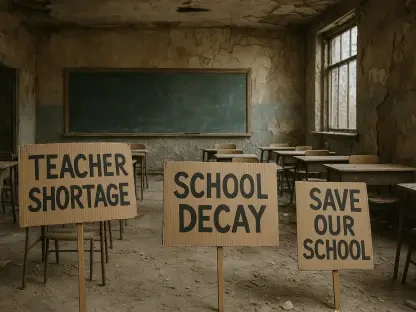

The quiet, suburban campus of Anna Maria College in Paxton, Massachusetts, currently stands at a precarious crossroads that mirrors a much larger existential threat facing small liberal arts institutions across the United States. While the college has long served as a cornerstone for Catholic education in the region, a recent and sobering notification from the Massachusetts Department of Higher Education has cast a long shadow over its future viability. State regulators have officially signaled that they can no longer confirm whether the college possesses the necessary financial resources to sustain its current level of operations or meet its fundamental academic obligations to its student body through the remainder of the 2026 academic year. This lack of confidence from the state has triggered a mandatory requirement for the institution to develop comprehensive contingency plans, which must include detailed preparations for significant downsizing or a potential orderly closure if fiscal stability is not quickly restored.
Structural Challenges and Regulatory Oversight
Assessing the Financial Stability Mandate: Risks and Requirements
The directive issued by the Massachusetts Department of Higher Education represents a significant escalation in regulatory oversight, reflecting a deep-seated concern regarding the institution’s immediate liquidity. Under state law, regulators are tasked with monitoring the financial health of private colleges to protect students from the fallout of sudden institutional collapses, which have become increasingly common in the higher education landscape. The current mandate requires Anna Maria College to provide a clear roadmap for how it would handle student transfers and records should the worst-case scenario manifest. This level of scrutiny follows a period where the college’s financial indicators suggested that its available capital might not cover its projected expenses for the 2026 fiscal cycle. Consequently, the administration is now under immense pressure to prove that its survival strategy is based on realistic revenue projections rather than optimistic forecasting.
Building on the regulatory pressure, the college’s internal financial data reveals a complex web of debt and contractual obligations that have become difficult to manage. The institution is currently grappling with approximately $18.4 million in total debt, a substantial portion of which is tied to state-issued notes that require consistent and predictable revenue streams to service. This situation reached a critical point during the previous fiscal year when the college inadvertently breached a loan covenant, a technical default that could have led to immediate demands for repayment. Although the lender eventually granted a waiver, the incident underscored the extreme fragility of the college’s balance sheet. The biweekly meetings held by the Board of Trustees reflect the urgency of the situation, as they must now monitor daily cash flow metrics and explore every available strategic option to prevent another technical default that could lead to an immediate shutdown.
Demographic Shifts and Enrollment Realities: The Sector-Wide Squeeze
The financial instability at Anna Maria College is not an isolated phenomenon but is deeply rooted in shifting demographics and structural challenges within the broader higher education sector. Since the start of the current five-year cycle in 2021, the college has experienced a staggering 16.6% decline in its student population, leaving it with a total enrollment of roughly 1,202 students. This slump is part of a national trend often referred to as the demographic cliff, where a shrinking pool of college-aged individuals has created hyper-competition among small institutions. For a tuition-dependent school like Anna Maria, every empty seat represents a direct hit to the operating budget, making it nearly impossible to maintain aging facilities and specialized academic programs. The resulting multimillion-dollar losses have forced the administration to acknowledge that the traditional model of small-scale liberal arts education is becoming increasingly unsustainable.
Beyond the numbers, the crisis reflects a systemic trend affecting small, private religious institutions that lack the massive endowments of their larger counterparts. As operational costs for technology, security, and specialized staffing continue to rise, these schools find themselves in a pincer movement of declining revenue and escalating overhead. Many similar institutions across New England have already been forced to cease operations or merge with larger universities to survive. The state’s insistence on contingency planning highlights the very real possibility that Anna Maria may be forced to drastically reduce its academic footprint or cease operations entirely if its financial trajectory does not see a significant reversal. This reality has created an atmosphere of uncertainty on campus, as students and faculty alike weigh the value of their long-term commitment against the institution’s immediate risk of insolvency.
Navigating the Crisis through Strategic Reform
Immediate Fiscal Interventions and Philanthropy: Stabilizing the Balance Sheet
In an aggressive attempt to bolster its liquidity and satisfy state regulators, the college administration has implemented several drastic cost-cutting measures and restructuring initiatives. These efforts have included significant staff reductions and a comprehensive review of operational efficiencies to trim any non-essential spending from the annual budget. To bridge the immediate gap, the institution recently received a critical $5.3 million anonymous gift, which provided a much-needed infusion of cash to stabilize day-to-day operations. Furthermore, the college is currently awaiting the disbursement of a $2.8 million federal tax credit, which is expected to provide further temporary relief. While these one-time injections of capital are vital for short-term survival, they do not resolve the underlying structural deficit that has plagued the institution’s finances over the last several years of operations.
The focus of the administration has now shifted toward converting these temporary financial cushions into a long-term stabilization plan that can withstand future economic volatility. Leaders are working to ensure that the current influx of capital is utilized to modernize recruitment efforts and update high-demand academic programs rather than simply covering existing debt service. The success of these interventions hinges on the college’s ability to demonstrate to both lenders and state officials that it can operate within a balanced budget without relying on unpredictable philanthropy. By restructuring its internal financial controls and maintaining a disciplined approach to spending, the college aims to regain the trust of the Department of Higher Education. However, the path to full recovery remains steep, as the institution must still navigate the high interest rates and restrictive terms associated with its existing $18.4 million debt load.
Academic Innovation and Long-Term Sustainability: Rebuilding the Student Base
To foster long-term growth and counteract the enrollment decline, Anna Maria College is aggressively pursuing new revenue initiatives that move beyond traditional undergraduate recruitment. A primary pillar of this strategy involves developing robust dual enrollment partnerships with local high schools and community colleges, allowing students to earn college credits before they even step onto the Paxton campus. By positioning itself as a more affordable and accessible option for local families, the college hopes to create a reliable pipeline of new students. Early indicators for the fall 2026 semester suggest that these efforts may be bearing fruit, as deposits are currently outpacing the levels seen in previous years. This uptick in interest provides a glimmer of hope that the college can successfully pivot its business model toward a more community-integrated and vocationally focused academic structure.
In addition to expanding recruitment pipelines, the college is focusing its resources on specific academic programs that are currently seeing growth, such as health sciences and criminal justice. By leaning into its strengths in these high-demand fields, the administration hopes to differentiate the institution from other small colleges that offer more generalized liberal arts degrees. The goal is to create a more resilient institutional identity that appeals to career-minded students who are increasingly concerned about the return on their educational investment. Despite the state’s warning and the requirement for contingency planning, college leaders expressed cautious optimism that these strategic shifts will ultimately preserve the institution’s mission. The upcoming academic cycles will be the ultimate test of whether these innovations can generate enough revenue to offset the institutional debt and secure the college’s place in the competitive education market.
The Board of Trustees and administration identified several critical steps that were necessary to navigate this period of intense fiscal instability and regulatory scrutiny. Stakeholders prioritized the diversification of revenue streams through the expansion of professional certification programs and adult education initiatives to reduce the college’s over-reliance on a shrinking traditional student demographic. It was determined that the institution had to maintain transparent and frequent communication with the Massachusetts Department of Higher Education to ensure that contingency plans remained updated and aligned with state safety standards. Faculty and staff were encouraged to participate in a campus-wide efficiency audit to identify further opportunities for cost savings without compromising the quality of student instruction. By focusing on niche academic markets and aggressive local recruitment, the college established a framework intended to prove its long-term viability and avoid the permanent closure that has claimed so many other small private institutions.