
The shift from measuring raw bandwidth to assessing the actual user experience marks a fundamental change in how educational institutions manage their digital ecosystems. This transformation occurs as classrooms become hyper-connected hubs where artificial intelligence, high-definition streaming, and real-time collaboration are no longer luxuries but standard requirements for daily instruction. For years, IT directors focused on increasing gigabits per second, assuming that more capacity would naturally lead to better learning outcomes. However, the reality of 2026 has shown that high speed does not equate to reliability if students cannot authenticate their devices or if a teacher’s interactive whiteboard freezes during a pivotal lesson. The growing complexity of these environments means that traditional metrics often mask underlying friction points. By prioritizing the end-user experience, school districts are finally addressing the disconnect between technical specifications and pedagogical needs, ensuring that technology serves as a bridge rather than a barrier to academic achievement.
The Evolution: Legacy Systems and User Outcomes
Part 1: Overcoming the Limitations of Fragmented Infrastructure
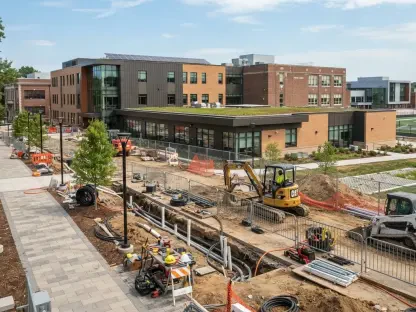
Fragmented and aging network infrastructures are increasingly unable to handle the sophisticated demands of modern educational software. Many districts are currently operating on equipment that was never designed to support the density of devices found in a typical classroom. When dozens of students simultaneously attempt to access cloud-based AI tools or participate in immersive virtual reality simulations, legacy switches and access points often buckle under the pressure. This inadequacy is particularly challenging for small IT teams who find themselves trapped in a cycle of reactive troubleshooting. Without a unified view of the network, these technicians spend hours chasing phantom connectivity issues that disrupt learning and frustrate educators. The sheer volume of internet-of-things devices, from security cameras to climate sensors, adds layers of security risk and management complexity that older systems cannot mitigate. Consequently, the push for modernization is driven by a need to simplify operations while maintaining the robust security protocols required for data privacy.
Part 2: Redefining Performance Through the Student Experience
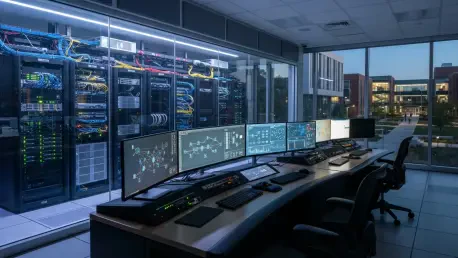
Moving away from purely technical metrics requires a fundamental shift in how network administrators interpret data. In the past, uptime was the primary indicator of health, yet a network could be technically functional while providing such high latency that video conferencing becomes impossible. Experience-driven networking focuses on whether the infrastructure is truly enabling students and teachers to reach their goals. This approach utilizes centralized management platforms to translate raw packet data into actionable insights about classroom performance. For instance, instead of seeing a general drop in signal strength, an IT professional can now pinpoint a specific wing where student devices are struggling to maintain a stable connection during testing. By analyzing telemetry data through the lens of the user, schools can prioritize interventions based on the severity of the impact on instruction. This methodology transforms the network from a silent utility into a strategic asset that provides measurable value to the mission of fostering a dependable environment.
Modernizing Operations: Intelligence and Resource Management
Part 3: Strategic Upgrades Through Enhanced Network Visibility
Financial constraints and limited staffing often make comprehensive network overhauls impossible for many public school districts. Rather than pursuing a total replacement of existing hardware, forward-thinking institutions are adopting a more surgical approach to infrastructure upgrades. By leveraging deep network visibility, IT leaders can identify exact bottlenecks—such as a single outdated switch or a poorly positioned access point—that may be causing widespread performance issues. This targeted strategy allows districts to allocate their limited budgets where they will have the most significant impact on the daily experience of students and staff. Building intelligence into the current network through software-defined solutions allows for incremental improvements that evolve alongside technological trends between 2026 and 2028. This philosophy of continuous, data-driven improvement ensures that every dollar spent directly enhances the classroom environment and supports overarching academic achievement without requiring massive capital expenditures.
Part 4: Future-Proofing Education with Automation and Insight
Looking back at the recent evolution of campus connectivity, it became clear that the most successful districts were those that embraced unified and scalable network architectures. These institutions moved beyond the era of isolated hardware management and adopted holistic platforms that prioritized ease of use and comprehensive visibility. By implementing automated diagnostic tools and experience-based monitoring, they established a resilient foundation that successfully adapted to the rapid integration of advanced classroom technologies. For administrators moving forward, the next logical step involved conducting a thorough audit of current visibility capabilities to identify where user experience data is lacking. Investing in software-defined networking allowed these schools to extend the lifespan of their hardware while gaining the intelligence needed for future-ready operations. Maintaining a focus on the end-user journey remained the most effective way to ensure that digital tools stayed a powerful catalyst for learning while minimizing the burden on specialized staff.