
Camille Faivre is a seasoned expert in education management, specializing in the delicate balance of institutional implementation and e-learning strategies. With a professional background rooted in navigating the post-pandemic restructuring of higher education, she brings a unique and critical lens to the rising friction between administrative leadership and faculty bodies. In our discussion, we explore the mechanics of institutional trust, the tangible consequences of leadership challenges, and the ways transparency can bridge the widening gap in academic governance. Faivre sheds light on the evolving nature of no-confidence votes, emphasizing that these actions are far more than symbolic gestures; they are powerful indicators of a university’s internal health and its capacity to survive financial and social turmoil.
When a faculty body passes a no-confidence resolution, how does this shift the power dynamic within the institution, and what does it reveal about the underlying health of the university’s governance?
A no-confidence vote is a seismic shift that transforms a symbolic expression of frustration into a substantive threat to leadership stability. Data suggests that in over half of the cases, specifically within a set of 75 reviewed instances, the targeted college president exits their role within a 12-to-15-month timeframe. This isn’t just a political statement; it is a visceral signal that the shared governance model has fundamentally broken down, often leaving faculty feeling that their backs are against the wall. When you look at the University of Nebraska-Lincoln, faculty weren’t just complaining; they were holding press conferences through their chapter of the American Association of University Professors and speaking at board meetings to fight program cuts. The eventual no-confidence vote against the chancellor served as a final, desperate lever when all other advisory channels failed to stall decisions. It reveals a landscape where the erosion of tenure and the marginalization of faculty in decision-making have reached a boiling point.
What are the primary factors currently driving the recent uptick in these votes, and why are we seeing them used more frequently than in previous decades?
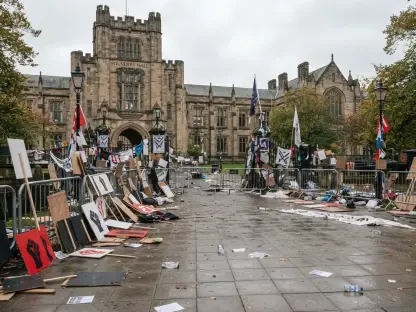
We are witnessing an unmistakable uptick in these measures because the financial and social pressures on higher education have intensified to a point where traditional diplomacy no longer feels sufficient. In the last three or four years, the frequency of these votes has increased as institutions grapple with massive budget deficits and the resulting suite of program eliminations, similar to the protests seen at West Virginia University. Faculty members are reacting to a perceived indifference to shared governance, where administrative decisions on enrollment or spending are made behind closed doors without their wealth of knowledge. Furthermore, fast-moving crises—such as the rapid-fire decisions required during the COVID-19 pandemic or the handling of campus protests—have often circumvented the normal timing for faculty input. This perceived impulsiveness from leadership creates a sense of betrayal that faculty are increasingly willing to address through formal, aggressive disapproval.
How can a university transition from a top-down administrative style to a more functional, collaborative model that involves faculty in high-stakes financial decisions?
Transitioning to a functional model requires a deliberate choice to treat transparency as a source of power rather than a threat, which means involving faculty in the official budgeting process from the very beginning. One of the most effective actions a university can take is to form a dedicated budget committee comprising student representatives, administrators, the CFO, and faculty who are charged with regularly reviewing revenue and expenses. We’ve seen instances where even the most vocal administrative antagonists, when placed on a board of trustees, become outstanding members because they finally have access to the data-informed reality of the institution’s finances. When faculty are excluded, they often don’t realize “how bad it is” until the moment of crisis, which makes the eventual cuts feel like a sudden attack rather than a collective sacrifice. By having the president make regular, detailed presentations to the university senate, the administration can take faculty input to heart and ensure that those who are most affected by policy changes have a hand in shaping them.
In moments of severe financial distress where deep cuts are inevitable, what specific actions can leaders take to mitigate the trauma and maintain some semblance of institutional unity?
When an institution is truly broken, as was the case with Henderson State University, the human toll of eliminating 45 faculty positions is almost impossible to avoid, but the manner in which it is handled determines the long-term survival of the campus culture. Leaders must recognize that displacing people from their careers and livelihoods causes a level of human trauma that cannot be solved by spreadsheets alone. In that specific case, despite the pain, there was an appreciation for the willingness of leadership to step in and try to save the institution, provided there was a common mission and a connection with the people involved. Presidents must go beyond the “badge of honor” mentality—where they feel that a no-confidence vote simply means they are making “hard decisions”—and instead lean into empathy and direct communication. Calling affected faculty members personally and explaining the necessity of the actions while acknowledging their contributions is a difficult but essential step in managing the total human experience of a university in crisis.
How are external political forces and changes in federal policy influencing the way faculty bodies interact with their administration right now?
The external environment is becoming a lightning rod for internal conflict, especially as state legislatures and governors sign laws that strip faculty senates of their traditional influence. At the University of Kentucky, for instance, the decision to do away with the power of the university senate led directly to a no-confidence vote, illustrating how administrative alignment with restrictive policies can alienate the academic core. We are also seeing faculty grapple with whether to become more aggressive or more cautious as higher education is targeted by shifting federal administrations and funding policies. There is a concern that “piling on” with internal votes during a time of external political targeting might further damage the institution, yet the tension over athletics spending versus academic funding continues to be a major point of friction. This environment is pushing some faculty to look beyond the president and consider no-confidence votes against the governing boards themselves, as they lose faith in the board’s ability to protect the institution’s core mission.
What is your forecast for the future of university leadership in an era where institutional trust seems to be at an all-time low?
My forecast is that we will see a continued rise in no-confidence measures as the financial “culture of scarcity” forces more institutions to make drastic program reductions that hit the very heart of the faculty’s livelihood. We are moving toward a reality where “transparency” will no longer be an optional leadership style but a survival requirement for any president who wishes to remain in office longer than the typical 12-to-15-month exit window following a major dispute. Future leaders will have to turn their governance into a genuine learning model, where the expertise of the faculty is leveraged to solve revenue and cost problems rather than being treated as a barrier to administrative efficiency. If institutions do not integrate faculty into the fiduciary and budgetary planning process now, the resulting fear and anxiety will inevitably lead to more leadership exits and lasting tensions that could take decades to heal. The universities that thrive will be those that recognize shared governance not as a hurdle, but as the only sustainable way to navigate the ongoing political and financial storms facing higher education.