
For generations, the American university system was heralded as the definitive engine of social mobility, promising a stable middle-class life in exchange for a few years of rigorous academic study and personal growth. However, this foundational belief is currently undergoing a radical transformation as the national consensus on the value of a degree continues to erode across nearly every demographic sector. What used to be a point of pride for families has morphed into a source of anxiety, fueled by rising tuition costs and a perceived misalignment with the needs of the modern economy. This shift is not merely a temporary dip in public approval but reflects a deeper systemic questioning of the institution’s purpose and its ability to deliver on its historical promises. As traditional pathways to success are reevaluated, the prestige once associated with elite and state institutions alike is being replaced by a pragmatic skepticism that prioritizes tangible outcomes over pedigree. This erosion of trust suggests that the higher education sector must navigate a period of intense scrutiny to justify its continued relevance in a society that is increasingly wary of the debt and ideological friction associated with a four-year degree.
The Role of Identity and Educational Background
Partisan Trends: The Deepening Republican Skepticism
Political affiliation has emerged as one of the strongest predictors of confidence in higher education, with Republican voters expressing significant concerns regarding the ideological environment found on many campuses. Many on the right argue that universities have moved away from their mission of fostering open debate, instead becoming echo chambers for a specific set of cultural views that alienate a large portion of the population. This perception has led to a sharp drop in support, as these critics increasingly view the university as a partisan entity rather than a neutral ground for scholarship. Legislative efforts in various states have already begun to reflect this discontent, targeting diversity programs and tenure protections as a way to force institutional reform. The friction between conservative values and the prevailing culture of academia has created a rift that seems to widen each year, making it difficult for institutions to maintain a broad base of support. This persistent ideological divide has transformed the university into a central battlefield in the nation’s ongoing cultural conflicts.
Partisan Trends: The Shift in Democratic Confidence
While Republicans have traditionally been the primary skeptics, recent trends indicate that Democrats are also experiencing a notable decline in their trust toward higher education systems. This shift is particularly striking because the Democratic base has historically been the most stalwart defender of the university’s role in society. However, rising concerns over accessibility and the commodification of education have led many left-leaning individuals to question whether the current model serves the public interest or simply reinforces existing socioeconomic disparities. The failure of many institutions to address the student debt crisis or to ensure that graduates from all backgrounds can achieve financial stability has dampened the enthusiasm of even the most ardent supporters. As a result, the crisis of confidence has become a bipartisan issue, signaling that the dissatisfaction is rooted in deep-seated structural problems rather than simple political posturing. The convergence of these trends suggests a fundamental break in the social contract between the public and the university.
Degree Satisfaction: The Outlook of Postgraduate Alumni
Educational attainment itself plays a significant role in shaping these perceptions, as those who have reached the highest levels of schooling tend to maintain the most positive outlook. For individuals who have earned master’s or doctoral degrees, the return on investment often appears more tangible, as these credentials frequently lead to specialized careers with higher earning potential and greater job security. Consequently, this group remains the most likely to defend the current university structure, seeing it as an essential component of professional advancement and intellectual fulfillment. In contrast, those who stopped their education after a bachelor’s degree are showing signs of increased frustration, often feeling that their undergraduate experience did not provide a sufficient advantage in the competitive labor market. This discrepancy suggests that the degree premium is being questioned most by those who find themselves in the middle of the educational hierarchy, where the costs of attendance may not always be offset by the eventual career outcomes.
Degree Satisfaction: The Perspective of Non-Degree Holders
The perspective of individuals who never completed a degree or never enrolled in college provides a sobering view of the current state of higher education. For this segment of the population, the university system is often viewed as an exclusive club that is both prohibitively expensive and increasingly irrelevant to their daily lives. The perception that a college degree is a mandatory gatekeeper for decent employment has led to a sense of resentment among those who feel sidelined by a credential-obsessed economy. Furthermore, as alternative paths like trade schools, certifications, and apprenticeships gain popularity, the necessity of a four-year degree is being actively challenged in favor of more direct routes to vocational success. This growing sentiment underscores a broader cultural shift where the prestige of a traditional academic path is no longer taken for granted. Without a clear demonstration of value to those outside the university bubble, institutions risk further alienating a significant portion of the workforce they are designed to serve.
Major Drivers of the Public’s Skepticism
Institutional Challenges: Navigating Cost and Politics
The astronomical rise in tuition costs remains the most cited reason for the public’s eroding faith in the university system as an accessible gateway to success. Over the last several years, the price of attendance has outpaced inflation and wage growth, forcing many students and their families to take on substantial loans that can take decades to repay. This financial burden has transformed the pursuit of education from a path toward freedom into a significant economic risk that many are no longer willing to take. At the same time, a significant portion of the public worries that campuses are focusing more on political agendas than on objective academic inquiry, creating a disconnect between institutional values and public expectations. Beyond ideological concerns, there is a growing fear that colleges are failing to equip students with practical skills for the modern economy. This tension highlights a fundamental disagreement over whether the primary goal of college is to create informed citizens or to produce a prepared workforce in a competitive world.
Future Resilience: Adapting to Technological Disruption
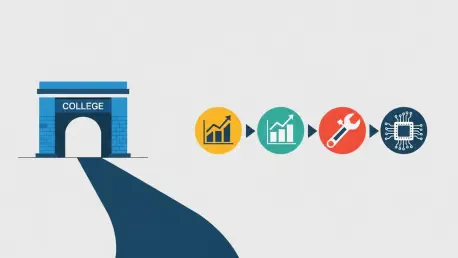
The rapid advancement of artificial intelligence introduced a new layer of uncertainty regarding the necessity of a traditional four-year degree for modern professionals. As AI tools became increasingly capable of performing complex analytical tasks, writing, and coding, the specific skills that many college programs focused on were automated at an unprecedented rate. To address these challenges, forward-thinking institutions moved toward a more transparent and outcome-oriented approach to education. Leaders in the sector recognized that restoring public trust required a direct confrontation with the issues of affordability and ideological balance. Many schools successfully implemented tuition freezes and expanded work-study programs that integrated professional experience directly into the curriculum. These steps helped bridge the gap between academic theory and practical application, making the value of a degree more apparent to a skeptical public. By focusing on high-impact practices and demonstrating a commitment to preparing students for a rapidly evolving landscape, some institutions reclaimed their roles.