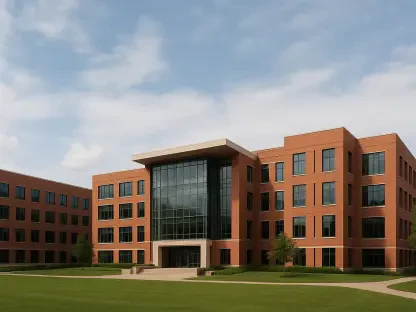

The rhythmic scraping of chalk against a blackboard has increasingly been replaced by the subtle click of a mouse and the low hum of cooling fans as education undergoes its most significant transformation since the invention of the printing press. While the fundamental goal of developing the human mind, body, and spirit remains unchanged, the physical environment where this development occurs is no longer tethered to a single zip code or a brick-and-mortar facility. For generations, the classroom served as the exclusive sanctuary for knowledge transfer, but the rapid evolution of information technology has decentralized the learning experience, pushing it into a dynamic digital frontier. The legacy of the global health crises earlier in the decade acted as a permanent catalyst, proving that digital tools are not merely elective enhancements but are essential pillars for a resilient educational infrastructure. As academic institutions in 2026 continue to refine these methodologies, the conversation has moved past whether technology belongs in schools and has instead focused on how to harmonize virtual efficiency with the irreplaceable human element of traditional teaching. This transition demands a careful examination of how digital ecosystems function, the global pressures necessitating their adoption, and the long-term impact on student well-being and academic rigor within a rapidly changing society.
Structural Foundations of Modern Digital Instruction
The transition to a digital learning ecosystem functions by meticulously replicating the multifaceted interactions of a traditional classroom through high-speed internet and sophisticated software suites. Instead of relying on physical textbooks and hand-delivered assignments, contemporary students utilize powerful Learning Management Systems like Canvas, Blackboard, or Moodle to organize their academic lives. These platforms serve as virtual campuses where live video lectures through Zoom or Microsoft Teams are augmented by interactive digital repositories containing high-definition video content, collaborative documents, and real-time feedback loops. This technological architecture allows the entire academic process to migrate into any location with a stable connection, effectively turning a home office or a library corner into a fully functional laboratory for intellectual growth. By removing the geographical constraints of the physical desk, the system offers an unprecedented level of flexibility that caters to diverse learning speeds and personal schedules, making education more personalized than it ever was in the era of rigid classroom bells.
Beyond the convenience of remote access, this digital shift provides a critical safety net that ensures the continuity of the global education system during periods of extreme instability. The movement of instructional resources to secure cloud-based servers means that schools no longer face total paralysis when physical buildings are rendered inaccessible due to social unrest, infrastructure failures, or local emergencies. By maintaining a permanent digital twin of their curriculum, institutions can pivot to fully virtual operations within hours, protecting students from the devastating loss of academic time that historically occurred during crises. This resilience is further bolstered by the integration of asynchronous learning tools, which allow students to interact with course materials even if they cannot attend a live session. This structural robustness has transformed education from a fragile, location-dependent service into a persistent, adaptable resource that can withstand the unpredictable challenges of the modern world, ensuring that the pursuit of knowledge is never truly interrupted.
Socio-Environmental Catalysts for Rapid Academic Shifts
The global movement toward virtual and blended learning models is largely a response to a pressing humanitarian crisis where millions of children remain excluded from traditional school systems. In regions afflicted by prolonged conflict or severe economic inequality, the physical infrastructure required to support thousands of students is often nonexistent or severely compromised. Digital platforms provide a vital bypass to these physical barriers, allowing displaced populations and underserved communities to access high-quality instruction provided by educators thousands of miles away. Initiatives utilizing satellite-based internet services, such as Starlink, have begun to bridge the connectivity gap in remote areas, ensuring that a student’s potential is no longer dictated by the limitations of their local geography. This democratization of access is not merely a technological achievement but a social imperative, as it provides a pathway for marginalized individuals to acquire the skills necessary to participate in the global economy without requiring massive investments in new physical school buildings.
Environmental volatility is also emerging as a dominant factor in the accelerated adoption of digital alternatives within the educational sector. As extreme weather events, including unprecedented heatwaves and recurring flood cycles, become more frequent, physical school closures have become a major threat to educational consistency. In these scenarios, online learning serves as an essential lifeline that prevents environmental disasters from permanently stalling a student’s cognitive development or future career prospects. Virtual classrooms allow for the continuation of the syllabus while keeping students safe from extreme temperatures or hazardous travel conditions, effectively decoupling academic progress from the immediate state of the local climate. This adaptation strategy is becoming a standard component of urban planning, as cities recognize that a digitally integrated education system is far more capable of weathering the physical challenges of a changing planet than a system reliant solely on traditional, localized infrastructure.
Navigating the Complexities of Virtual Classroom Outcomes
Adopting a virtual-first or blended pedagogical model introduces several clear advantages that enhance the overall efficiency of the learning process for the modern era. Without the logistical burden of a daily commute, students often find they have more time to dedicate to deep study, extracurricular pursuits, and adequate rest, leading to a more balanced lifestyle. Furthermore, the digitalization of resources promotes environmental sustainability by drastically reducing the consumption of paper and the carbon emissions associated with large-scale student transportation. Perhaps most importantly, the constant immersion in digital environments helps students naturally develop the technical fluency and remote collaboration skills that are now mandatory in the professional world. By learning to manage digital workflows and master complex software early in their academic careers, students are better prepared for a global job market that increasingly prizes digital literacy and the ability to operate effectively within decentralized, technology-driven teams.
Despite these significant benefits, the virtual model presents substantial challenges regarding the physical health and social integration of the student body. Prolonged exposure to screens has been linked to a variety of physiological issues, including digital eye strain and poor posture, while the absence of physical proximity can foster a sense of social isolation. The lack of spontaneous, face-to-face interaction often inhibits the development of soft skills such as non-verbal communication and conflict resolution, which are traditionally cultivated on the playground and in crowded hallways. Furthermore, the digital divide remains a persistent obstacle, as students from lower-income households may struggle to afford the high-performance hardware or reliable high-speed connections required to participate fully. This disparity creates a risk where the move toward digital education could inadvertently widen the gap between those with technological abundance and those who are left behind, necessitating targeted interventions to ensure that the digital shift does not become a new form of systemic exclusion.
The shift toward home-based learning also raises critical questions about academic discipline, integrity, and the quality of student engagement. In a traditional classroom, the presence of an instructor and peers provides a structured environment that minimizes distractions and encourages active participation. Conversely, a student at home faces a constant barrage of digital interruptions from social media, gaming, and other domestic distractions that can undermine their focus and retention. Ensuring that assessments remain fair and that students are actually learning the material—rather than simply navigating around proctoring software or utilizing generative AI to complete tasks—requires a complete overhaul of traditional testing methods. Educators must now move toward more complex, project-based assessments and oral examinations that require a deeper level of critical thinking. This evolution in pedagogy is necessary to ensure that the convenience of online learning does not come at the expense of genuine academic achievement or the development of a disciplined work ethic.
Strategic Integration and the Blended Future
Governmental agencies and educational policymakers have responded to these challenges by establishing national digital portals and implementing comprehensive digital health guidelines. These initiatives are designed to provide free, high-quality educational content to the public, utilizing a variety of delivery methods ranging from advanced AI-driven tutoring platforms to traditional broadcast television in areas where internet access is still limited. By setting strict standards for screen time and encouraging “digital hygiene,” regulators are attempting to mitigate the health risks associated with excessive computer use while still harvesting the benefits of online instruction. These frameworks often include funding for teacher training, ensuring that educators are not just using technology to post PDFs, but are instead creating immersive, interactive experiences that leverage the full potential of digital media to inspire their students. Such strategic oversight is essential for creating a cohesive system that treats technology as a tool for empowerment rather than a source of distraction or harm.
The discussion surrounding modern education ultimately recognized that the most effective path forward was the establishment of a robust blended learning framework. This approach successfully combined the logistical efficiency and personalized pacing of digital tools with the vital social and character-building benefits found within the physical classroom. By viewing technology as a bridge rather than a replacement, academic institutions were able to maintain continuity during emergencies while preserving the school building as a hub for community, social development, and hands-on experimentation. Moving forward, stakeholders must prioritize the closing of the digital divide by treating high-speed internet as a fundamental utility rather than a luxury. Additionally, there was a clear need for schools to reinvest in mental health support and social-emotional learning programs to counter the isolation sometimes caused by virtual interfaces. Through this balanced integration, the education system moved toward a future that was more inclusive, resilient, and better aligned with the demands of a technologically integrated global society.