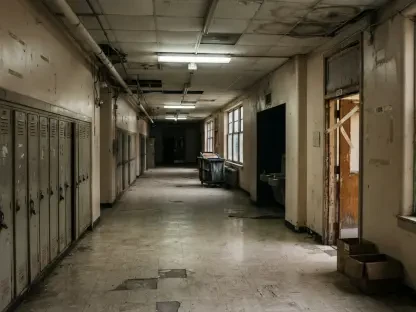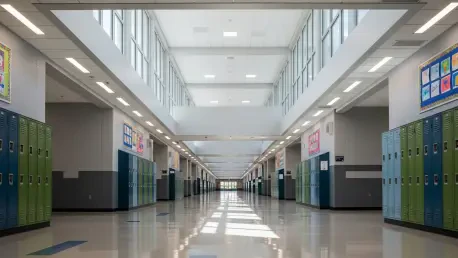

The echoing silence now permeating the sprawling hallways of Collinwood High School serves as a stark testament to the profound shifts occurring within the urban educational landscape of Cleveland. This landmark institution, which once anchored the surrounding community with its vibrant energy, recently navigated its final weeks of operation before becoming a quiet relic. Beyond the administrative logistics of shuttering a large facility, the closure provided a window into the emotional transformation of a school that evolved from a powerhouse into a decommissioned space. To document this transition, a storytelling initiative empowered twenty seniors to capture their daily lives using disposable cameras. This choice bypassed formal records in favor of a raw, intimate perspective, ensuring the final chapter of the school was recorded through the eyes of those who lived it. By focusing on these students, the narrative shifted from bureaucratic data to the shared human experience.
The Transformation of a Regional Powerhouse
The Evolution of an Urban Institutional Case Study
The transition of Collinwood from a regional educational powerhouse to its current state of decommissioning serves as a case study in urban institutional evolution. In the middle of the current decade, the school faced the inevitable reality of structural shifts that have been gaining momentum across the city. This transformation was not an overnight occurrence but rather a gradual recalibration of space as the surrounding neighborhood demographic underwent significant changes. As the facility prepared for its final chapter, the emphasis moved away from long-term planning toward the preservation of historical identity and the immediate needs of the remaining students. This period was marked by a dual sense of mourning and celebration, as stakeholders recognized the immense contribution the school had made to generations of families. The contraction of the institution mirrored broader socioeconomic trends, requiring a thoughtful approach that prioritized human dignity over mere efficiency.
The Contrast of Graduating Generations
The staggering disconnect between the historical legacy of Collinwood and its terminal state became visible during the final graduation ceremonies where hundreds of alumni gathered. These former students returned to pay respects to an institution that, at its peak, served a population of 4,000 individuals across various grades. In sharp contrast, the final graduating class consisted of only 33 seniors, illustrating the systemic contraction that has reshaped local neighborhoods over several decades. This disparity highlights how a dominant institution can eventually shrink into a small group of survivors who must navigate a space designed for thousands. The visual of a few teenagers standing on a stage meant for hundreds served as a metaphor for the school’s slow fade, reflecting a trend of institutional downsizing in urban centers where community anchors have struggled to maintain their original scale.
The Erosion of Comprehensive Opportunities
Historically, Collinwood functioned as a comprehensive high school that guaranteed students a wealth of opportunities, ranging from honors classes to a vibrant marching band. In its final operational year, however, the average daily attendance plummeted below 100 students, leading to the erosion of these traditional extracurricular and academic programs. The students frequently expressed a longing for basic amenities such as music and art, which had once been the pride of the school but became unsustainable as the budget and student body dwindled. This loss underscores the challenges of maintaining the comprehensive education model in modern urban settings where resources are often stretched thin. The absence of these programs not only limited variety available to the final class but also altered the school spirit, forcing students to define their identity without the traditional pillars of high school life.
The Human Legacy and Physical Void
The Intersection of Collective Memory and Physicality
While the institutional framework of Collinwood began to dissolve, the human legacy and the physical void left by the massive building became the focal points of the school’s final days. The sheer scale of the facility, designed for a different era of mass education, created a unique environment where the few remaining inhabitants had to navigate vast, echoing spaces. This physical void, however, was filled by a heightened sense of community among those who remained, as the shared experience of closure brought students and staff closer together. The legacy of the institution is being redefined through these final interactions, moving away from academic statistics and toward the personal growth of the individuals who walked the halls. This period highlighted the importance of viewing school buildings as sacred communal spaces that carry collective memory. As equipment was packed away, the essence of the impact was found in the resilience of the people and the strength of their shared bonds.
The Village Concept in Educational Support
As students turned their lenses toward their surroundings, the resulting photographic evidence revealed that the value of the school in its final months resided in interpersonal connections. Rather than documenting empty library shelves, the senior class chose to photograph the adults who provided the daily stability required to reach graduation. Portraits of the school secretary, custodial staff, and the lunch ladies became central to the project, emphasizing the school as a “village” where every individual played a role in the success of the youth. These workers often provided more than their job descriptions required, offering emotional support in an environment that was rapidly changing. By centering these figures, the students highlighted the human infrastructure that remains even when the framework begins to crumble, proving that the relationships forged in the hallways were the primary reason they continued to show up and perform during the difficult final days of school life.
The Social Fabric of Peer Connections
Beyond the relationships with staff, the student-led project captured the essential social fabric consisting of peer bonds, highlighting the fun and occasional drama that defines high school. Photos of students lounging in largely empty classrooms reflect a level of intimacy and comfort that only a fellow student could truly document. These moments of connection suggest that while the physical institution was failing to meet standard operational benchmarks, the social lives of the students remained a vibrant and necessary component of their development. The cameras captured the resilience of teenage life, showing that even in a building slated for closure, the fundamental human need for community and friendship persisted. This social ecosystem provided a buffer against the uncertainty of the school’s future, allowing the seniors to focus on their shared journey rather than the loss of their home. The images serve as a reminder that the essence of a school is found in the people.
The Enduring Impact of Communal History
The physical reality of the massive building provided a haunting backdrop for the final hours, with the structure feeling increasingly cavernous as the population dwindled. Many photographs taken by the students utilized lighting that created a distinct “underwater” effect, serving as a visual metaphor for a sinking ship. While the building reached its structural end, the closure necessitated a forward-looking approach to how districts manage the decommission of historical landmarks while preserving human history. Educators recognized that the transition required more than just moving furniture; it demanded a sensitive handling of the community’s identity. Looking ahead, municipalities should prioritize collaborative archival projects that allow residents to document their own experiences during periods of change. Such initiatives ensured that the transition was an opportunity to celebrate resilience. Districts found that by engaging students in the process, they fostered agency and honored the decades of service provided.