
The sudden and violent dissolution of Sudan’s educational infrastructure has created a profound rift in the lives of thousands of students whose professional aspirations were extinguished nearly overnight. As the current conflict persists through 2026, the initial shock of the 2023 outbreak has transitioned into a systemic and silent erasure of the country’s future intellectual leadership. In the three years since the hostilities began between the Sudanese Armed Forces and the Rapid Support Forces, the focus of the international community has largely remained on immediate survival, food security, and primary healthcare. While these priorities are undeniably critical, they often ignore the fact that an entire generation of university-age youth is being permanently disconnected from the global economy and the professional world. This is not merely a temporary pause in schooling; it is an administrative and physical dismantling of a nation’s human capital. For those who fled, the sanctuary of foreign borders has not provided the educational refuge they desperately needed, as they now find themselves trapped in a bureaucratic purgatory where their past achievements are unverifiable and their future potential is ignored by host nations and international institutions alike.
The Shattering of Academic Sanctuaries
Urban Warfare: The End of the Physical Campus
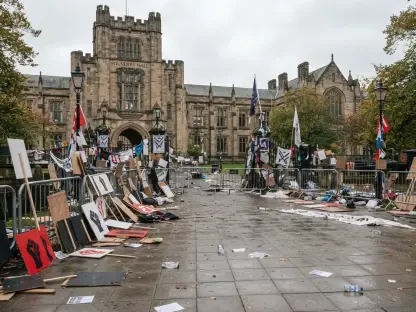
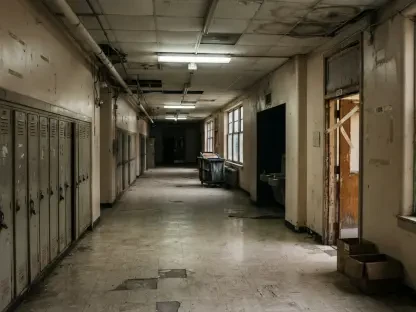
The transformation of major metropolitan areas like Khartoum into active combat zones has resulted in the total physical destruction of Sudan’s most prestigious higher education institutions. Universities that once served as the pride of the nation, such as the University of Khartoum and the Sudan University of Science and Technology, have been repurposed as military barracks, sniper nests, or temporary detention centers. This desecration of academic space represents more than just collateral damage in a civil war; it is the physical manifestation of a state’s collapse. Laboratories containing decades of research, libraries holding rare manuscripts, and specialized medical equipment used for training the next generation of doctors have been looted or incinerated. For the students who once walked these halls, the loss is visceral. They did not just lose a building; they lost the structured environment that legitimized their hard work and social mobility. The assumption that these campuses could remain neutral ground in a political struggle proved to be a fatal miscalculation, leaving thousands of young adults without a place to return to even if a ceasefire were negotiated tomorrow.
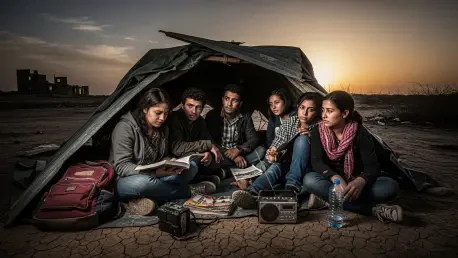
The scale of displacement among the student body is so vast that the very concept of a “student” has been replaced by the generic label of “displaced person” within the humanitarian framework. When families were forced to flee across the borders into Egypt, Ethiopia, or Chad, the relief agencies naturally prioritized the basic requirements of life, such as potable water and emergency shelter. However, this survival-based approach has a significant blind spot regarding the needs of young adults. By categorizing university students solely as refugees, the global aid system inadvertently pauses their professional development at a critical juncture. There is no large-scale infrastructure to facilitate the continuation of higher education in refugee camps or informal urban settlements. This creates a reality where a third-year engineering student or a final-year law student is treated as an unskilled laborer. The right to education, as defined in international treaties, often stops being enforced once a child reaches adulthood, leaving these individuals in a state of permanent educational limbo where their years of previous study are effectively discarded by the systems meant to protect them.
Administrative Collapse: The Lethal Impact of Missing Paperwork
A primary driver of the erasure of Sudanese students is the total failure of the nation’s administrative and digital record-keeping systems during the peak of the conflict. In a functioning society, an academic transcript is a mundane piece of paper, but in the context of mass exile, it becomes a high-stakes legal document required for survival. When the central servers of the Ministry of Higher Education were damaged or lost power during the initial sieges, the digital history of an entire generation was compromised. Many students fled their homes with only the clothes on their backs, unable to secure physical copies of their degrees or semester reports. Without these documents, they are unable to prove to foreign universities that they have completed any coursework at all. This administrative void is often more difficult to overcome than the physical act of crossing a border. International accreditation bodies are built on the assumption of state stability, and they rarely have the flexibility to accommodate students from a country where the issuing authority has ceased to exist or cannot be reached for verification purposes.
This bureaucratic wall creates an environment where years of specialized training are rendered worthless in the eyes of the international community. A student who was months away from becoming a licensed physician or a structural engineer is suddenly faced with the prospect of starting their education from the very beginning in a foreign language and under a different curriculum. The rigidity of global education systems means that even the most talented Sudanese students are often rejected from master’s programs or professional certifications simply because they cannot provide a stamped, original transcript from a university that no longer has an administrative office. This is not just a failure of the Sudanese state; it is a failure of the global academic architecture to adapt to the realities of contemporary warfare. By insisting on traditional verification methods for individuals fleeing a total institutional collapse, foreign universities and licensing boards are effectively participating in the erasure of these students’ professional identities, forcing them into menial labor roles to survive while their hard-earned skills atrophy from lack of use.
Navigating the Limbo of Exile
The Refugee Paradox: Victims or Students?
Sudanese students residing in neighboring countries like Egypt or Rwanda find themselves caught in a debilitating legal and economic paradox that prevents any meaningful progress. From a legal standpoint, they are often classified as asylum seekers or refugees, which grants them certain basic protections but frequently bars them from accessing local education systems on the same terms as citizens. Simultaneously, if they attempt to apply to universities as international students, they are met with prohibitively high tuition fees that are designed for wealthy expatriates rather than those fleeing a war zone. This leaves them in a position where they are too educated to fit the mold of the typical aid recipient, yet too impoverished by the conflict to pay for the “international” status required by the host country’s academic institutions. This middle ground is a space of profound stagnation, where the labels intended to provide security actually serve as barriers to the very activities that would allow these students to eventually contribute to their host societies or rebuild their homeland.
The lack of policy flexibility in host nations often stems from a fear that granting educational access to displaced populations will put a strain on limited national resources. In many cases, rigid visa regulations prevent these students from working legally, making it impossible for them to save money for tuition or application fees. Even when informal study groups or online learning initiatives arise, they rarely culminate in the recognized credentials needed to secure a career or advance to higher levels of study. Some students try to audit classes or attend lectures in secret, but these efforts provide no long-term professional security. The message from the host governments is often that the students are welcome to stay as long as they remain invisible and do not compete for the limited spots in the academic or professional sectors. This systemic exclusion ensures that the intellectual potential of the Sudanese youth is wasted in urban centers across the region, where they spend their most productive years waiting for a change in status that may never come.
Institutional Rigidity: The Burden of Global Bureaucracy
While the global academic community often releases statements of solidarity and concern regarding the humanitarian situation in Sudan, these sentiments are rarely backed by the structural changes needed to help students. Institutional compassion is frequently confined to symbolic gestures, such as a handful of highly competitive scholarships that benefit only a tiny fraction of the thousands of displaced students. For the vast majority, the reality of applying to a university in the West or even in other African nations is a gauntlet of requirements that were never designed for refugees. Language proficiency exams like the TOEFL or IELTS require expensive fees and travel to secure testing centers, which are often inaccessible to those in exile. Furthermore, many universities refuse to waive application fees or provide flexibility for students who cannot produce letters of recommendation from professors who are now either missing, displaced, or deceased. This reliance on a “business as usual” model during an extraordinary crisis highlights a fundamental weakness in how higher education interacts with global instability.
The gap between academic rhetoric and bureaucratic reality reinforces a cycle of exclusion that punishes the victim for the circumstances of their displacement. Many universities cite accreditation rules and financial quotas as reasons why they cannot provide more robust support for Sudanese students. They argue that maintaining “academic standards” requires a level of documentation that is simply impossible for a student from a failed state to provide. However, this narrow focus on procedural purity ignores the broader moral and developmental imperative to prevent the total loss of a nation’s professional class. When an institution chooses to prioritize a missing stamp over the verified knowledge of a senior medical student, it is making a choice that has long-term consequences for the stability of the entire region. The current system values the integrity of the process over the value of the person, ensuring that the most vulnerable and talented individuals are left behind simply because their life story does not fit into a pre-defined administrative template.
The National Cost of a Lost Generation
Psychological Erasure: The Cost of Interrupted Identity
The humanitarian response to the Sudanese crisis has consistently prioritized primary and secondary education for young children, effectively leaving university-age individuals in a developmental blind spot. This policy bias is rooted in the idea that younger children are more vulnerable and that their educational loss is more foundational, yet it ignores the immediate societal need for the skills that only higher education provides. Relief agencies often provide basic school supplies and “child-friendly spaces” in camps, but there are virtually no equivalent resources for a 22-year-old who was midway through a degree in public health. This neglect sends a subtle but damaging message to young adults that their education is a luxury that can be sacrificed, rather than a necessity for the reconstruction of their country. This policy gap not only hinders the economic prospects of the individuals but also undermines the long-term goal of national recovery, which will require a massive influx of local professionals who understand the specific cultural and social context of Sudan.
Beyond the lack of funding and institutional support, the psychological burden of being “erased” from the professional world is immense and deeply traumatizing. For many students, their academic identity was their primary source of hope and their intended path out of poverty. When that identity is stripped away and replaced by the status of a perpetual refugee, the result is often a profound sense of hopelessness and a loss of self-worth. They face the daily stress of survival in a foreign city, combined with the guilt of being unable to help their families who remain in Sudan. Every rejection from a university or a potential employer because of an expired passport or a missing record serves as a reminder that the world has moved on without them. Many have been forced to abandon their dreams entirely, taking on menial jobs in the informal economy just to pay for basic necessities. This erosion of hope is a quiet tragedy that will have lasting effects on the mental health of the Sudanese diaspora, as an entire generation grows up with the bitterness of knowing that their potential was discarded because of paperwork and political indifference.
Strategic Interventions: Building a Framework for Academic Recovery
The necessity for a shift in global educational policy became an undeniable reality as the crisis deepened and the long-term effects of student erasure began to manifest. Researchers argued that protecting the academic trajectory of the displaced was a fundamental requirement for the eventual peace and stability of the entire region. It was observed that the post-war reconstruction of other nations had failed primarily because the human capital required to manage infrastructure and public health had been depleted during the conflict years. To avoid this outcome in Sudan, international bodies advocated for a rights-based approach that prioritized the recognition of interrupted studies. This transition required a move away from sporadic charity and toward systematic agreements that allowed for the alternative verification of academic credentials. The implementation of digital identity solutions and decentralized academic archives became a central part of the discussion on how to safeguard the records of students living in fragile states during this period.
Progress was made when regional coalitions and international NGOs began to pressure host governments to grant Sudanese students “educational asylum,” which decoupled their right to study from their legal residency status. These initiatives sought to create special admission tracks that acknowledged the extraordinary circumstances of the conflict, allowing students to demonstrate their knowledge through proficiency exams rather than relying solely on missing transcripts. Observers noted that when universities provided these flexible pathways, the students often outperformed their peers, demonstrating a high level of resilience and dedication to their fields. The lessons learned during this time emphasized that the intellectual health of a nation was just as vital as its physical security. By 2026, the global community started to recognize that failing to support these students was not just a humanitarian oversight but a strategic failure that ensured a cycle of poverty and instability. The focus eventually shifted toward creating a sustainable framework that treated education as a portable right that could not be erased by the violence of a collapsing state.