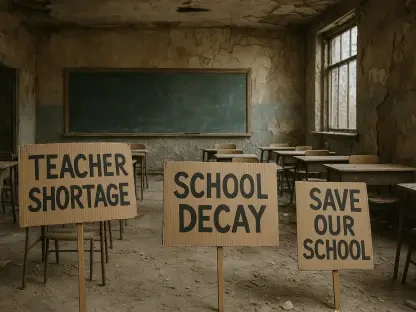

The storied legacy of St. Bernadette’s Catholic Academy in Dyker Heights, which once served as a definitive model for private parochial education in Brooklyn, is currently being overshadowed by a systemic institutional crisis that threatens to dismantle its seven decades of community trust. For generations, the academy was synonymous with academic rigor, disciplined environments, and a faculty that functioned more like an extended family than a standard workforce. However, the transition from the long-standing leadership of Sister Joan to the current administration under Jeanne Shannon has precipitated an unprecedented wave of parental dissatisfaction and operational instability. This shift has not been a gradual decline but rather a sharp departure from the standards that once earned the institution its “School of Distinction” status. As families navigate the complexities of the 2026 academic landscape, the academy finds itself at a crossroads where the tradition of the past is in direct conflict with the administrative realities of the present. The internal friction has spilled over into public forums, revealing a deep-seated disconnect between the school’s governing body and the community it is intended to serve, leading to a significant exodus of long-term supporters and students.
Administrative Failure and Communication Breakdowns
The Leadership Gap: Parental Frustration and Silent Management
The current administrative climate at St. Bernadette’s is frequently described by distraught parents as an informational “black hole” where previously transparent communication channels have effectively ceased to function. In the modern educational landscape, parents rely heavily on digital integration to monitor their children’s progress, yet reports indicate that tools such as Google Classroom and direct faculty email addresses are being systematically ignored or underutilized by the current staff. This breakdown in basic operational protocol has left families in a state of perpetual uncertainty regarding daily assignments, long-term projects, and critical academic benchmarks. The silence from the principal’s office has not only frustrated the parent body but has also fundamentally eroded the foundational trust that once allowed the academy to thrive as a community-centered institution. Without a reliable feedback loop, the partnership between home and school has dissolved into a one-way street where parental inquiries regarding student welfare and curriculum implementation go unanswered for weeks. This administrative inertia suggests a deeper organizational struggle to adapt to the expectations of a contemporary tuition-paying demographic that demands high-level responsiveness.
Beyond the immediate lack of digital engagement, there is a pervasive sense of exclusion among families who have invested years of loyalty and financial support into the institution. The shift in leadership style from the approachable, community-oriented tenure of Sister Joan to the current, more insulated administration has created a culture where parents feel like outsiders in their own children’s education. This isolation is compounded by a perceived lack of transparency regarding the internal logic of the school’s decision-making processes. When parents attempt to voice concerns about the sudden departure of beloved faculty or the implementation of new, unproven policies, they are often met with professional platitudes or a complete refusal to engage in meaningful dialogue. This defensive posture from the school’s leadership has converted what should be a collaborative environment into one of mutual suspicion. The psychological impact on the community is significant, as the loss of a shared mission has left many families feeling that the school no longer represents the values or the level of professional accountability they were promised upon enrollment.
Transparency Issues: Institutional Secrecy and Disciplinary Shifts
A critical point of contention within the school community involves the administration’s refusal to provide clear information regarding the credentials and qualifications of newly hired staff members. As veteran teachers have exited the institution in large numbers, parents have naturally sought assurances that their replacements possess the necessary experience and pedagogical training to maintain the academy’s high standards. However, the school has reportedly withheld this information, citing privacy or internal policy, which has only served to fuel rumors of under-qualification and staffing desperation. This lack of transparency extends to the school’s board of directors, which has remained largely invisible to the public despite the growing calls for intervention. The inability of the administration to justify its hiring practices or provide a roadmap for academic stability has created a vacuum of confidence. Families who are paying significant sums for a private education feel they have a right to know who is educating their children, and the denial of this basic information is being viewed as a breach of the unspoken contract between the academy and its patrons.
The internal tension is further exacerbated by what many describe as an abrupt and inexplicable shift in the school’s disciplinary philosophy. Reports from the 2026 academic cycle indicate that the administration has begun implementing uncharacteristically harsh measures for minor infractions, such as student lateness or dress code nuances, which parents argue are often the result of adult logistical issues rather than child defiance. There are growing concerns about faculty members using aggressive verbal tones in the classroom, a departure from the nurturing yet firm Catholic environment that previously defined the school. This shift toward a more punitive and less communicative culture has created a sense of apprehension among the students, who now perceive the school environment as rigid and unforgiving. When these disciplinary actions are taken without the context of parental consultation or an explanation of the underlying pedagogical goal, it reinforces the narrative of an administration that is more interested in control than in the holistic development of the child. This atmosphere of strictness without support has driven a wedge between the faculty and the families, leading many to question if the school still aligns with the compassionate values of its founding mission.
The Erosion of Educational Standards
Classroom Quality: The Shift to Digital Busywork
The most alarming development for many families at St. Bernadette’s is the perceived collapse of high-quality, teacher-led instruction in favor of a heavy reliance on digital learning platforms. In the lower grades, where foundational skills in literacy and mathematics are typically established through direct interaction and guided practice, parents have reported that students are spending an inordinate amount of time on independent computer tasks. This pedagogical pivot is seen by many as a cost-cutting measure or a symptom of an underprepared faculty rather than a legitimate modernizing strategy. The lack of active instruction has left many children feeling “unseen” and unsupported in their learning, as the personalized attention that once characterized the academy’s classrooms has been replaced by standardized software modules. This shift is particularly distressing to parents who chose a private Catholic education specifically to avoid the impersonal, technology-dependent trends that can sometimes plague larger public systems. The consensus among the departing families is that the “real teaching” that justified the cost of tuition has been sacrificed for a more passive and less effective educational model.
The consequences of this instructional decline are becoming increasingly visible in student performance and engagement levels. Parents who have recently withdrawn their children describe a scenario where students were essentially left to navigate complex concepts on their own with minimal guidance from the front of the room. This environment has been especially detrimental for students who require more structured support or those who thrive on the traditional mentorship of a classroom teacher. Moreover, the reliance on digital busywork has led to a noticeable decrease in the depth of the curriculum, with students reporting a repetitive cycle of online quizzes and videos that lack the intellectual stimulation provided by veteran educators. This “teaching to the screen” approach has stripped the curriculum of its nuance and has forced many parents to hire outside tutors to ensure their children do not fall behind their peers at other institutions. The frustration stems from the belief that the school is failing to deliver on its primary promise of academic excellence, opting instead for a path of least resistance that prioritizes administrative convenience over student outcomes.
Resource Management: Shortages and Large Class Sizes
Compounding the instructional deficiencies is a startling lack of physical resources and basic classroom infrastructure that has hindered the start of the current academic cycle. In several lower-grade classrooms, students were forced to rely on loose, photocopied worksheets for weeks because the administration failed to order or distribute the necessary textbooks in a timely manner. When materials did finally arrive, some parents noted that the texts were outdated—particularly in the social studies department—failing to reflect the modernization of the curriculum that was promised during the leadership transition. This lack of preparation suggests a breakdown in the school’s operational logistics and a failure to prioritize the basic tools required for a functional learning environment. For a tuition-based institution, the absence of textbooks is viewed by the community as a significant red flag, indicating either financial mismanagement or a severe lack of organizational oversight. It has created a disjointed learning experience where students are constantly catching up with missing materials rather than moving forward in a structured, cohesive manner.
Perhaps the most controversial decision made by the current administration was the sudden merger of two third-grade sections into a single classroom of thirty-eight students. This move, which was reportedly executed without prior notification to the affected families, has been met with widespread outrage and is cited as a primary reason for several recent withdrawals. In the context of a private academy, a class of this size is considered counterproductive to the individualized attention and high-quality instruction that parents are paying for. The logistics of managing nearly forty students in a single room have led to a chaotic classroom dynamic, where behavioral management often takes precedence over academic delivery. Parents argue that the school’s refusal to hire additional staff or maintain smaller class sizes is a direct betrayal of the “close-knit” environment that was a key selling point for the academy. This overcrowding is seen as a symptom of a larger institutional crisis where financial stability and administrative convenience are being prioritized over the physical and academic well-being of the student body.
Staffing Instability and Cultural Shifts
The Teacher Exodus: Loss of Institutional Knowledge
St. Bernadette’s is currently grappling with an unprecedented “mass exodus” of veteran educators, a trend that has fundamentally altered the character of the institution. While the school’s leadership has attributed these departures to the competitive salaries offered by the public school system, the narrative from the departing staff and the parent body suggests a more complex internal struggle. Many of the teachers who have left were staples of the community for decades, including the last remaining nuns who embodied the school’s historical identity and values. The loss of these individuals has created a massive vacuum of institutional knowledge and has severed the emotional ties that many families had with the school. Parents contend that the departures are a direct response to a management style that many find abrasive and non-collaborative, leading to a toxic work environment that even the most dedicated educators could no longer endure. The rapid turnover has resulted in a rotating door of new hires, many of whom leave shortly after arriving, further destabilizing the daily routine of the students.
This instability in the workforce has forced the administration into emergency measures, including instances where the principal herself has had to step into the classroom to fill staffing gaps. While this may provide a temporary solution to the lack of personnel, it detracts from the principal’s ability to manage the school’s broader administrative and strategic challenges. The constant reshuffling of teachers in the middle of the term has disrupted the academic progress of the students, as new educators must spend valuable time building rapport and understanding the specific needs of their classes. The loss of the “old guard” has also meant the disappearance of the mentorship programs that used to support younger faculty members, leading to a decline in overall pedagogical quality across the board. For the parents, seeing the people they trusted with their children’s education leave in such quick succession has been a clear signal of internal decay. The cultural shift from a stable, mission-driven faculty to a transient and demoralized workforce is perhaps the most visible indicator that the academy is no longer the institution it was just a few years ago.
Student Well-being: Anxiety and the Loss of Security
The ongoing administrative and staffing turmoil has had a measurable impact on the emotional and psychological well-being of the student population. Parents have reported a significant increase in student anxiety, with many children expressing a newfound reluctance to attend school. Morning drop-offs, which were once routine and positive, have reportedly become scenes of distress for many younger students who feel overwhelmed by the chaotic atmosphere and the frequent changes in their classroom leadership. The sense of a “close-knit” family environment, which was the hallmark of the St. Bernadette experience, has been replaced by a pervasive feeling of instability. Children are remarkably sensitive to the stress of the adults around them, and the tension between the parents and the administration, coupled with the morale issues among the remaining staff, has created an environment that is no longer conducive to healthy social and emotional development. The loss of familiar faces among the faculty has stripped away the sense of security that is essential for a productive learning experience, leaving many students feeling adrift.
Furthermore, the implementation of more rigid and punitive disciplinary measures has contributed to a culture of fear rather than a culture of respect. Students who were once excited about their academic achievements are now more concerned with avoiding the scrutiny of an administration that they perceive as unpredictable and harsh. This shift has stifled the creative and social growth of the students, as they are less likely to take risks or engage deeply in an environment where they do not feel supported. The reports of teachers yelling and the lack of warmth in the hallways represent a significant departure from the academy’s historical commitment to the “whole child.” Parents have noted that their children, who previously “thrived” in the St. Bernadette’s environment, have become withdrawn or irritable at home, a change they directly attribute to the negative atmosphere at the school. This decline in student happiness is often the final straw for families, leading them to seek alternative educational environments where the emotional health of the child is given as much weight as academic performance.
Financial Disputes and Institutional Accountability
The Battle Over Tuition: Contracts and Legal Recourse
The conflict at St. Bernadette’s has moved beyond the classroom and into the financial and legal arenas, as families who have withdrawn their children face significant hurdles in recovering their funds. The academy maintains a rigid financial contract, which includes non-refundable registration fees ranging from $500 to $1,000 and a July deadline for tuition refunds. However, parents argue that these policies should be reconsidered in light of the school’s failure to provide the quality of education and the environment that was promised at the time of enrollment. They contend that the school has breached its contractual obligations by failing to provide textbooks, merging classes to excessive sizes, and losing the core faculty members who were essential to the school’s identity. The administration’s refusal to offer even partial refunds has been viewed as an act of bad faith, particularly toward families who have been loyal supporters of the institution for many years. This financial standoff has created a deep sense of resentment, as parents feel they are being penalized for making the difficult decision to prioritize their children’s education over a failing institution.
With the school board and the administration standing firm on their no-refund policy, several families have begun pursuing legal action through small claims court. They argue that their payments were made in “good faith” for a specific set of services that the school ultimately failed to render. The legal battle is not just about the money, but about holding the institution accountable for its operational failures. At the same time, the Diocese of Brooklyn has largely distanced itself from the conflict, with officials characterizing the disputes as “local issues” that must be resolved by the individual school board. This lack of oversight from the broader Catholic educational authority has left families feeling abandoned by the very organization they thought would protect the standards of their faith-based education. The financial disputes have effectively destroyed any remaining goodwill between the academy and the departing families, ensuring that the rift will have long-lasting consequences for the school’s reputation and its future enrollment numbers.
Future Viability: The Pivot to Public Education
The systemic failures at St. Bernadette’s have led to a surprising and significant pivot toward the local public school system, a move that would have been unthinkable for many of these families just a few years ago. Traditionally, Catholic school parents in Dyker Heights have been skeptical of the public system, valuing the smaller classes and moral foundation of the parochial model. However, the current crisis has reversed this trend, with multiple families reporting that their children began to “thrive” immediately upon transferring to public institutions. They cite better communication, more structured classroom environments, and a wider range of resources as the primary benefits of the switch. This shift represents a major threat to the long-term viability of the academy, as it suggests that the “brand” of a Catholic education is no longer enough to overcome the reality of poor management and declining standards. If the public school system is perceived as providing a superior and more stable environment, the academy loses its primary competitive advantage in the local market.
In the final assessment, the situation at St. Bernadette’s Catholic Academy during the 2026 academic cycle served as a cautionary tale of how quickly a legacy institution can be compromised by a failure in leadership and a lack of transparency. The administration was focused on maintaining the outward appearance of success, citing scholarship numbers and past achievements, while the internal foundation of the school was actively crumbling. To ensure future viability, the school board should prioritize a total overhaul of its communication strategy, including a transparent accounting of faculty credentials and a commitment to restoring teacher-led instruction. Actionable steps would include the immediate re-establishment of a parent-teacher advisory council to bridge the gap between the administration and the community, as well as a comprehensive review of the school’s financial refund policies to address legitimate grievances. The academy’s ability to recover from this crisis depended entirely on its willingness to acknowledge its failures and to place the academic and emotional needs of the students back at the center of its mission.