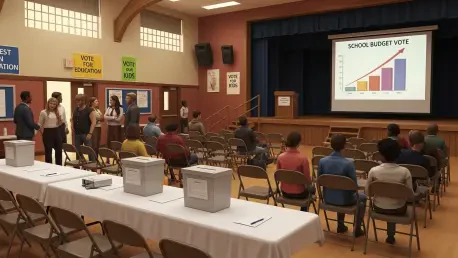

The quiet streets of Alford and Sheffield are currently charged with a palpable tension as residents prepare to decide the fate of their local education system through a critical special town meeting. At the heart of this unfolding drama is a proposed $21.37 million budget for the Southern Berkshire Regional School District, a figure that represents far more than simple arithmetic for the five member towns involved. This year, the usual administrative routines have been replaced by a sense of urgency and collective anxiety, spurred by a series of operational failures and financial discoveries that have shaken the community to its core. As the June 30 deadline looms, the decision-making process for Alford, Egremont, Monterey, New Marlborough, and Sheffield has become a litmus test for local governance. The outcome will not only dictate the district’s immediate spending power but also signal whether these municipalities can reconcile their fiscal responsibilities with the mounting costs of modern public education in a period of extreme economic volatility.
Fiscal Realities and Legal Consequences
The Cost: Education and Town Mandates
The proposed spending plan of $21.37 million constitutes a 3.7 percent increase over the previous fiscal cycle, a rise that reflects the harsh realities of maintaining a regional school system during a period of shifting economic priorities. Approximately three-quarters of this total budget is slated to be funded directly through local tax assessments, placing a heavy burden on the individual property owners of the five member towns. The formula used to calculate these contributions is notoriously complex, factoring in both shifting student populations and fluctuating property valuations within each municipality. Consequently, the impact is not felt equally across the district; while some towns face relatively modest adjustments, Sheffield, the largest and most populous member of the regional collective, is confronting a steep 7.1 percent hike in its assessment. This disparity has naturally ignited a debate regarding the fairness of the funding model and the long-term sustainability of regional education.
Beyond local tax concerns, the district is struggling with a significant reduction in state aid, a trend that is currently complicating public budgeting across the Commonwealth of Massachusetts. As state contributions dwindle, regional districts are forced to bridge the gap through increased local reliance, a strategy that often reaches its ceiling as taxpayers reach their limit. Compounding this challenge is the sudden and sharp escalation of municipal health insurance premiums, which have surged unexpectedly in the current fiscal environment. These external pressures create a perfect storm for administrators who must balance contractual obligations with a shrinking pool of available resources. The budget proposal represents a calculated attempt to maintain essential services while acknowledging that the era of predictable funding has largely vanished. For many voters, the debate is not merely about the percentage increase, but about whether the district is effectively managing the external variables that are driving these costs upward.
Navigating the Threat: State Intervention
The procedural requirements for approving the regional school budget are governed by strict state statutes that demand a high level of consensus among the member municipalities. For the $21.37 million spending plan to take effect, four of the five towns must cast affirmative votes during their respective special town meetings. This high threshold ensures that the district cannot move forward without broad regional support, but it also creates a precarious situation where a small minority can effectively stall the entire process. If the district fails to secure the necessary approvals by the July 1 start of the fiscal year, the consequences are immediate and severe. Under Massachusetts law, the Department of Elementary and Secondary Education would be required to step in and impose a level-funded monthly budget. This administrative intervention is designed as a safety net to ensure schools remain open, yet it is widely viewed as a failure of local control that strips the district of its autonomy and flexibility.
Operating under a 1/12th budget mandate would effectively freeze spending at the levels established in the previous year, leaving the Southern Berkshire Regional School District unable to address the impacts of inflation or the evolving needs of its students. Such a scenario prevents the administration from filling critical vacancies, purchasing necessary supplies, or implementing any new educational initiatives that require additional funding. This regulatory mechanism serves as a last resort, meant to prevent a total cessation of services, but it offers no solutions for the systemic financial gaps currently facing the district. For the community, the threat of state intervention acts as a powerful motivator to find common ground before the clock runs out at the end of June. The realization that a failure to act could result in a loss of local decision-making power has shifted the tone of recent public discussions, moving the focus toward the long-term implications of administrative paralysis in a highly competitive educational landscape.
Internal Instability and Operational Failures
A Leadership Crisis: Bookkeeping Blunders
A significant portion of the current fiscal instability can be traced back to the discovery of systemic bookkeeping errors that were allowed to persist for years. After the district ended its contract with a third-party management firm and transitioned to new financial consultants, a series of audits revealed that many costs had been improperly categorized across various internal accounts. These accounting blunders effectively obscured the true financial health of the district, making it nearly impossible for the School Committee to build a reliable budget during the standard spring cycle. The arrival of Open Architects, a consulting firm brought in to rectify these discrepancies, marked a turning point in the district’s pursuit of transparency. However, the depth of the historical inaccuracy was so profound that it required months of forensic accounting just to establish a credible baseline for current spending. This delay in reporting has fueled frustration among town officials who feel they are being asked to vote on a budget built on shifting sands.
The revelation that funds had been misallocated across the district’s ledger has forced a complete overhaul of the budgeting process, moving away from broad estimates toward a more rigorous line-item reporting system. While this shift is essential for rebuilding trust, the timing could not have been more difficult, as it coincided with a period of peak administrative stress. The new financial team has been tasked with not only fixing the errors of the past but also educating the public on why previous projections were so fundamentally flawed. This transition toward a data-driven model is intended to prevent the recurrence of such oversight, yet the immediate impact has been a loss of confidence in the district’s ability to self-govern. The current budget proposal is the first step in a multi-year effort to stabilize the district’s finances, but the scars left by years of poor bookkeeping remain a central theme in the upcoming town votes. Residents are now demanding a level of detail that was previously ignored, changing the dynamic of school board meetings.
Balancing the Books: Restoring Community Trust
Public confidence was further eroded by a contentious debate regarding the district’s actual cash reserves, with some vocal community members claiming that a $2.5 million surplus had been hidden from the public eye. This figure quickly became a focal point of town meetings, serving as evidence for those who argued that the proposed budget increase was unnecessary and that the district should instead draw from its existing wealth. However, Superintendent Brian Ricca eventually clarified that the $2.5 million figure was the result of a significant misunderstanding of the year-end cash flow cycle. He explained that this amount represented expected revenue and pending expenditures rather than unallocated, idle funds that could be used to lower assessments. The actual projected year-end surplus was revealed to be a much more modest $339,000, a sum that is barely sufficient to cover unexpected emergency costs. This clarification highlighted the deep-seated confusion caused by years of inconsistent financial reporting and the lack of a certified fund.
The administration successfully established a multi-year financial planning framework that prioritized fiscal transparency and student equity across the five member towns. By creating a collaborative task force that included town administrators and school board members, the district ensured that every budgetary decision was vetted through a lens of long-term economic sustainability. This new approach facilitated the restoration of critical teaching positions and the implementation of a certified reserve fund, which acted as a vital buffer against the unpredictability of state aid. These strategic reforms effectively rebuilt the community’s trust, allowing the district to move past its administrative hurdles and focus on delivering a high-quality education. The implementation of these data-driven policies not only stabilized the budget but also provided a clear and actionable blueprint for future regional cooperation. Ultimately, the Southern Berkshire schools emerged from this period with a more resilient governance structure that balanced fiscal prudence with educational excellence.