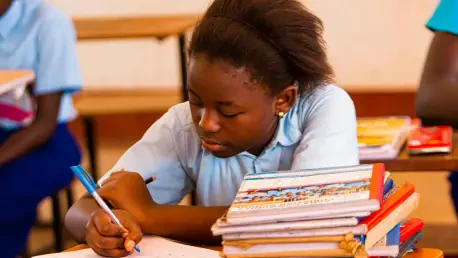

In the quiet neighborhoods of South Africa, a staggering eighty percent of ten-year-old children face a daunting educational hurdle as they struggle to read for basic meaning within their primary school classrooms. This statistic reflects a broader systemic challenge where roughly two-thirds of families with young children do not possess a single book in their homes, effectively stalling cognitive development before a child even enters a formal school setting. Since ninety percent of human brain growth occurs within the first five years of life, the absence of literacy materials during this critical window creates a deficit that is difficult to bridge later in life. To address this gap, an innovative partnership has emerged to redefine how educational resources are produced and distributed to the most vulnerable populations. By rethinking the traditional publishing industry, this initiative aims to put physical books into the hands of those who need them most, ensuring that early childhood development becomes a priority rather than a luxury reserved for the affluent.
The Mechanics of Educational Equity
Revolutionizing the Publishing Ecosystem
Traditional publishing is often bogged down by high overhead costs and complex royalty structures that make high-quality children’s literature prohibitively expensive for low-income households. Book Dash has effectively disrupted this cycle by implementing a creative volunteer-driven model that compresses the production timeline and slashes expenses by eighty percent compared to industry standards. Instead of months of back-and-forth negotiations and revisions, teams of writers, illustrators, and editors gather for intensive sessions to create professional-grade content in a single day. This efficiency allows the organization to bypass the traditional retail markup and focus entirely on the mass printing and distribution of materials to the communities that need them most. By removing the financial barriers associated with intellectual property and creative labor, the program transforms the book from a high-priced commodity into a shared public good. This streamlined approach serves as a blueprint for other nations seeking to democratize access to education.
The ultimate ambition of this initiative is to ensure that every child in South Africa has a personal library of at least one hundred books by the time they reach the age of five. This specific milestone is grounded in research indicating that constant exposure to print media within the home environment is a primary predictor of future academic success and professional stability. For families living in poverty, receiving these books as gifts changes the domestic dynamic by encouraging parents to engage in daily reading rituals that foster emotional bonding and language acquisition. These physical volumes are not merely educational tools but symbols of investment in a child’s future, signaling that literacy is an attainable right rather than a distant dream. As the distribution network expands from 2026 to 2028, the focus remains on reaching the most remote rural areas where access to bookstores or libraries is virtually non-existent. The tangible presence of books in these households bridges the gap between early childhood centers and the home.
Cultivating Linguistic and Cultural Identity
Representation remains a cornerstone of the project, as children are far more likely to engage with stories that reflect their own lived experiences and cultural heritage. In a country with twelve official languages, including sign language, the challenge of providing inclusive material is immense, yet the partnership has committed to producing content in every recognized tongue. Stories feature characters who look like the readers and navigate familiar landscapes, which validates the child’s identity and fosters a sense of belonging within the broader literacy landscape. When a child sees their own community depicted in the pages of a book, the act of reading becomes an act of self-discovery rather than a foreign academic exercise. This linguistic diversity also supports mother-tongue education, which is crucial for establishing a strong cognitive foundation before transitioning to additional languages later in the school curriculum. By prioritizing local narratives, the initiative ensures that global literacy standards do not come at the expense of indigenous culture.
While the rise of digital technology offers new avenues for content delivery, recent data underscores the superior efficacy of printed books for cognitive retention and deep comprehension in early childhood. Unlike digital screens, which can often lead to passive consumption and shorter attention spans, physical books provide a tactile experience that enhances sensory learning and improves fine motor skills through the turning of pages. The permanence of a printed book allows a child to revisit their favorite stories repeatedly, reinforcing vocabulary and narrative structures through familiarity and repetition. Furthermore, in many South African regions where electricity is unreliable and internet access is expensive, physical media remains the most resilient and reliable form of technology. The strategy focuses on the lasting impact of print, acknowledging that a physical book does not require a battery or a data plan to provide a “window into the world.” This dedication to traditional media ensures that the literacy intervention is both inclusive and durable for years to come.
Strategic Expansion and Global Impact
Collaborative Growth: The Role of Global Support
The partnership with Theirworld has been a primary catalyst for scaling the impact of these local efforts into a nationwide movement with global recognition. Through the Education Innovation Awards, the program secured essential grant funding and strategic mentoring that allowed for a significant expansion of the distribution infrastructure starting in early 2026. This collaboration provided more than just financial resources; it offered a platform to connect with international experts and refine the logistical processes required to reach over one hundred and ten thousand households. The mentorship aspect focused on strengthening organizational strategy and ensuring that the high-volume production model could be replicated in different geographical contexts without losing quality. This systemic support enabled the transition from a localized non-profit to a major player in the global effort to end the educational crisis. The resulting data from this period showed a marked increase in school readiness among children who participated in the book ownership program compared to their peers.
Preschool teachers and early childhood development practitioners have reported a transformative shift in classroom engagement since the influx of these culturally relevant materials. Children who previously entered the school system with no prior exposure to books now demonstrate advanced listening skills, a broader vocabulary, and an eagerness to participate in group reading activities. This feedback is corroborated by household surveys where parents noted that the presence of books at home led to more frequent interactions and a more positive attitude toward learning in general. As the initiative looks toward the period spanning 2026 to 2028, the goal is to leverage these success stories to secure further public-private partnerships that can sustain the distribution model long-term. By proving that a low-cost, high-impact intervention is possible, the project has set a new standard for how non-governmental organizations can collaborate with international bodies to solve complex social issues. The focus now shifts toward ensuring that every child, regardless of their economic background, has the tools to succeed.
Future Pathways: Scaling the Success Model
The collaborative efforts between Book Dash and Theirworld established a definitive path forward for addressing the systemic roots of illiteracy through localized action and global support. By prioritizing the first five years of life and focusing on mother-tongue representation, the initiative provided a concrete solution to the problem of educational inequality. Stakeholders recognized that the success of this model depended on the seamless integration of creative volunteerism and strategic funding, which allowed for the mass distribution of high-quality print media. Moving forward, the focus turned toward institutionalizing these practices within national education policies to ensure that book ownership becomes a standard component of early childhood development programs. Leaders in the field advocated for the continued use of physical books as essential tools for cognitive growth, even as digital alternatives became more prevalent. The initiative proved that when resources are tailored to the specific needs of a community, the cycle of poverty and illiteracy could be effectively broken.
Future considerations emphasized the need for a sustained commitment to linguistic diversity and the expansion of the “window into the world” concept to other emerging markets. The lessons learned from the South African context suggested that empowering local creators was the most effective way to produce content that resonated with young readers on a deep emotional level. As more organizations adopted this streamlined publishing model, the global community saw a significant shift in how educational resources were valued and distributed. Actionable steps for the future involved creating more cross-border mentorship programs to share best practices and technical expertise between different regions facing similar literacy challenges. The integration of sign language and inclusive storytelling set a new benchmark for what equitable education should look like in a modern society. Ultimately, the partnership demonstrated that the most effective way to prepare the next generation for the complexities of the world was to start with a simple, high-quality book in the hands of every child.