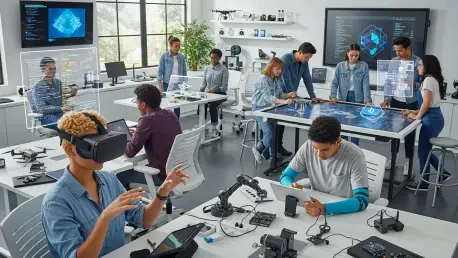

The traditional four-year campus experience is rapidly giving way to a more agile, technology-driven model that prioritizes immediate industrial utility over abstract academic theory. This shift represents a fundamental realignment of the higher education sector, where the focus has migrated from purely intellectual exploration to the cultivation of specific, workforce-ready competencies. At the center of this transformation is an institutional model that has transitioned through over a century of academic history to address the needs of the contemporary student. This demographic is no longer defined by the stereotypical late-teenager living in a dormitory, but rather by working adults and career changers who demand flexibility and a clear return on investment.
The modern educational framework is built on the core principle of career alignment, ensuring that every credit hour translates into a professional advantage. By evolving from a legacy institution into a high-tech learning hub, the system has successfully bridged the gap between academic tradition and the requirements of a digital economy. This evolution is particularly relevant for the current student body, which views education as a tool for immediate professional development. The transition from physical campus life to a technology-driven pedagogy has allowed for a more inclusive environment, catering to those who must balance rigorous studies with full-time employment and personal responsibilities.
The Evolution: Applied Learning and Modern Educational Frameworks
Modern institutional strategy is defined by an adaptive approach that mirrors the rapid pace of the private sector. Instead of relying on static curricula that take years to update, the current model utilizes modular learning blocks that can be adjusted as industry standards shift. This flexibility is not merely a convenience but a necessity in a landscape where technical skills have a shorter shelf life than ever before. The institutional evolution reflects a move toward “just-in-time” education, where students acquire the exact knowledge needed for their current or next career move.
Furthermore, the shift toward applied learning emphasizes the “2026 student” profile—an individual who is deeply skeptical of generalist degrees and instead seeks mastery over specialized tools. This transition has necessitated a complete overhaul of the student experience, moving away from the social-heavy campus model toward a professional immersion environment. The result is a more focused academic culture that values technical proficiency and project-based outcomes, ensuring that the transition from the classroom to the boardroom is as seamless as possible.
Creative Technology: Media Design Systems
The integration of specialized design schools has introduced a new level of sophistication to creative technology programs. A prominent example is the implementation of systems that focus on screen scoring and music design, which function through a sophisticated blend of orchestral theory and modern electronic production. These programs recognize that the entertainment industry now requires a dual mastery of traditional composition and cutting-edge software. By positioning these schools in global media hubs, the education model provides students with direct access to the film and gaming industries, turning the curriculum into a live laboratory.
The instructional philosophy in these design systems prioritizes professional immersion over rote memorization. Students are encouraged to engage with high-stakes projects that mimic the pressures of a real-world production studio. This approach is led by industry veterans who bring decades of experience from major studios, ensuring that the technical skills taught are currently in high demand. By removing the financial barriers through targeted scholarships, the system has also expanded the talent pool, allowing for a more diverse range of voices to enter the competitive fields of media and design.
High-Stakes Technical Proficiency: Cybersecurity Benchmarks
Technical rigor is best observed through the performance of students in national security challenges, such as the National Security Agency’s Codebreaker Challenge. The success of this model is evidenced by the ability of its participants to outperform students from research-heavy state universities. This performance is a direct result of a curriculum that emphasizes reverse engineering, cryptography, and digital forensics. These benchmarks demonstrate that a workforce-focused education can produce results that rival the most prestigious engineering programs in the country, provided the training is sufficiently rigorous.
The curriculum is designed to move beyond theoretical security concepts into the realm of active defense and threat mitigation. By engaging in real-world scenarios, students develop a deep understanding of how to protect national infrastructure and sensitive data. This hands-on experience is critical for developing the technical proficiency required in the cybersecurity sector. Moreover, the focus on competitive performance fosters a culture of excellence and accountability, preparing graduates for the high-pressure environments of government and corporate security operations.
Artificial Intelligence Fluency: Agentic Systems
Artificial intelligence has been integrated into the academic pathway not just as a tool, but as a core competency. The curriculum now includes specialized concentrations in “agentic” systems, where AI functions with a degree of autonomy within a business context. This represents a significant step forward from basic machine learning, as it prepares students to manage and architect systems that can make independent decisions based on complex data sets. These programs are essential for leaders who need to drive digital transformation within their organizations.
The implementation of AI fluency extends across both information technology and management programs, creating a cross-disciplinary approach to automation. Students learn how to leverage AI to optimize supply chains, enhance customer experiences, and automate routine administrative tasks. This focus on agency ensures that graduates are not merely users of technology but are capable of designing the next generation of autonomous business processes. By emphasizing the strategic application of AI, the curriculum bridges the gap between technical development and executive leadership.
Emerging Trends: Workforce-Ready Technical Education
The most significant trend in current technical education is the democratization of high-level skills for working adults. High-level technical training was once reserved for those who could afford to step away from the workforce for years, but the current model has broken down these barriers. This democratization is driven by the demand for “clear-eyed” career pathways that offer a direct route to high-growth sectors. As a result, the market is seeing a surge in enrollment for programs that offer specific, high-demand certifications alongside traditional degree requirements.
Moreover, there is an increasing shift toward AI-driven leadership, where management theory is being rewritten to account for a hybrid workforce of humans and machines. Educational programs are now focusing on how leaders can effectively oversee algorithmic teams and ensure ethical standards in automated decision-making. This trend reflects a broader move toward “technological literacy” as a requirement for all professional roles, regardless of the specific industry. The demand for practical, industry-aligned education continues to grow as the global economy becomes increasingly tech-centric.
Real-World Applications: Industry Hubs
The deployment of these educational technologies is most visible in specific sectors, such as the booming film and music industries in global media hubs like Atlanta. These geographical centers serve as real-world extensions of the classroom, where students can apply their skills in scoring and design to actual commercial projects. This proximity to industry hubs allows for a level of networking and professional integration that is impossible in isolated academic settings. The synergy between the academy and the industry ensures that the curriculum remains relevant and that graduates are immediately employable.
Specialized leadership institutes have also implemented high-level management theory in tech-forward workplaces, demonstrating the versatility of the modern education model. By combining management principles with technical tools, these institutes prepare executives to lead in an environment of constant change. This integration of theory and practice is a hallmark of the modern approach, emphasizing that leadership in the digital age requires a deep understanding of the technologies being managed. These applications show that the technology-integrated academy is not just a place of learning but a vital part of the industrial ecosystem.
Challenges: Modernizing Professional Education
Maintaining a curriculum that keeps pace with rapid advancements in artificial intelligence remains a significant technical hurdle. The speed at which new models and tools are released can make traditional textbook-based learning obsolete within months. This requires a highly agile administrative structure capable of updating course materials in real-time. Furthermore, the regulatory environment for degree programs often struggles to keep up with the pace of technological change, creating friction between institutional innovation and accreditation standards.
Financial barriers also persist as a major challenge in scaling professional immersion models. While full-tuition scholarships have been effective in certain sectors, the cost of high-end hardware and software required for technical training can be prohibitive. Scaling these models to reach a global student base requires significant investment in cloud-based infrastructure and virtual laboratories. Additionally, balancing the need for rigorous technical training with the flexibility required by working adults remains a constant tension for educational designers.
Future Trajectory: The Tech-Integrated Academy
The future of technology education lies in even deeper industry-embedded learning, where the lines between the workplace and the classroom become increasingly blurred. We can expect to see an expansion of digital transformation roles that require a blend of technical expertise and strategic management. The curriculum of the future will likely be more personalized, using AI to tailor learning paths to the specific career goals and existing skill sets of each student. This shift will move the academy further toward a model of continuous, life-long learning.
Breakthroughs in autonomous AI management are expected to further transform the landscape of professional education. As AI systems become more capable of independent action, the need for human oversight and ethical guidance will become paramount. This will drive a demand for programs that focus on the intersection of technology, ethics, and governance. The long-term impact of these workforce-based models on the global economy will be a more resilient and adaptable labor force, capable of navigating the complexities of a rapidly evolving technological landscape.
Final Assessment: Modern Educational Transformation
The review of the current technology education model revealed a successful synthesis of industry integration, technical competency, and equitable access. By prioritizing applied learning over traditional academic structures, the system effectively addressed the needs of a modern workforce. The transition toward agentic AI systems and high-stakes cybersecurity benchmarks demonstrated a commitment to technical rigor that matched or exceeded traditional standards. These initiatives successfully removed historical barriers to entry for working adults, creating a more inclusive pathway into high-growth industries.
The overall assessment indicated that the shift toward a professional immersion model was both timely and effective. The strategy of locating programs in industry hubs provided students with invaluable real-world experience and professional networking opportunities. Although challenges regarding the speed of AI advancement and financial accessibility remained, the ongoing efforts to mitigate these issues showed a clear trajectory toward improvement. Ultimately, the transformation of the academy into a tech-integrated hub established a new standard for how higher education can serve as a direct pipeline for the next generation of industry leaders.