
The traditional classroom model often functions as an isolated island where academic theories remain disconnected from the vibrant, lived realities of the students who occupy the desks. For modern educators, the challenge lies in bridging the significant gap between a student’s unique personal background and the standardized curriculum required by state and national benchmarks. Experts from prestigious institutions such as Columbia, NYU, and Harvard have reached a definitive consensus: effective teaching requires a fundamental transition from the passive delivery of information to active, student-centered participation. By scaffolding new academic concepts onto a student’s existing knowledge base, teachers can foster much higher levels of engagement and long-term retention. This pedagogical strategy ensures that the classroom becomes a space for building onto a stable and relatable foundation rather than an environment for memorizing abstract facts that lack context. When learning feels personal, the educational experience transforms from a mandatory chore into a meaningful exploration of the world.
Anchoring Lessons in Personal Reality
One of the primary trends identified by leading researchers involves the strategic use of pedagogical anchor points to ground complex concepts in a student’s daily life. Christopher Emdin suggests that teachers should meticulously analyze the passions and daily realities of their students to find these specific grounding elements. For instance, rather than relying solely on generic digital images or textbook diagrams to explain geology, an educator might incorporate tangible artifacts from the local environment, such as rocks found in a nearby park or construction site. This approach makes abstract scientific principles concrete and immediate, allowing students to physically interact with the subject matter. By utilizing the familiar as a gateway to the unknown, teachers reduce the cognitive load required to grasp new ideas. This method recognizes that students do not enter the classroom as blank slates but as individuals with rich sensory experiences that can be directly leveraged to enhance the understanding of academic material.
Building on this foundation of local relevance, Natalia Ortiz emphasizes the importance of a culturally responsive pedagogy that utilizes what she calls knowledge biographies. These biographies are detailed inventories that help teachers understand exactly what students already know, what they care about, and how they interact with their communities. This information facilitates a process known as heart-storming, where educators connect emotional experiences and personal values with rigorous academic subjects. When a student sees their own culture or family history reflected in a history lesson or a literature assignment, their investment in the material increases substantially. This synthesis of personal storytelling and academic inquiry ensures that learning is not an isolated event but a continuous expansion of the student’s existing worldview. By valuing the prior knowledge that students bring into the room, schools can create a more inclusive environment where diverse perspectives serve as the primary catalysts for collective intellectual growth.
Implementing Metacognitive and Interactive Frameworks
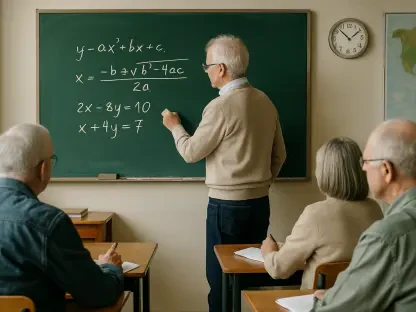
Practical classroom techniques serve as the essential tools for scaffolding these connections, with the do now exercise acting as a frequent starting point for linking personal experience to historical or scientific themes. A simple domestic argument over a television remote control, for example, can be utilized as a powerful metaphor for the complex resource conflicts that were central to the Civil War. This technique allows students to first process a concept through a lens they already understand before applying that logic to high-level academic analysis. In the field of mathematics, Jon Star advocates for a metacognitive approach where students are encouraged to brainstorm multiple problem-solving strategies rather than rushing toward a single correct answer. By discussing the merits of different paths to a solution, students build a mental database of strategy effectiveness. This practice effectively increases their knowledge of their own knowledge, making them more resilient and flexible thinkers when they encounter unfamiliar challenges.
Future academic success was established by the deliberate integration of student agency into every layer of the instructional design process. Educators moved away from rigid hierarchies and instead prioritized co-generative dialogues, which empowered students to critique lesson structures and suggest more relevant ways to explore the curriculum. This shift in the power dynamic encouraged students to take ownership of their intellectual development, leading to much higher rates of graduation and post-secondary enrollment. Leaders in the field implemented peer-teaching programs that allowed students to translate complex academic jargon into the vernacular of their peers, further reinforcing the bridge between lived experience and formal study. These actions proved that when students felt their internal expertise was respected, they remained significantly more likely to invest their effort into the learning process. These strategies provided a clear roadmap for schools seeking to eliminate the disconnect between the classroom and the real world.