
The sweeping transition toward Kenya’s Competency-Based Curriculum was envisioned as a landmark educational reform designed to replace rote memorization with critical thinking and technical proficiency. As the nation navigates the current academic landscape in 2026, the initial enthusiasm for the Junior Secondary School system has encountered the harsh realities of implementation on a massive scale. What was intended to be a seamless pivot toward modern vocational and cognitive development has instead surfaced a series of logistical and pedagogical hurdles that threaten the stability of the entire educational infrastructure. Administrators and policymakers are currently grappling with the tension between these visionary goals and the practical limitations of existing school facilities. While the shift was theoretically sound, the discrepancy between the planned curriculum and the available resources has created a significant operational gap. This disconnect has led to widespread concerns among stakeholders regarding the long-term viability of the framework without immediate and sustained intervention from the central government.
Structural and Academic Roadblocks
Overcrowding and Repurposed Facilities
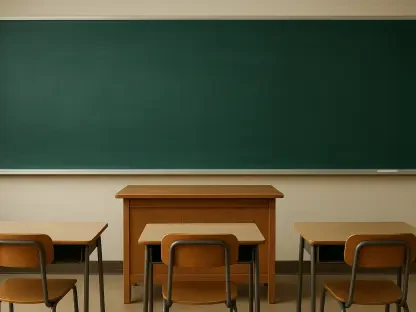
The most immediate challenge facing the new system is the severe lack of physical space, which has forced many primary schools to absorb the additional Grade Seven through Nine cohorts without adequate expansion. This surge in student numbers has pushed existing facilities to their absolute breaking point, often resulting in classrooms that are so packed that teachers struggle to move between desks or provide individual attention to learners. To manage the overflow, many headteachers have had to make difficult decisions, such as partitioning existing halls or holding lessons in outdoor areas that are vulnerable to the elements.
This atmosphere of overcrowding is further complicated by the widespread conversion of non-academic spaces into makeshift classrooms to accommodate the rising enrollment numbers. Schools have been forced to repurpose dining halls, staffrooms, and even storage areas, which significantly disrupts the day-to-day operations of the institution and diminishes the overall quality of the learning environment. These temporary solutions provide a roof over the students’ heads, yet they often lack the acoustic properties and ergonomic furniture necessary for an effective educational experience. The resulting noise and lack of focus are becoming major points of contention for parents who expected a higher standard of academic delivery.
The Practical Learning Deficit
A core pillar of the current curriculum is its emphasis on science, technology, and hands-on learning, yet the reality in many institutions is a near-total absence of the specialized laboratories required for these subjects. Without dedicated spaces for chemistry experiments or technical workshops, the curriculum remains largely theoretical, undermining the very essence of the competency-based approach. Many students are currently learning about advanced scientific concepts solely through textbooks and chalkboard drawings, which fails to prepare them for the practical challenges they will face in senior secondary education or the modern workforce.
The absence of technical equipment extends beyond just science labs to include computer rooms and vocational tools that are essential for the 21st-century learner. There is a growing fear among educators that this generation of students will suffer from a significant skill gap compared to their counterparts in private or better-funded urban institutions. This disparity creates an uneven playing field, as students from resource-poor schools are essentially being asked to master practical skills without ever touching the tools of the trade. If this lack of equipment is not addressed, the goal of producing a technically proficient graduate will remain an elusive dream for a large portion of the population.
Resource Management and Equity
Workforce Strains and Subject Mismatch
The human resource component of this transition has proven to be equally problematic, as the demand for specialized teachers has far outpaced the current recruitment capabilities of the Teachers Service Commission. This shortage has created a environment where many educators are assigned to teach subjects that fall completely outside their professional training or expertise. For example, a teacher trained in history might find themselves tasked with leading a class in integrated science or computer studies, simply because there is no one else available to fill the slot. This mismatch inevitably leads to a diluted quality of instruction and high levels of frustration for both teachers and students.
Furthermore, the high teacher-to-student ratios in many public schools have led to rapid burnout and a decline in staff morale across several counties. Educators are often forced to manage multiple large classes back-to-back, leaving very little time for lesson planning or the personalized assessment that the new curriculum requires. The mental and physical strain on the workforce is becoming visible as more teachers report feeling overwhelmed by the administrative and pedagogical demands placed upon them. Without a significant influx of new, qualified personnel, the system risks a total breakdown in instructional quality that could take years to rectify.
Fiscal Delays and Regional Disparities
A breakdown in the financial pipeline has further stalled the progress of the Junior Secondary School system, leaving billions of shillings in essential funds caught in administrative bottlenecks. These fiscal delays are often the result of complex procurement disputes and a lack of transparency in how resources are allocated at the local level. As a result, many schools have been left waiting for the capital needed to build new classrooms or purchase essential learning materials, even as the academic year progresses. This financial uncertainty makes it nearly impossible for school boards to plan for the future or maintain their current facilities effectively.
These financial hurdles are not felt equally across the country, as regional disparities continue to widen the gap between urban centers and marginalized rural areas. Schools in informal settlements and remote counties are frequently the last to receive government support, exacerbating existing social and economic inequalities. While wealthy regions may be able to rely on parental contributions to bridge the gap, underserved communities are left entirely dependent on a slow-moving central bureaucracy. This uneven distribution of resources threatens to create a two-tiered education system where the quality of a child’s schooling is determined more by their zip code than by their potential or hard work.
Strategic Pathways for Educational Recovery
To address these systemic vulnerabilities, the government initiated a multi-faceted recovery plan that prioritized infrastructure and digital integration. Authorities evaluated the existing bottlenecks and recognized that a centralized approach was insufficient for the diverse needs of the various counties. Consequently, the Ministry of Education moved toward a decentralized model that empowered local communities to manage small-scale construction projects for new laboratories and classrooms. This shift sought to reduce the delays caused by national procurement disputes and allowed for a faster response to the overcrowding crisis that had plagued the initial rollout phase.
Private sector partnerships also played a crucial role as the nation sought to bridge the equipment gap for technical and scientific subjects. Large corporations and international development agencies collaborated to provide mobile laboratory units and digital devices to schools in marginalized rural areas. These collective actions focused on ensuring that every student, regardless of their geographic location, had access to the minimum tools required by the new curriculum. By 2026, the implementation of these strategic measures helped to stabilize the Junior Secondary School system and restored a measure of public confidence in the national academic framework.