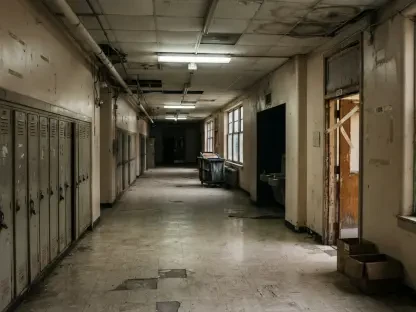

The Montgomery County Juvenile Detention Center in Dayton, Ohio, operates as a high-security facility that must simultaneously function as a place of learning for students awaiting court decisions. Housing approximately forty-five youths at any given time, many between the ages of thirteen and seventeen, the facility presents a stark visual and functional hybrid of a 1970s dormitory and a traditional secondary school. While the stated mission of the center is to rehabilitate young people through structured education and behavioral intervention, recent investigations suggest a troubling gap between these noble goals and the actual quality of instruction provided behind locked doors. The tension between maintaining secure confinement and providing a rigorous academic environment has sparked a significant debate among educators, judicial officials, and community advocates regarding whether these students are truly being prepared for a successful return to society.
This unique status as a “nonpublic chartered school” places the facility in a legal gray area that complicates academic accountability and public oversight. Because it is taxpayer-funded but not a traditional public school, the center is exempt from many of the performance metrics and state report cards typically used to measure student success across Ohio. This lack of rigorous scrutiny by the Ohio Department of Education and Workforce means that while teachers are required to be licensed, the actual depth, consistency, and efficacy of the curriculum are rarely evaluated by external authorities. Without the standard data points provided by state testing and graduation rate tracking, the true academic progress of detained youth remains largely invisible to the public, creating a system where institutional maintenance often takes precedence over educational excellence.
The Regulatory Framework and Oversight Gaps
Oversight Challenges: Minimal State Scrutiny and Performance Reporting
The primary challenge in assessing the facility’s educational output is the persistent absence of standardized reporting that usually defines public education in the United States. Since the state does not issue formal performance grades for the detention center, there is virtually no public data available regarding how well students are progressing academically during their stay. While the state requires the center to file routine expenditure reports and verify that it employs qualified staff, these administrative checks do not necessarily ensure that the students are receiving an education equivalent to that of their peers in traditional schools. This regulatory vacuum allows for a lack of transparency that can mask systemic inefficiencies and pedagogical failures, leaving parents and the community with little more than internal assurances that learning is actually occurring.
Beyond the lack of public grading, the facility’s isolation from mainstream educational networks prevents meaningful peer comparisons and quality control measures. Standardized tests, which serve as a benchmark for student growth in most districts, are often administered in a fractured or inconsistent manner due to the transient nature of the population. This results in a fragmented educational record that makes it difficult for teachers to identify where a student stands in their learning journey when they first arrive at the facility. Furthermore, without the pressure of state report cards, there is less incentive for the administration to invest in the latest instructional technologies or professional development for staff, potentially leaving detained students with an outdated or stagnant curriculum that fails to meet modern standards.
Vulnerable Students: Neglect of Specialized Educational Services
The lack of transparency is particularly concerning for students with disabilities, who historically make up a significant portion of the population within the juvenile justice system. Reports indicate that federal requirements for Individualized Education Programs (IEPs) are frequently overlooked or marginalized due to the operational demands of the detention center. Intervention specialists, who are legally required to provide tailored support for these students, are often diverted from their primary duties to cover general education classrooms when regular teachers are absent. This systemic failure leaves the most vulnerable students without the necessary legal and pedagogical support they need to maintain their academic progress, effectively stalling their development during one of the most critical periods of their lives.
When these specialized services are ignored, the facility risks violating the civil rights of students who are already facing significant life challenges and legal hurdles. The failure to implement IEPs consistently means that students who struggle with reading, processing, or behavioral issues do not receive the specialized interventions that would allow them to succeed. This neglect creates a downward spiral where academic frustration leads to increased behavioral issues, which in turn leads to further disciplinary action within the facility. By prioritizing staffing convenience over the legal mandates of special education, the center undermines its own rehabilitative mission and increases the likelihood that these students will struggle to re-engage with the education system once they are released from custody.
Conflict Between Educators and Court Administration
Internal Friction: Grievances and Curricular Inconsistency
Former teachers have described a chaotic educational environment where instructional guidance is virtually nonexistent and professional autonomy is discouraged. Some educators reported that they were never required to submit formal lesson plans, leading to a fragmented classroom experience where different teachers might cover the same material multiple times or skip essential concepts entirely. This lack of a coherent framework forces teachers to operate in a vacuum, often without the necessary resources or textbooks to provide a comprehensive education. When motivated teachers attempted to introduce their own supplemental materials or advocate for better books to help students struggling with basic literacy, they allegedly faced significant pushback from the facility’s leadership, who prioritized uniformity and control over creative instruction.
This lack of curricular structure is compounded by an environment where security protocols often disrupt the flow of teaching and learning throughout the day. Frequent lockdowns, movement restrictions, and the daily logistical requirements of a high-security facility mean that actual instructional time is often shorter than what is scheduled. Without a strong administrative commitment to protecting the integrity of the school day, education becomes an afterthought to the primary goal of containment. Teachers who have tried to bridge this gap by bringing in outside guest speakers or specialized learning tools often found themselves stymied by bureaucratic hurdles that prioritize risk management over academic engagement. This culture of restriction not only hampers the teachers’ ability to provide a high-quality education but also signals to the students that their schooling is a secondary concern.
Workplace Instability: Administrative Retaliation and Staff Turnover
The friction between frontline teaching staff and facility leadership has reportedly led to a culture of retaliation and exceptionally high turnover, particularly within core departments like English and math. Former employees have claimed that speaking out about academic deficiencies or resource shortages resulted in disciplinary actions or the non-renewal of contracts, creating a disillusioned and fearful workforce. This instability in the teaching staff further undermines the consistency of education, as students must constantly adapt to new instructors who may lack the institutional knowledge or emotional support needed to manage a traumatized population. When teachers do not feel supported or safe in their roles, the quality of their instruction inevitably suffers, and the students are the ones who bear the ultimate cost of this professional volatility.
High turnover rates also prevent the development of long-term relationships between students and educators, which are essential for students who have often experienced significant trauma and instability in their personal lives. In a detention setting, the teacher is often one of the few positive adult role models a student interacts with daily, and the constant cycling of staff prevents the building of trust and rapport. This professional instability also leads to a loss of institutional memory, where successful programs or teaching strategies are abandoned as soon as the person who championed them leaves the facility. Consequently, the educational program remains in a state of perpetual flux, never quite reaching the level of maturity or stability required to produce consistent academic outcomes for the students in its care.
Institutional Defense: The Official Defense of Facility Operations
In response to these serious allegations, court administrators have defended the center by highlighting the immense complexities of managing a transient and often high-risk student body. They argue that the primary difficulties in providing a seamless education lie in the chronic delays of receiving academic records from the students’ home districts rather than internal administrative failures. Administration officials have also dismissed much of the criticism as the complaints of disgruntled former employees who may have failed to meet professional standards or maintain their required state licensure during their tenure. From the court’s perspective, the facility is doing its best under challenging circumstances to balance the mandates of the justice system with the requirements of the educational code.
The administration also contends that their focus must remain on the safety of all individuals within the building, which occasionally necessitates the redirection of staff and resources. They maintain that the educational program is functional and that students are provided with the opportunity to earn credits and stay current with their studies while awaiting their court dates. By framing the issues as external or personnel-related, the administration shifts the focus away from systemic reforms and toward a narrative of operational competence. This defense suggests a fundamental disagreement between the educators, who see a system in crisis, and the administrators, who view the facility as a well-run institution meeting the basic legal requirements of juvenile detention and educational service delivery.
Quality Assurance: Implementation of Standardized Software and Audits
To address ongoing concerns regarding educational consistency and resource allocation, the administration recently transitioned to a standardized digital curriculum designed to provide uniform lessons across all grade levels. This software-based approach is intended to ensure that every student, regardless of their arrival date or specific teacher, has access to the same core material. Additionally, officials point to a recent state audit conducted by the Ohio Department of Youth Services that found the facility in full compliance with current operating standards. These audits are frequently cited as evidence that the center is meeting its obligations and providing a safe, structured environment for the youth in its custody, regardless of the internal disputes reported by former staff.
However, critics of the facility note that these state audits often prioritize safety protocols, sanitation, and intake procedures over the actual pedagogical quality of the classroom experience. A facility can be in “full compliance” with safety regulations while still providing a subpar education that fails to challenge or inspire its students. Furthermore, while digital curricula can offer consistency, they often lack the personal engagement and individualized instruction necessary for students who are already disengaged from the traditional school system. Relying too heavily on software can lead to a passive learning environment where students simply “click through” modules without truly grasping the material. This reliance on digital tools and administrative audits may check the boxes of legal compliance without addressing the underlying need for a high-quality, human-centered educational experience.
Barriers to Academic Reintegration and Credit Transfer
Credit Loss: The Technical Struggle with Course Credits
One of the most significant and frustrating hurdles for detained youth is the persistent difficulty of transferring school credits earned at the facility back to their home districts. Historically, the center utilized a “partial credit” system that awarded points in increments that did not align with the standard 0.5 or 1.0 credit increments used by most public schools in Ohio. This technical misalignment often results in students losing significant academic ground upon their release, as their home districts may refuse to recognize the work completed during their detention. This effectively punishes students for the time they spent in the justice system, forcing them to repeat coursework they have already finished and further delaying their path to graduation.
This loss of credit is more than just an administrative headache; it is a major factor in student frustration and eventual dropout rates among justice-involved youth. When a student spends months working on a subject only to be told those hours do not count toward their diploma, the incentive to stay in school diminishes rapidly. The failure to create a seamless credit transfer system reflects a lack of coordination between the juvenile justice system and the broader educational infrastructure of the county. Without a standardized agreement that ensures every hour of classroom time in detention is valued by the local school boards, the educational mission of the facility will continue to be undermined by bureaucratic hurdles that trap students in a cycle of academic failure.
Communication Gaps: Persistent Inconsistencies with Local School Districts
Administrators from neighboring districts, such as Dayton Public Schools, have confirmed ongoing issues regarding the quality of student transcripts and the timely delivery of educational services. A reported backlog of academic records and incorrect class placements have plagued the system for years, making it nearly impossible for some students to stay on the correct path toward graduation. When a student is placed in the wrong class or their previous records are not reviewed, they are set up for failure before they even begin their first lesson in detention. These communication breakdowns between the facility and the home districts create a disjointed experience that leaves students feeling lost and unsupported by the very institutions meant to help them.
Furthermore, the lack of a centralized data-sharing platform means that teachers in the detention center are often flying blind, without knowledge of a student’s previous successes, struggles, or specific learning needs. This information gap leads to repetitive testing and redundant instruction, which wastes valuable time and resources. For these young people, every day of unrecorded or subpar instruction significantly increases the risk that they will drop out of the education system entirely once they are released. The persistent inconsistencies in how records are handled suggest that the educational welfare of these students is being sacrificed to a lack of institutional cooperation, leaving the most vulnerable youth to navigate a complex and often hostile bureaucratic landscape on their own.
The Intersection of Judicial Leadership and Public Policy
Judicial Influence: Judicial Oversight and the Recidivism Link
The detention center operates under the direct authority of elected judges who have publicly stated that education is a critical tool for reducing recidivism and ensuring community safety. These leaders often speak about the importance of giving young people a second chance and providing them with the skills they need to lead productive lives. Despite these high-level commitments, teachers have claimed that their attempts to notify the judiciary of systemic failures and educational deficiencies have gone largely unaddressed by the bench. This disconnect suggests that the facility’s leadership may be more focused on institutional security and legal compliance than on the actual academic outcomes of the youth in their care, creating a gap between public rhetoric and private reality.
If education is truly a cornerstone of the rehabilitative process, then the judicial leadership must take a more active role in monitoring the classroom environment and ensuring that teachers have the resources they need. When judges are perceived as being out of touch with the daily struggles of the educational program, the staff and students alike may feel that their efforts are undervalued. This perception can lead to a culture of apathy where the minimum standards are accepted as the norm. By failing to bridge the gap between their public statements and the internal operations of the center, the judiciary risks overseeing a system that stabilizes youth in the short term but fails to provide them with the long-term tools necessary to break the cycle of involvement with the justice system.
Reform Movements: Political Stakes and the Call for Reform
The current political climate and upcoming election cycles have brought renewed attention to the center’s educational policies, as challengers to the bench emphasize the need for better alignment with state graduation requirements. There is a growing consensus among policy experts that providing a clear and attainable path to a GED or high school diploma is one of the most effective ways to ensure that these students can secure stable employment and avoid future criminal activity. This political pressure highlights a growing public demand for greater transparency and accountability in juvenile justice education. Advocates are increasingly calling for the detention center to be held to the same rigorous standards as any other school in the state, arguing that a student’s zip code or legal status should not determine the quality of their education.
This push for reform is driven by the understanding that the current system is not only failing the students but also the taxpayers who fund these facilities with millions of dollars each year. The argument for change is both moral and economic: it is far cheaper to educate a young person and set them on a path to employment than it is to incarcerate them as adults. As public awareness of these issues grows, there is an increasing likelihood that legislative or judicial changes will be mandated to improve the oversight and quality of education in juvenile facilities. This political momentum represents a significant opportunity to rethink how the county approaches juvenile justice, moving away from a model of pure containment and toward one of genuine academic and personal transformation.
Resource Management: Financial Logistics and Resource Allocation
With an annual operating budget of over seven million dollars, the detention center draws from a variety of funding sources, including county general funds, federal Title I grants, and per-diem payments from the students’ home districts. Despite this substantial financial backing, frontline educators have frequently reported a scarcity of basic resources, such as updated textbooks, modern classroom materials, and specialized instructional tools. This discrepancy raises serious questions about how educational funds are prioritized relative to the facility’s substantial security and administrative costs. If the budget is intended to support the rehabilitation of these youth, then a greater share of those resources must find its way directly into the classroom where the most impactful work occurs.
The complexity of the funding model also makes it difficult for the public to track exactly how much money is being spent on direct instruction versus security and maintenance. This lack of financial transparency can lead to suspicions that educational grants are being used to subsidize other areas of the facility’s operations. For example, if Title I funds, which are specifically designated for the education of disadvantaged youth, are being used for administrative salaries instead of classroom technology or tutoring services, the students are being deprived of the very resources meant to help them. A more detailed and publicly accessible breakdown of the facility’s spending is necessary to ensure that the educational needs of the students are being met and that taxpayer dollars are being used efficiently and ethically.
Daily Realities: The Student Experience and Grievance Discrepancies
The daily reality for students in the Montgomery County Juvenile Detention Center is one of extreme restriction, where they are escorted to every class by corrections officers and spend the majority of their time in individual cells. While official audits suggest that students feel comfortable filing grievances about their treatment or the quality of their education, former staff members tell a very different story, alleging that student petitions were often dismissed on minor technicalities or ignored altogether. This discrepancy underscores the need for a more robust and truly independent monitoring system to protect the rights of youth within the juvenile justice system. When students feel that their voices do not matter, they are less likely to engage with the educational opportunities available to them, further hindering their progress.
Living in a high-security environment naturally creates barriers to learning, as the constant focus on safety can make the classroom feel more like an extension of the cell block than a place of discovery. For students to succeed academically, they need to feel safe, respected, and heard—conditions that are difficult to maintain in a facility designed for confinement. The reported issues with the grievance system suggest a power imbalance that can leave students feeling helpless and discouraged. If the facility is to fulfill its promise of rehabilitation, it must create a culture where student feedback is taken seriously and where the educational environment is protected from the more punitive aspects of the detention center. Without these changes, the school within the walls will remain a missed opportunity for the young people who need it most.
The challenges facing the Montgomery County Juvenile Detention Center highlight a significant systemic failure to align judicial oversight with academic excellence. Local administrators and state regulators took notice of the rising concerns and began a series of dialogues aimed at streamlining credit transfers and increasing instructional transparency. These stakeholders recognized that the existing “chartered nonpublic” status required more rigorous internal audits to ensure that the quality of education remained consistent with state standards. Moving forward, the implementation of a more robust data-sharing platform between the facility and local districts proved to be an essential step in preventing the academic loss that often follows detention. By prioritizing the educational rights of these students, the county started to address the root causes of recidivism and prepared these young individuals for a more stable future. It was eventually understood that the only way to truly rehabilitate youth was to treat their education not as a secondary service, but as the primary vehicle for their successful reintegration into the community.