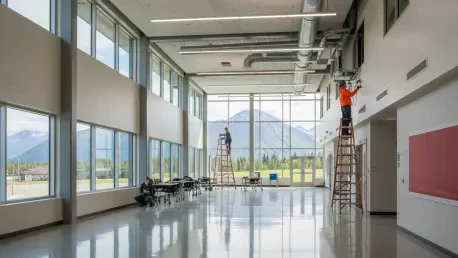

The Alaska Legislature’s recent decision to triple the state’s investment in public school repairs for the upcoming fiscal cycle marks a significant shift in fiscal policy, yet it faces intense scrutiny from local educators and administrators who witness the daily, dangerous decay of classrooms and facilities firsthand. This legislative session concluded with a landmark $148 million allocation specifically designated for school maintenance and critical repairs, a figure that represents the most aggressive financial intervention the state has seen in over a decade. The sudden urgency behind this funding follows a series of high-profile investigative reports that brought to light the harrowing conditions within many Alaskan schools, where children are often forced to learn in environments that lack basic safety standards or structural integrity. While the dollar amount appears impressive on paper, it arrived amid a backdrop of skepticism, as advocates pointed out that the scale of the crisis necessitated a much broader commitment to long-term infrastructure health.
Deteriorating Foundations: The Human Cost of Neglect
In the vast and rugged terrain of rural Alaska, the physical condition of educational facilities has reached a breaking point after years of systemic neglect and deferred maintenance. The Jack Egnaty Sr. School in Sleetmute serves as a grim example of this reality, having battled a severely leaking roof for nearly twenty years, which eventually led to pervasive structural rot and persistent bat infestations within the walls. These are not merely aesthetic concerns or minor inconveniences; they represent significant health hazards that endanger students and staff members alike on a daily basis. When structural integrity is compromised to such a degree, the learning environment shifts from a place of academic growth to one of survival and constant adaptation to failing surroundings. The localized failures in Sleetmute are mirrored in dozens of other remote districts, where the lack of immediate intervention has allowed small, manageable issues to balloon into catastrophic building failures that now require millions to remediate.
The implications of these crumbling facilities extend far beyond the classroom, as school buildings in remote regions often serve as the primary or only emergency shelters for the community during natural disasters. When a roof is unable to withstand heavy snowfall or a foundation begins to sink into the thawing permafrost, the entire community’s safety net is essentially dismantled, leaving residents vulnerable during extreme weather events. This physical deterioration disproportionately impacts Indigenous students, who comprise the majority of the population in the most neglected districts and frequently find their educational needs ignored by a centralized government. The psychological toll of attending a school that is literally falling apart cannot be overstated, as it sends a clear message to young learners about the value the state places on their future and well-being. Ensuring these buildings are safe is therefore a matter of civil rights and community resilience rather than just a simple line item in a municipal or state infrastructure budget.
Fiscal Shortfalls: Measuring the Billion-Dollar Infrastructure Gap
While the $148 million allocation for the 2027 fiscal year is record-breaking in the context of recent history, it is remarkably small when measured against the actual documented need reported by school districts across the state. In the current 2026 cycle, local districts submitted formal requests totaling more than $1.12 billion for essential infrastructure projects, ranging from HVAC replacements to complete structural overhauls of condemned wings. This means the newly approved state funding covers a mere 13% of the total demand, leaving nearly a billion dollars in critical repairs unfunded and scheduled to worsen over the coming seasons. The massive gap highlights the extent to which Alaska has fallen behind in maintaining its educational assets, creating a mountain of debt that threatens to overwhelm the state’s fiscal capacity. Without a more comprehensive strategy to bridge this billion-dollar deficit, the record investment serves as a temporary patch rather than a sustainable solution to a decades-long decline in building quality.
This persistent trend of underfunding is not a new phenomenon but rather a structural failure that has persisted for decades, creating a maintenance backlog that may prove impossible to clear without a fundamental shift in revenue allocation. For years, the legislature has provided only a small fraction of the funds requested by districts, with some annual cycles seeing allocations as low as 5% of the total identified need. Lawmakers have often described these small distributions as scraps of a pie, acknowledging that the funds are spread so thin that they rarely address the root causes of building decay in any single location. This approach has forced districts into a state of perpetual emergency management, where they must constantly prioritize which leaking roof or failing boiler is the most immediate threat to life and limb. The accumulation of these deferred projects has led to a compounding interest of decay, where every year of inaction significantly increases the eventual cost of repair, further straining the state’s limited resources.
Systemic Barriers: Political Deadlock and Competitive Inequity
A persistent political blame game between different branches of the government has made it exceedingly difficult to secure a stable and predictable funding stream for school infrastructure. The Department of Education has frequently claimed that its ability to address these issues is severely restricted because the legislature maintains the power of the purse and often ignores departmental recommendations during the budget process. Conversely, lawmakers have expressed frustration with the department, arguing that it fails to provide clear, actionable data regarding the precise condition of school buildings, which makes it difficult to justify large expenditures to the public. This lack of transparent communication and shared objectives has resulted in years of political gridlock, with students and teachers caught in the middle of a bureaucratic dispute over accountability. Until both the executive and legislative branches can agree on a unified system for assessing and reporting building conditions, the allocation of funds will likely remain reactive.
The current system for prioritizing school repair projects has also faced heavy criticism for harboring a systemic bias that favors larger, wealthier urban districts over their smaller rural counterparts. Urban districts often possess the financial resources to hire professional grant writers and specialized building inspectors who can produce polished, data-heavy applications that naturally rise to the top of the state’s priority list. In contrast, small rural districts often lack the tax base or administrative staff required to compete on this level, leaving their applications for emergency repairs at the bottom of the pile despite having the most dire needs. This administrative divide ensures that the communities with the most crumbling infrastructure remain the least likely to receive the funding necessary to fix it, creating a cycle of poverty and neglect. Reformers have argued that the state must overhaul its ranking criteria to account for the lack of local resources, ensuring that funding is distributed based on the severity of the hazard.
Strategic Responses: Mitigating Risks and Future Prospects
To ensure that the most vulnerable schools remain operational, lawmakers have recently introduced several targeted measures, such as a permanent grant program designed to offset the crippling energy costs in roadless communities. These rising utility expenses often drain district budgets that would otherwise be used for minor repairs, so stabilizing energy costs serves as an indirect but vital way to preserve the physical integrity of school buildings. Furthermore, the legislature has had to make the difficult decision to reduce the scope of individual large-scale projects to spread the $148 million across a larger number of districts, aiming to provide at least some relief to as many communities as possible. While these stopgap solutions are absolutely necessary for the immediate survival of many rural schools, they do not address the systemic root causes of the infrastructure crisis. These interventions act more like a triage system in a disaster zone, focusing on keeping the doors open today without a clear plan for how these buildings will be modernized.
The success of the $148 million investment ultimately depended on the final approval of Governor Mike Dunleavy, who navigated a complex political landscape where public pressure collided with fiscal conservatism. While the Governor had a historical pattern of vetoing school maintenance funds to balance the state’s broader budget, the heightened media scrutiny and community activism surrounding the current crisis pushed the administration toward a more supportive stance. Stakeholders recognized that signing this funding into law was only the first step in a much longer process of legislative reform and administrative transparency. Moving forward, the state established a more rigorous oversight committee to monitor the execution of these repair projects, ensuring that funds reached the most critical sites without delay. This proactive approach sought to dismantle the barriers that previously prevented rural districts from accessing state aid. By prioritizing the structural safety of educational facilities, Alaska took a decisive, initial step toward honoring its obligation.