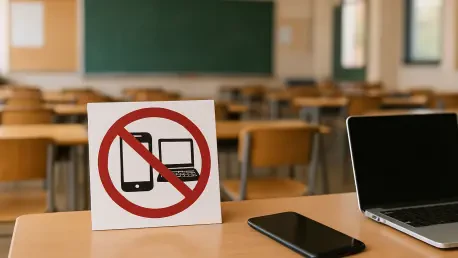

The traditional sound of a school bell has recently been accompanied by a different kind of signal: the persistent vibration of a smartphone tucked away in a pocket or backpack, signaling a digital intrusion into the academic sphere. Indiana schools have entered a new era of classroom management where the buzzing of a notification is no longer a standard part of the school day, thanks to the comprehensive mandate of Senate Enrolled Act 78. Signed by Governor Mike Braun, this law establishes a “bell-to-bell” ban on personal communication devices in all public and charter schools across the state. This legislative shift addresses the growing realization that intermittent digital connectivity serves as a constant barrier to deep learning and student concentration. By mandating that devices remain stored and inactive from the first bell to the last, the state aims to reclaim instructional time and foster an environment where students are fully present in their education.
Strategic Enforcement and District Accountability
Local Management and Storage Strategies
Individual school districts have begun adopting specific logistical strategies to comply with the new state law, ensuring that the transition to a device-free environment is as seamless as possible for both staff and students. One primary method involves the use of lockable storage units featuring numbered slots where confiscated or stored devices remain secure throughout the day. For example, at Mishawaka High School, administrators have implemented a system where students place their phones in designated cubbies upon entering the building or the classroom. This physical separation is designed to eliminate the temptation of a quick glance at a screen while providing parents with the peace of mind that expensive technology is being kept in a protected location. These storage solutions are becoming a standard feature in Indiana hallways, representing a tangible commitment to the new policy and providing a clear visual reminder that the school day is a time for focus rather than social browsing.
Effective implementation of these storage protocols requires significant preparation and clear communication with families well before the academic year begins. Schools have utilized parent-teacher orientations and digital newsletters to outline the specific physical procedures for device handling, aiming to manage expectations and reduce friction on the first day of classes. By being transparent about how devices will be collected, where they will be kept, and how they can be retrieved, districts are building a foundation of trust with the community. This proactive approach ensures that parents understand the rationale behind the storage units and the logistical steps taken to prevent loss or damage. As these systems become more refined, they serve as a blueprint for other districts looking to balance security with the state’s mandate. The goal is to create a routine where the storage of a phone becomes as habitual as hanging up a coat, allowing the school day to proceed without the persistent interruptions of the digital world.
Disciplinary Procedures and Behavioral Expectations
To ensure widespread compliance with the bell-to-bell ban, districts have established a clear hierarchy of disciplinary consequences for students who choose to violate the new restrictions. Initial offenses typically result in the device being held in a central office or a secure vault until the end of the day, acting as a direct but relatively mild corrective measure. This allows students to understand the seriousness of the policy without immediately facing severe academic penalties. Administrators emphasize that the goal is not to punish, but to retrain habits that have become deeply ingrained over years of unrestricted device access. By providing a clear warning system, schools give students the opportunity to adjust to the new expectations while maintaining a firm boundary. This initial layer of enforcement is critical for setting the tone of the school year and demonstrating that the state mandate will be consistently applied to every individual regardless of their grade level or previous disciplinary record.
For cases where initial warnings and temporary confiscations prove insufficient, the disciplinary framework escalates to include more serious actions such as after-school detention or mandatory parent meetings. These secondary measures are designed to involve families in the corrective process, ensuring that the message of digital responsibility is reinforced both at home and in the classroom. In the most persistent cases of non-compliance, students may face in-school suspension, which underscores the state’s commitment to maintaining a distraction-free atmosphere for all learners. By treating device violations with the same level of seriousness as other behavioral infractions, Indiana schools are sending a powerful message about the value of the instructional environment. This tiered approach provides administrators with the flexibility to address different levels of defiance while ensuring that the primary objective of the law—uninterrupted education—remains the central focus of the school’s daily operations and overall management strategy.
Rationale for a Digital-Free Learning Environment
Cognitive Focus and Academic Performance
The primary academic motivation for the ban centers on the elimination of “cognitive interruption” caused by the persistent presence of digital alerts and social media notifications. Research shared during the legislative sessions indicated that even when a student does not actively engage with their phone, the mere sound or vibration of an incoming message can break their concentration. This phenomenon requires the brain to expend significant energy to return to a state of deep focus, a process that can take several minutes for each individual interruption. When multiplied across a classroom of thirty students, these frequent alerts accumulate over time, leading to a profound loss of instructional quality and a measurable decrease in overall academic performance. By removing these triggers, Indiana is attempting to create a “flow state” in the classroom where students can engage deeply with complex materials without the constant pull of the digital world competing for their limited attention spans.
Beyond the immediate benefit of improved concentration, the removal of personal devices is expected to enhance the quality of instructional delivery and teacher-student interactions. Educators have long argued that the presence of smartphones creates a secondary, invisible classroom where students are mentally checked out while appearing physically present. By eliminating this distraction, teachers can once again command the full attention of their audience, leading to more robust discussions and more effective hands-on learning experiences. The focus shifts back to the curriculum and the collaborative nature of the classroom, rather than the isolated consumption of digital content. This change is not just about stopping a negative behavior, but about fostering a positive environment where curiosity and intellectual rigor can flourish. As schools move forward with this policy, the expected outcome is a significant increase in test scores and a more comprehensive understanding of the core subjects that form the foundation of the state’s educational standards.
Social Development and Mental Well-being
Educators and mental health professionals believe that removing personal devices will revitalize the social fabric of the school environment by encouraging direct interaction. Advocacy groups and teachers’ unions point to the potential for reduced cyberbullying during school hours, as students will no longer have the tools to record, share, or engage in online conflicts while on campus. By limiting screen time during lunch and passing periods, school officials hope to encourage students to engage in genuine face-to-face discourse and become more present in their immediate physical surroundings. This shift is seen as essential for developing the interpersonal skills that are often lost in a world of digital mediation. When students are forced to put down their phones, they are more likely to notice the peers around them, leading to stronger friendships and a more inclusive school culture. This return to traditional social engagement is a cornerstone of the state’s broader strategy to improve the overall well-being of its youth.
The reduction of social anxiety associated with constant connectivity is another significant benefit anticipated by proponents of the statewide ban. Many students feel an immense pressure to remain “online” and responsive at all times, leading to a state of perpetual stress and the fear of missing out on social developments. By mandating a break from the digital world during the school day, the law provides students with a necessary reprieve from the demands of their social media personas. This “digital detox” allows them to focus on their own personal growth and learning without the constant comparison to the curated lives of others. Furthermore, the absence of phones reduces the opportunities for students to engage in harmful behaviors such as taking unauthorized photos or videos of their classmates, which often leads to long-term psychological distress. As the school environment becomes a safer space for social exploration, the overall mental health of the student body is expected to improve, creating a more stable and supportive atmosphere for everyone involved.
Legislative Nuance and the Regional Landscape
Specialized Exemptions and Medical Accessibility
While the ban is comprehensive, the legislation includes vital exceptions to ensure that it does not negatively impact students with specific medical or educational requirements. Students who need personal devices for documented health reasons, such as monitoring blood glucose levels for diabetes or managing severe allergies, are explicitly exempt from the general restrictions. These devices act as essential medical tools rather than sources of entertainment, and the law recognizes the necessity of maintaining access to life-saving technology. By providing these clear exemptions, the state ensures that the safety and well-being of every student remain the top priority. This nuanced approach allows schools to enforce a strict policy for the general population while still being inclusive of those with unique challenges. It prevents the ban from becoming a one-size-fits-all solution that could inadvertently harm the most vulnerable members of the school community, maintaining a balance between focus and health.
In addition to medical exemptions, the law provides flexibility for students with Individualized Education Programs (IEPs) and Section 504 plans that necessitate the use of technology. For some learners, personal devices serve as vital assistive tools that facilitate communication, reading, or organization, and denying access would constitute a barrier to their academic success. The legislation ensures that these students can continue to use their devices as outlined in their specific educational plans, keeping technology available as a tool for accessibility. This distinction is critical for maintaining compliance with federal disability laws and ensuring that the pursuit of a distraction-free environment does not come at the cost of educational equity. By allowing these specialized uses, Indiana demonstrates that the ban is targeted at recreational and social distractions rather than the constructive use of technology for learning support. This allows administrators to manage the classroom effectively while still meeting the diverse needs of their entire student body.
Regional Policy Alignment and Future Implementation
Indiana’s decision to implement a bell-to-bell ban aligns with a broader regional movement as neighboring states like Michigan and Illinois explore similar restrictions. While some jurisdictions offer more flexibility for older students in high school, the general trend across the Midwest is toward reclaiming the school day from the pervasive influence of digital interference. This regional consensus reflects a growing awareness among lawmakers and the public that the unchecked use of smartphones in schools has reached a tipping point. As more states adopt these policies, a new national standard for classroom integrity is beginning to emerge, emphasizing the importance of focused, distraction-free environments for the next generation of learners. Indiana is currently at the forefront of this movement, providing a model for how state-level legislation can provide the necessary support for local districts to make difficult but necessary changes. This alignment across state lines suggests that the era of “anything goes” with student technology is coming to a close.
As Indiana districts continue to wait for further technical guidance from the Department of Education, they are busy updating their student handbooks to reflect the new legal reality. These updates are not merely administrative; they represent a fundamental shift in the culture of the school system and the expectations placed upon the modern student. Schools are also looking at long-term strategies for integrating school-issued technology—such as laptops and tablets—in a way that does not mimic the addictive qualities of personal smartphones. The focus is on ensuring that technology remains a servant of education rather than its master. Future considerations include the potential for expanded teacher training on managing a device-free classroom and the development of new curriculum that emphasizes digital literacy and responsible tech use. By taking these steps, Indiana is preparing its students for a future where they can navigate the digital world with intention and control, rather than being constantly at the mercy of their notifications and social media feeds.
The adoption of Senate Enrolled Act 78 represented a decisive step toward prioritizing academic achievement and student well-being over the convenience of constant digital access. School boards across Indiana worked diligently to establish standardized protocols for device storage and clear disciplinary frameworks that balanced firmness with fairness. These actions ensured that the transition to a device-free school day was supported by both logistical planning and community outreach, providing a solid foundation for the new policy. Moving forward, the focus shifted toward monitoring student performance data and social interaction metrics to gauge the long-term effectiveness of the mandate. Educators were encouraged to leverage the newly reclaimed instructional time to implement more interactive and collaborative learning strategies that were previously hindered by digital distractions. By creating an environment where students could focus on their studies and their peers without the interference of personal technology, Indiana laid the groundwork for a more engaged and mentally healthy generation of learners who were better prepared for the complexities of the modern world.