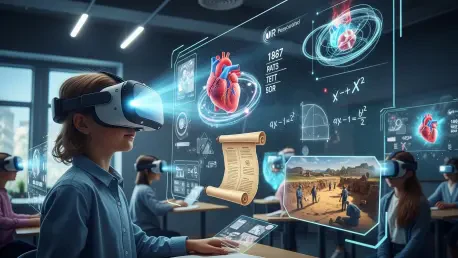

The integration of immersive technology into the modern academic curriculum has transitioned from a speculative experiment to a necessary evolution in how information is synthesized and retained. San José State University’s School of Information, in collaboration with New Media Learning, is spearheading a transformative initiative that utilizes the Virtual Experience Research Accelerator to explore the depths of human-computer interaction. This effort focuses on how virtual and augmented reality can bridge the gap between passive consumption and active, experiential learning by placing users inside the data they are studying. By utilizing the VERA framework, researchers are meticulously documenting the cognitive shifts that occur when individuals navigate digital landscapes, providing a data-driven foundation for future educational standards. This project serves as a blueprint for how institutions can scale high-tech solutions to reach diverse populations, effectively leveling the playing field for digital literacy and success.
Researching Information: Behavioral Studies in 3D
Building an Immersive Interaction Testbed
The technological cornerstone of this research project is a sophisticated interaction testbed developed using the Unity engine, which facilitates a comprehensive analysis of user behavior within a controlled 3D environment. Traditionally, conducting high-level research on virtual reality required participants to be physically present in a laboratory setting, which often limited the diversity and size of the study group due to geographic and logistical constraints. However, this new system circumvents these barriers by enabling large-scale, remote participation from across the country, allowing a broader demographic of learners to contribute to the data pool from their own locations. This decentralization of research not only makes the findings more representative of the general population but also provides a more robust data set for understanding how different people interact with immersive interfaces. By moving the laboratory into the cloud, the team has created an inclusive environment where nuances of digital engagement can be studied with scale.
To capture a holistic view of the learning process, the researchers utilize an array of sophisticated tracking mechanisms that record granular movements, specific navigation choices, and the frequency of interactions with virtual objects. Every head tilt, hand gesture, and focal point is logged with millisecond precision, offering a transparent window into the user’s cognitive journey as they move through a simulated educational module. This high-resolution data allows the team to identify exactly where a learner might become confused or disengaged, enabling the redesign of virtual spaces to better support information retention. When these quantitative metrics are paired with qualitative feedback from user surveys and interviews, the result is a multi-dimensional portrait of the immersive learning experience that goes far beyond simple test scores. Understanding these behavioral patterns is essential for developing intuitive interfaces that minimize cognitive load while maximizing the pedagogical impact of the technology on the individual student.
Expanding Participant Diversity and Data Scope
A significant aspect of this project is its commitment to making high-tech learning accessible to everyone, from small local libraries to large urban universities, ensuring that the benefits of virtual reality are not confined to well-funded institutions. The research isn’t just about the hardware itself, but about building a scalable system that can be seamlessly integrated into the existing infrastructure of diverse schools and cultural centers. This approach ensures that students in remote areas have the same opportunities to engage with cutting-edge tools as their counterparts in major technological hubs. By focusing on the practical limitations of public spaces, such as limited bandwidth or varying levels of technical expertise among staff, the team is creating a resilient model for digital inclusion. This ensures that as educational technology continues to evolve, the gap between different socioeconomic groups does not widen, but instead begins to close through shared resources and collective innovation.
By integrating the VERA framework, the research team is moving beyond the initial novelty of virtual reality to establish a scientific baseline for how humans act and interact within digital spaces. This structured approach allows for the comparison of data across different studies and institutions, fostering a collaborative environment where findings can be validated and expanded upon by the global research community. The framework provides the necessary tools to analyze information behavior in three dimensions, offering insights that were previously impossible to gather through traditional 2D interfaces. This deeper understanding of human-computer interaction is critical for designing educational environments that feel natural and intuitive to the user. As the project progresses, the data collected through the VERA framework will serve as a cornerstone for new pedagogical theories that account for the unique affordances of immersive media, ultimately shaping how knowledge is communicated in a digital-first world.
Applying Frameworks: Driving Real-World Impact
Using Global Goals and Personalized Learning
The first phase of the research uses the United Nations Sustainable Development Goals as a guide for virtual lessons, providing students with a structured environment to tackle complex, real-world issues. By immersing learners in scenarios related to climate action, clean energy, or social equity, the project transforms abstract global challenges into tangible, interactive experiences that require critical thinking. This approach allows students to experiment with various solutions in a simulated space where the consequences of failure are purely educational, fostering a sense of agency and global responsibility. Utilizing a recognized framework like the SDGs ensures that the curriculum is intellectually rigorous and relevant to the professional landscapes students will eventually enter. Furthermore, this alignment with international priorities makes the findings easily adaptable for educators worldwide who are looking to implement immersive training programs that address the most pressing issues of our time.
In the long run, the project plans to expand into digital literacy training, workforce skills, and public health, utilizing artificial intelligence to create learning paths that adapt to the specific needs of each individual student. This synthesis of AI and virtual reality provides a safe and cost-effective platform for practicing skills that are too risky or expensive to perform in the real world, such as emergency medical procedures or complex industrial repairs. The adaptive nature of the technology ensures that every learner receives the appropriate level of challenge, preventing boredom for advanced students and providing extra support for those who need it. By prioritizing workforce readiness and technical proficiency, the initiative prepares a new generation of professionals to navigate a landscape where digital and physical realities are increasingly intertwined. This proactive approach to skill development ensures that the labor force remains competitive and capable of leveraging the latest technological advancements for the public good.
Advancing Career Readiness Through Simulation
The successful deployment of this initiative relied on a robust partnership between academic researchers and industry experts, which allowed for the seamless integration of virtual reality into over two hundred public libraries. This collaboration ensured that the theoretical findings from the university were immediately applied to solve practical challenges, such as hardware maintenance and user accessibility in community-focused environments. Stakeholders recognized that maintaining these systems required a consistent investment in both technical infrastructure and staff training, which fostered a more resilient educational network. Librarians and educators were empowered to facilitate immersive sessions, transforming their local branches into hubs for digital innovation and lifelong learning. By grounding the research in these real-world settings, the project demonstrated how public-private partnerships could effectively democratize access to advanced technology. These efforts created a sustainable model for community engagement.
Student researchers played a pivotal role in this process, as they managed the technical operations of the testbeds and analyzed the vast streams of behavioral data generated by the virtual interactions. These individuals gained hands-on experience in user research and data science, which prepared them for leadership roles in the rapidly evolving technology sector. By involving students in every stage of the project, the program ensured that the next generation of professionals was equipped with the skills needed to design and manage complex digital environments. The findings from their research were used to refine the user interfaces and pedagogical strategies, making the virtual experience more intuitive and impactful for the general public. Educators also saw the value in this student-led approach, as it fostered a culture of mentorship and practical application that extended beyond the classroom. This comprehensive strategy ultimately solidified the role of immersive technology in modern education.