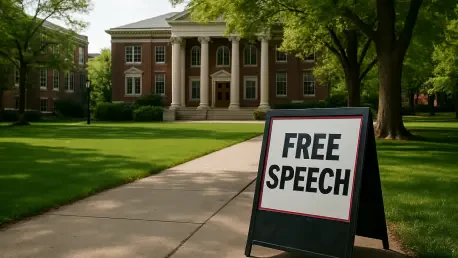

The recent enactment of legislative measures in Oklahoma marks a pivotal shift in how public universities manage the delicate balance between academic order and the constitutional rights of students. For years, higher education institutions across the United States have struggled with “free speech zones” and restrictive policies that critics argue stifle open inquiry and debate on controversial topics. Oklahoma’s initiative seeks to dismantle these barriers by establishing clear, statewide standards that prioritize the First Amendment within the university environment. This transition reflects a growing trend where state governments intervene to ensure that campuses remain open marketplaces of ideas rather than echo chambers of a single ideology. By redefining the parameters of acceptable discourse, the state aims to eliminate the ambiguity that often leads to administrative overreach and self-censorship. The law does not merely suggest guidelines but mandates specific protocols, ensuring that every student has a voice.
Redefining Public Spaces: The End of Restrictive Speech Zones
The primary objective of this legislation involves the total elimination of designated speech zones, which previously confined student expression to remote or small corners of a campus. Under the new legal framework, all outdoor areas of public university campuses are categorized as traditional public forums, meaning students can engage in expressive activities anywhere that does not physically block traffic or interfere with scheduled classes. This change fundamentally alters the geography of campus activism, allowing for spontaneous demonstrations and literature distribution in high-traffic areas where they are most effective. Furthermore, the law adopts the stringent Davis v. Monroe County Board of Education standard for harassment, which requires that speech be so severe, pervasive, and objectively offensive that it denies a student equal access to education. By aligning campus policy with Supreme Court precedents, Oklahoma prevents administrators from using broad harassment definitions to silence views.
Accountability serves as the cornerstone of this legal overhaul, as institutions are now required to submit annual reports detailing their efforts to protect free expression. These documents must include information on any complaints filed regarding speech violations, the outcomes of those complaints, and the specific actions taken by the university to rectify any issues. Transparency ensures that the public and state lawmakers can monitor institutional compliance and identify patterns of censorship before they become systemic problems. Moreover, the law empowers students and faculty members to seek legal recourse if their rights are infringed upon, providing a clear path for litigation against institutions that fail to uphold these new standards. This shift from passive suggestion to active enforcement creates a deterrent against the implementation of administrative bodies that have historically been used to monitor or discourage certain types of discourse.
Looking forward from the implementation period spanning from 2026 to 2028, the focus shifted toward refining the practical applications of these free speech protections. Stakeholders moved beyond mere compliance to establish robust internal review boards that evaluated the effectiveness of new training programs and reporting mechanisms. It became clear that the most successful institutions were those that actively encouraged faculty to incorporate diverse perspectives into their curricula, rather than just tolerating them. To maintain this momentum, universities adopted decentralized communication strategies that allowed students to voice concerns directly to ombudsmen specialized in First Amendment issues. Policy makers recommended that other states observe Oklahoma’s model to develop similar protections that balanced safety with the necessity of challenging ideas. The ultimate goal became the creation of an environment where the pursuit of truth remained unencumbered by administrative hurdles.