
Walking across a sun-drenched quad toward a mid-morning physics lecture, a student might expect to dodge skateboards and frisbees rather than encounter officers equipped with semi-automatic rifles and sonic dispersal devices designed for high-intensity combat zones. This stark reality has become increasingly common across California’s public higher education systems, where the line between campus safety and military-grade tactical readiness has blurred significantly. While university environments are traditionally viewed as sanctuaries for open research and peaceful debate, recent investigations into the state’s 148 public campuses have unveiled specialized armories housing thousands of chemical munitions and high-powered weaponry. This shift toward a more aggressive policing posture has sparked a statewide conversation about the necessity of such equipment in the pursuit of academic security and the psychological impact it has on the student population.
The depth of this militarization was largely obscured from public view until legislative intervention and investigative journalism forced a reckoning with the contents of these campus arsenals. Through a comprehensive analysis of the University of California, California State University, and California Community College systems, a pattern of systemic expansion in tactical hardware has emerged. This development is not merely a logistical update in policing equipment but represents a fundamental change in how institutions manage student expression and campus incidents. As the public gains access to these previously hidden inventories, the friction between administrative safety strategies and student-led activism has reached a boiling point, prompting many to question whether a college campus is a suitable environment for the tools of modern warfare.
The Silent Escalation of Tactical Hardware in California’s Academic Spaces
The presence of semi-automatic rifles and submachine guns in environments reserved for intellectual discovery creates a jarring visual and cultural dissonance that many students find impossible to ignore. In the halls of prestigious research universities and local community colleges alike, the quiet hum of academic life is increasingly punctuated by the specialized gear of campus police departments. These officers are no longer just equipped with standard sidearms; many now have access to AR-15s and other high-velocity firearms capable of penetrating barriers and delivering lethal force at long ranges. The justification often centers on the need to respond to active shooter scenarios, yet the permanent integration of these weapons into the daily landscape of the university changes the nature of the relationship between the police and the students they serve.
Beyond traditional firearms, the introduction of the “Voice of God”—the Long-Range Acoustic Device (LRAD)—marks a significant transition from combat zone utility to campus protest management. Originally developed for military use to broadcast orders over the roar of battle or to repel maritime threats, these devices are now being deployed during student demonstrations to issue commands at deafening volumes. While administrators argue that these tools are essential for clear communication in large crowds, their capability to emit 160-decibel sound beams introduces a physical element to crowd control that goes far beyond simple messaging. The use of such technology suggests that campus security has shifted toward a model of dominance and control, rather than the de-escalation and community-based policing often promised in university brochures.
There remains a profound disconnect between the perceived safety of a public college campus and the logistical reality of armories housing thousands of chemical munitions, including tear gas and pepper spray grenades. These chemical agents are designed to induce physiological distress, such as choking, temporary blindness, and skin irritation, yet they are stored in the same buildings where students attend seminars and write exams. The scale of these inventories is often staggering, with some campuses maintaining stocks of munitions that rival those of large municipal police departments. This stockpile of incapacitating agents creates an atmosphere where the potential for a militarized response to civil disobedience is always present, regardless of the actual threat level on campus.
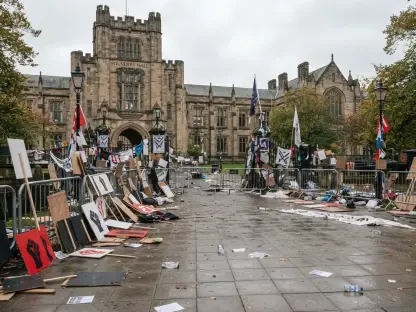
Consequently, military-grade technology has become a central focal point for student-led activism across California, as a new generation of learners challenges the ethics of militarized policing. Activists argue that the presence of such equipment does more to intimidate vulnerable populations than it does to protect them, particularly for students from communities that have historically experienced over-policing. This growing tension has led to demands for “demilitarization” and a reassessment of how campus budgets are allocated. The debate is no longer just about safety statistics; it is about the fundamental identity of the university and whether the tools of state-sanctioned violence have a legitimate place in the center of higher learning.
The Legislative Foundation: Understanding the Stakes of Assembly Bill 481
The push for transparency regarding campus arsenals found its primary legal vehicle in Assembly Bill 481, a landmark piece of California legislation passed in 2021. This law was a direct response to the perceived “militarization” of local law enforcement and aimed to restore public oversight over the acquisition and use of specialized tactical gear. For the first time, campus police departments were legally required to define what “military equipment” they possessed and to seek explicit approval from their governing boards for its continued use. This shift in the law was intended to strip away the secrecy that had allowed departments to accumulate high-powered weaponry without community input or administrative scrutiny.
Under the requirements of AB 481, the legal mandate for transparency is rigorous and multifaceted. Campus police must not only list their inventories but also provide a detailed “use policy” that outlines the circumstances under which military-grade tools can be deployed. This has forced departments to justify their equipment in a public forum, a process that has often revealed a lack of clear protocols. Moreover, the law includes a “no civilian alternative” clause, which serves as a significant hurdle for law enforcement. To maintain their specialized gear, departments must prove that there is no commercially available, non-military alternative that can perform the same function, a requirement that challenges the necessity of high-powered rifles and chemical grenades in a public higher education setting.
The scope of this legislative reach is immense, covering 148 campuses across the UC, CSU, and Community College systems. An investigation into these institutions has evaluated how effectively they have integrated these mandates into their daily operations. The results show that while the law provides a framework for accountability, its implementation has been inconsistent. Some districts have embraced the spirit of the law, using the reporting process to foster dialogue with their students, while others have viewed the requirements as a bureaucratic hurdle to be bypassed or ignored. The 148-campus investigation highlights the massive scale of the task, as the public attempts to monitor the equipment policies of an incredibly diverse range of academic institutions.
Despite the clear legal requirements, the “militarization” of campus police remains a moving target, as definitions and reporting standards vary. The stakes of AB 481 are high; failure to comply not only risks legal challenges but also erodes the trust between the university administration and the student body. The law was designed to ensure that if a campus chooses to arm itself with military-grade technology, it must do so with the full knowledge and consent of the community. However, as the evidence suggests, the transition from a culture of tactical secrecy to one of public accountability is far from complete, leaving many students to wonder who is truly in control of the weapons on their campuses.
A Detailed Survey of the Modern Campus Arsenal
A closer look at the actual inventories of California’s campus police departments reveals a staggering array of high-powered firearms that are often indistinguishable from those used by frontline infantry. AR-15 rifles have become a standard fixture in many departments, frequently reclassified as “patrol rifles” to minimize the military association, yet they retain the same semi-automatic fire capabilities and high-capacity magazines as their tactical counterparts. Perhaps more controversial is the presence of unauthorized submachine guns in some campus inventories—weapons designed for high-intensity, short-range engagements. These firearms represent a level of lethality that many faculty members and students find incompatible with the mission of a university, raising questions about the types of threats campus police are truly preparing to face.
The proliferation of chemical and incapacitating agents is another significant component of the modern campus arsenal, with tear gas and pepper spray grenades becoming common tools for “crowd management.” These munitions are not just passive deterrents; they are active agents of physical pain and psychological trauma. Analyzing the use of these tools shows that they are often deployed in situations where student populations are densely packed, such as during campus encampments or large-scale protests. The physiological impacts—including respiratory distress and lasting sensitivity—can be severe, yet many campus reports treat these munitions as routine safety equipment. This normalization of chemical warfare tactics on campus creates a hostile environment for those seeking to exercise their right to free speech.
Tactical surveillance has also evolved with the integration of drones and remotely piloted aircraft into daily campus safety operations. These devices offer a bird’s-eye view of student life, allowing police to monitor gatherings and track movements from the sky. While officials often frame the use of drones in the context of emergency management or search-and-rescue operations, their constant presence over campus squares and residential areas introduces a new layer of surveillance that can chill political expression. The use of drones at institutions like Cal State Monterey Bay highlights how technology originally developed for reconnaissance in war zones is being repurposed for the routine monitoring of academic spaces, often with very little oversight regarding data privacy or the duration of surveillance.
Acoustic weaponry presents perhaps the most insidious risk to student health, with the output of LRAD devices frequently exceeding safe noise levels. While these “sonic cannons” are marketed as communication tools, their 160-decibel output is far beyond the 120-decibel threshold for permanent hearing damage. Comparing this power against federal safety limits for sudden noises reveals a dangerous gap in campus safety protocols. The risk of permanent hearing loss is a high price for students to pay for participating in a protest, yet the deployment of these devices continues under the guise of “crowd safety.” The technical specs of these instruments demonstrate that they are weapons of sound, capable of inflicting physical injury on anyone within their path.
Patterns of Non-Compliance and Administrative Inertia
The effectiveness of any transparency law depends on the willingness of institutions to follow it, but the investigation into California’s campuses has uncovered a significant reporting gap. Many institutions, including high-profile schools like UC Berkeley, only published their military equipment lists after repeated journalistic pressure and formal inquiries. This suggests a culture of administrative inertia, where departments only prioritize transparency when forced by the threat of public exposure. In the case of Berkeley, the delay in publication meant that the community was unable to provide feedback on the police department’s arsenal for months after it had been internally approved, effectively silencing the public’s voice in the oversight process.
Oversight failures have been particularly prominent in the CSU system, where a breakdown in communication between individual campuses and the Board of Trustees has undermined the spirit of AB 481. While the law mandates that governing boards must annually re-approve equipment policies, the CSU Board of Trustees has not conducted a systemwide review at a public meeting in years. Instead, individual campuses often claim they have submitted reports that never reach the final oversight body, or they assume that no news is good news. This lack of centralized accountability allows for a fragmented approach to policing, where different campuses may be following entirely different sets of rules regarding the use of high-powered rifles and chemical agents.
Furthermore, many departments have exploited the “Standard Issue” loophole to bypass the transparency requirements of state law. By reclassifying military-grade rifles or chemical munitions as “standard issue” for all officers, some campus police departments claim they are exempt from the reporting and public hearing mandates of AB 481. This linguistic maneuver allows for the maintenance of a militarized arsenal without the burden of public scrutiny. At campuses like San Jose State and San Francisco State, the presence of AR-15s has been a point of confusion, with administrators alternating between classifying them as specialized military equipment and standard-issue tools depending on who is asking the question.
The illusion of public engagement is perhaps the most frustrating aspect for those seeking reform, as many mandated public forums are held in a way that discourages attendance. In several instances, police departments scheduled forums during times when few students were on campus or failed to promote the events through official channels. The result is often a meeting with zero community attendance, which departments then cite as evidence of community support or indifference. This “check-the-box” approach to public oversight turns a mandatory legal requirement into a hollow exercise, further alienating the students and faculty who the law was designed to empower. Without rigorous promotion and a genuine desire for feedback, these forums fail to serve as a check on the expansion of campus armories.
Building a Culture of Accountability: Practical Strategies for Reform
In the face of these challenges, some campuses have emerged as models for how a community can successfully resist the militarization of its educational space. The Mt. San Antonio College model is a prime example of this success, where a coalition of student veterans and campus clubs blocked the acquisition of AR-15s. These students used their own experiences with military hardware to argue that such weapons had no place in a learning environment. By organizing protests and speaking directly to the Board of Trustees, they demonstrated that the “no civilian alternative” clause could be used as a powerful tool for community leverage. Their success proved that when students and faculty unite, they can prevent the further escalation of tactical gear on their campus.
Another critical path toward reform involves the implementation of “Corrective Action Plans” for departments that have failed to meet legal standards. Compton College provides a blueprint for this process; after realizing the college had been using semi-automatic rifles for years without a formal policy, the administration took rapid steps to align with the law. This included the establishment of community oversight committees and the creation of a transparent legal framework that was developed with input from students and faculty. This proactive approach to remediation shows that it is possible to correct years of non-compliance through a commitment to radical transparency and a willingness to acknowledge past failures in oversight.
Strategies for community engagement must move beyond simple town halls and toward rigorous Q&A sessions where police departments are held accountable for their use-of-force policies. At San Bernardino Community College District, forums became a space for intense dialogue, with students challenging officers on the necessity of every item in their inventory. These sessions forced the department to explain not just what they had, but why it was necessary and under what specific conditions it would be used. This level of scrutiny ensures that the public is not just a passive audience but an active participant in the governance of campus security. It shifts the burden of proof back onto law enforcement, requiring them to justify their presence and their tools to the people they protect.
The path toward inventory reduction is also becoming a reality at some institutions, as seen with the lead taken by MiraCosta College. Recognizing that their stockpile of chemical munitions and specialized gear was out of sync with actual campus needs, the college began a process of reassessing and responsibly scaling back its inventory. This involved not just stopping new purchases, but actively removing items that were deemed unnecessary for a modern campus environment. By following this lead, other California colleges can begin to demilitarize their security forces, proving that safety is not measured by the size of an armory but by the strength of the community’s trust in its institutions. This move toward a leaner, more focused security model offers a vision of a campus that prioritizes the well-being of its students over tactical dominance.
The investigation into the militarization of California’s public higher education police forces revealed a persistent culture of administrative neglect regarding transparency mandates. While the 2021 law established a clear framework for accountability, many campuses only adhered to these standards after external pressure forced their hand. Stakeholders recognized that the presence of high-powered weaponry often served as a point of contention rather than a source of safety, particularly during periods of intense student activism. Moving forward, officials looked to create a more balanced approach that emphasized de-escalation over tactical hardware. The lessons learned from the discrepancies in reporting and the successes of student-led resistance provided a foundation for a more transparent future in campus policing. By prioritizing the public’s right to know and fostering genuine community oversight, California’s public colleges began the slow process of rebuilding the trust that had been eroded by years of silent escalation. These institutions understood that a safe academic environment was one built on dialogue and restraint rather than the accumulation of military-grade tools.