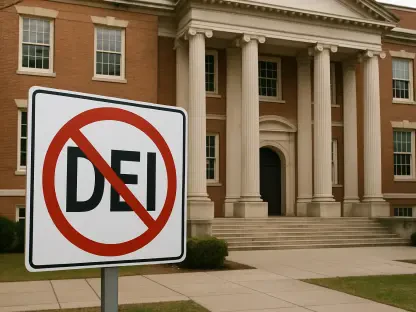

Camille Faivre brings an extensive background in education management and policy development to the table, particularly in navigating the complex intersection of legislative mandates and institutional autonomy. As institutions transition into a post-pandemic era, her work has focused on the structural integrity of higher education systems and the evolving role of governance in shaping student experiences. With state legislatures across the country increasingly taking a direct role in campus operations, her insights provide a vital lens into how policy shifts—ranging from curricular requirements to leadership selection—affect the long-term health of public and private universities.
The following discussion explores the recent legislative developments in Iowa, where a series of bills aims to overhaul the traditional foundations of university life. Key themes include the implementation of mandatory civics curricula, the state-level oversight of diversity and equity programs, the tightening of confidentiality in presidential searches, and the potential financial repercussions for private colleges that maintain diversity-focused administrative offices.
Public universities may soon require specific American history and government coursework alongside new civics centers for public debates. How would these requirements alter current general education curricula, and what specific challenges do faculty face when balancing mandated content with traditional academic autonomy?
The introduction of mandated American history and government courses represents a significant shift in how public universities design their core academic requirements. Under these new bills, institutions would be required to establish civics education centers tasked specifically with identifying courses to fulfill these mandates and organizing a lecture and debate series to promote “civil dialogue.” For faculty, the weight of this change is heavy because it moves the center of gravity for curriculum development away from academic departments and into specialized centers that may have different ideological priorities. Professors often feel a sense of unease when the state prescribes not just the subject matter, but the very framework for public debate, which can feel like a direct challenge to the traditional freedom of inquiry. When graduation requirements are dictated by legislative preferences rather than faculty expertise, it creates a rigid environment where the organic evolution of academic disciplines is stifled by a list of state-sanctioned topics.
State-appointed regents may soon have the authority to eliminate any courses flagged for diversity, equity, inclusion, or critical race theory content. What criteria should be used to evaluate these classes, and how might this oversight impact the long-term recruitment of faculty specialized in these fields?
The prospect of state-appointed regents reviewing and potentially eliminating courses based on “diversity, equity, inclusion, and critical race theory-related content” introduces a high level of professional vulnerability for scholars. If the criteria for evaluation remain vague or politically charged, we risk a “chilling effect” where educators preemptively sanitize their syllabi to avoid any risk of being flagged for elimination. This oversight structure is particularly daunting for recruitment because specialized faculty are unlikely to move to a state where their life’s work could be erased at the stroke of a pen by a political appointee. We are looking at a potential brain drain where experts in systemic racism or social structures choose to work in states with more robust protections for academic freedom, leaving Iowa’s institutions struggling to offer a comprehensive, modern education. The emotional toll on current staff is palpable; there is a persistent anxiety that years of research and curriculum design could be deemed “prohibited” based on shifting political definitions of CRT or DEI.
A new proposal would allow a small committee of regents to select university presidents without making candidate names public. How does a confidential search process affect campus trust, and what steps should be taken to ensure student and staff input remains meaningful during these leadership transitions?
Shifting to a confidential search process, where a committee of five voting regents selects a university president without public disclosure, fundamentally alters the social contract of the university community. Transparency is the bedrock of institutional trust; when students, staff, and faculty are relegated to “nonvoting” roles and kept in the dark about who might lead them, it creates a sense of profound alienation and suspicion. To prevent this, the input of nonvoting representatives must be more than a formality; they need a structured, documented way to influence the committee’s decision-making before a final vote is cast. Without this, the step-by-step erosion of transparency starts with the lack of public forums and ends with a leader who has no initial buy-in from the very people they are supposed to serve. It feels like a corporate takeover of a public trust, where the voices of the primary stakeholders—the students—are treated as secondary to the preferences of the state’s governing board.
Private institutions with diversity and equity offices could lose access to state-funded tuition grants for their students. What are the financial implications for low-income students at these schools, and how might administrators weigh the value of these offices against the potential loss of millions in student aid?
The financial stakes here are incredibly high, as the Iowa Tuition Grant currently provides up to $7,500 annually to full-time undergraduates at participating nonprofit colleges. For a low-income student, this grant is often the difference between staying in school and dropping out, and losing it for four years could mean a total loss of $30,000 in essential aid. Administrators at these private institutions are being forced into a heartbreaking calculation: do they maintain their diversity and equity offices, which provide vital support for marginalized students, or do they dissolve them to protect the financial viability of their entire student body? This isn’t just a budget line item; it is a choice that affects the real lives and futures of thousands of students who rely on that $7,500 every year to manage rising costs. The tension in these boardrooms is thick, as they weigh the moral and educational value of DEI initiatives against the hard, cold numbers of millions of dollars in potential lost state support.
Required history courses often cover systemic racism, yet new policies might ban content related to critical race theory. How can professors navigate this legal overlap when designing syllabi, and what specific safeguards are necessary to prevent the accidental elimination of graduation requirements due to content conflicts?
Navigating the overlap between required American history courses and the ban on “critical race theory” is like walking through a minefield for the modern educator. Since “systemic racism” is a central academic concept for understanding American history, professors find themselves in a paradox where they are mandated to teach history but prohibited from using the frameworks that explain its most difficult chapters. To safeguard graduation requirements, institutions must establish clear internal review processes that shield curriculum from sudden external cancellation, ensuring that a course fulfills its academic purpose without triggering a legislative flag. It requires a meticulous, almost legalistic approach to syllabus design, where every term is scrutinized for how it might be interpreted by a board of regents with the power to eliminate the course. This conflict doesn’t just disrupt teaching; it risks a scenario where students cannot graduate because the very courses they were required to take have been purged from the catalog.
What is your forecast for the future of higher education governance in Iowa?
My forecast for the future of higher education governance in Iowa is one of increasing centralization and partisan alignment, a trend that began in earnest with the formation of the House Higher Education Committee in 2024. We are moving toward a model where the “three public universities” are no longer seen as independent bastions of research and thought, but as extensions of the state’s executive and legislative priorities. This shift toward top-down control suggests that the coming years will be defined by a series of legal and cultural battles over the soul of the university, with the Board of Regents acting as the primary enforcer of conservative policy. I expect to see a narrowing of the curriculum and a more homogenized leadership structure, which may satisfy current legislative goals but could ultimately diminish the global competitiveness and intellectual diversity of Iowa’s higher education system. The long-term health of these institutions will depend on whether they can find a way to maintain their commitment to free inquiry while operating under the most restrictive oversight in their history.