
The persistent challenge of transforming classrooms into hubs for global knowledge sharing has often been hindered by a significant gap between pedagogical intent and technical execution. Educators who recognize the potential of open platforms frequently find themselves paralyzed by the perceived complexity of community norms and the intimidating landscape of digital contribution. To address this structural barrier, the EduWiki Starter Kit was launched in May 2026 as a sophisticated roadmap designed to guide instructors through the intricacies of integrating Wikimedia projects into their curriculum. This resource does not merely serve as a technical manual; instead, it functions as a strategic bridge that empowers students to transition from being passive consumers of information to becoming active, critical architects of the global knowledge commons. By providing a structured pathway, the kit ensures that the leap into open education is a managed and supported professional evolution.
Bridging the Implementation Gap: From Interest to Action
For years, the primary obstacle for many educators has not been a lack of interest in open knowledge, but rather a daunting implementation gap characterized by complex interfaces and community protocols. The EduWiki Starter Kit systematically dismantles these barriers by offering a clear and incremental entry point that allows even the most hesitant newcomers to build their digital confidence. Rather than forcing teachers to navigate the vast Wikimedia ecosystem in isolation, the kit provides a scaffolded approach that aligns with existing educational standards and classroom schedules. This structural support is crucial for ensuring that open education initiatives are sustainable over the long term, moving beyond one-off assignments toward integrated learning experiences. By clarifying the roles of various community entities, the resource helps educators understand exactly where they fit into the broader movement, effectively turning a solitary journey into a collaborative endeavor.
Fostering digital literacy in the modern era requires more than just teaching students how to search for facts; it demands that they understand the underlying systems that govern information. The Starter Kit facilitates this by encouraging a deep dive into the mechanics of peer-reviewed digital content and the ethics of public citation. As students engage with the provided modules, they learn to evaluate sources with a critical eye, understanding that knowledge is a shared responsibility rather than a static product. This pedagogical shift is essential for preparing learners for a landscape where information is constantly evolving and often contested. By mastering these skills within the safe and guided environment of a classroom, students develop the resilience needed to participate in high-stakes public discourse. The kit thus serves as an essential tool for training a new generation of digital citizens who are both capable and responsible in their online interactions.
Cultivating Student Agency: The 5Rs Framework in Practice
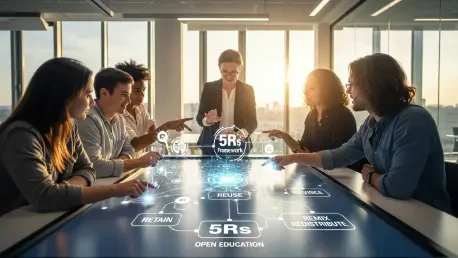
Central to the effectiveness of this new educational resource is the robust application of the 5Rs framework of Open Educational Resources, which includes retaining, reusing, revising, remixing, and redistributing. This methodology encourages students to view the information they encounter not as a finished artifact, but as a living entity that can be improved and expanded. When a student revises a local history article or remixes a scientific explanation into a more accessible format, they are exercising a form of agency that traditional textbooks rarely permit. This hands-on involvement with the content creates a sense of ownership over learning, as students see their contributions having a real-world impact. The EduWiki Starter Kit provides the specific guidelines necessary to execute these activities without infringing on intellectual property rights or community standards. This balanced approach ensures that creativity is fostered within a professional framework, teaching students the value of both innovation and rigorous adherence to collaborative norms.
Furthermore, the ability to revise and remix content allows educators to tailor their teaching materials to specific cultural and linguistic contexts that are often overlooked by mainstream curricula. In many regions, the lack of localized educational content is a significant barrier to student engagement and success; however, the Starter Kit provides the tools to bridge this divide. By empowering local communities to create and curate their own knowledge bases, the kit promotes a more inclusive and representative global encyclopedia. This focus on local relevance ensures that education is not a one-size-fits-all model but a dynamic process that reflects the lived experiences of students everywhere. Educators can use the kit to guide students in translating complex concepts into their native languages or documenting local traditions that might otherwise be forgotten. This process of cultural preservation and dissemination not only enriches the global knowledge pool but also reinforces the identity and confidence of the learners participating in these projects.
Strategic Growth: Global Equity and Institutional Impact
The Wikimedia movement is fundamentally a social ecosystem that thrives on human infrastructure, a reality the EduWiki Starter Kit addresses by providing a clear social map for new participants. By demystifying the relationships between the Wikimedia Foundation, regional user groups, and local chapters, the kit helps educators navigate the community with confidence. This organizational clarity is especially critical for promoting global equity, as it ensures that participants from diverse regions such as Africa, South Asia, and Latin America have equal access to the support networks they need. The kit is available in multiple languages, dismantling the linguistic barriers that have historically favored Western-centric perspectives in the digital space. This commitment to inclusivity ensures that the tools for open education are truly universal, allowing local communities to curate and control their own knowledge bases. Strengthening these interpersonal and regional connections is essential for creating a representative global knowledge pool.
The launch of this comprehensive educational resource marked a transformative moment for the integration of open knowledge projects within professional learning environments. By successfully addressing technical, social, and pedagogical barriers, the kit provided the necessary structure for educators to turn their theoretical interests into sustainable classroom practices. Institutions that adopted these frameworks reported a significant improvement in student engagement and a more robust development of critical information literacy skills. To build upon these established successes, academic leaders should now prioritize the integration of the Starter Kit into official faculty development programs. Additionally, establishing formal feedback loops between classrooms and the volunteer community will help maintain the relevance of these tools as digital standards continue to evolve. By committing to the long-term support of localized knowledge creation, the educational community ensured that students were prepared to be active and ethical leaders.