
The traditional classroom structure, long defined by a rigid top-down hierarchy where an instructor delivers knowledge to a passive audience, is rapidly dissolving in favor of dynamic, interpersonal learning models. Modern educational theory suggests that students often grasp complex concepts more effectively when they are explained by peers who recently mastered the material. This shift represents a fundamental reorganization of how human capital is utilized within schools to combat rising student isolation and academic stagnation. By leveraging shared experiences, institutions are creating environments where learning is a continuous, social process rather than a scheduled, transactional event. This transition necessitates a deep dive into how peer-led initiatives are currently redefining the boundaries of academic achievement and personal growth. As institutions move away from siloed learning, the focus on community-driven education becomes the cornerstone of institutional resilience for students.
Structural Evolution: Collaborative Environments
Transition: Hierarchy to Peer Networks
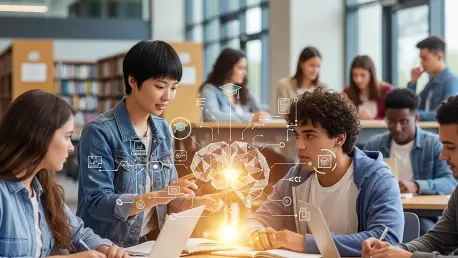
The movement toward decentralized learning environments has fundamentally altered the architecture of educational institutions since early 2026. In these modern frameworks, the role of the educator has morphed into that of a facilitator who oversees a complex web of student-led interactions rather than acting as the sole source of truth. This peer-networked approach addresses the expert blind spot, where advanced instructors struggle to communicate basic concepts to beginners. Conversely, a peer mentor who has navigated the same hurdle retains a fresh perspective on the specific friction points of the curriculum. These networks foster a sense of psychological safety, allowing mentees to ask questions they might perceive as too basic for a professor. The result is a resilient academic community where knowledge circulates freely among participants. By empowering students to lead, universities have created a scalable model for support that adapts to the diverse needs of the student body.
Results: Academic Retention and Success
Recent studies indicate that students involved in structured peer-to-peer programs exhibit significantly higher retention of technical information compared to those relying on independent study. The cognitive process of the protégé effect—where individuals put more effort into learning when they know they must teach others—serves as a catalyst for academic mastery. This reciprocal relationship ensures that both parties derive value, creating a self-sustaining cycle of excellence that reduces the burden on traditional tutoring centers. Furthermore, these programs have proven particularly effective in STEM fields, where the complexity of the material often leads to high attrition. By providing a relatable support system, institutions have successfully narrowed the achievement gap for underrepresented groups. Data suggests that social integration through mentoring is the strongest predictor of graduation. This localized support system allows for real-time intervention before academic struggles become insurmountable.
Integration: Technology in Student Support
Platforms: Digital Global Connectivity
The deployment of sophisticated matching algorithms has revolutionized how mentoring programs are scaled across diverse geographic landscapes. Modern platforms now utilize data analytics to pair students based on academic needs, compatible learning styles, and career aspirations. This technological layer ensures that the mentorship bond is grounded in mutual understanding, which is essential for the success of the relationship. Furthermore, the integration of real-time communication tools allows for asynchronous support, breaking the constraints of traditional office hours. Institutions began incorporating decentralized ledgers to verify the contributions of mentors, providing them with digital credentials that carry weight in the job market. This shift toward a technology-enabled peer economy has made high-quality academic support accessible to students regardless of their physical location. These tools have democratized access to guidance that was previously reserved for those in elite circles.
Excellence: Long-Term Institutional Growth
Educational leaders recognized the necessity of moving beyond traditional instructional methods to embrace the social dimensions of human cognition. The implementation of robust peer mentoring structures proved that decentralized learning was a vital component of a modern curriculum. Schools that integrated these programs saw improvements in student mental health and academic persistence throughout the middle of the decade. Moving forward, institutions prioritized the formalization of these roles, treating peer mentorship as a credited academic pursuit. Administrators invested in training programs that taught students the ethics of mentorship and peer-led instruction. The focus shifted toward creating a culture where students were viewed as both learners and teachers. By embedding these values, the education sector established a more sustainable path for development that favored collective success. This transformation ensured that the next generation was equipped with both social and technical fluency.