
The sight of thick smoke drifting from distant wildfires often serves as a grim reminder for students that the environmental crisis is no longer a theoretical concept discussed in textbooks but a tangible reality impacting their immediate surroundings. Within the Louis Riel School Division in Manitoba, educators are witnessing a significant rise in climate-related distress among youth who feel overwhelmed by the scale of global ecological degradation and the perceived inaction of older generations. Rather than allowing this anxiety to manifest as paralysis or despair, innovative pedagogical approaches are shifting the focus toward localized, meaningful intervention that empowers students to reclaim a sense of agency. By moving away from abstract global statistics and toward the preservation of specific local ecosystems, schools are demonstrating that the antidote to environmental dread is not just information, but the physical act of stewardship within one’s own neighborhood. This transition requires a fundamental restructuring of how environmental science is taught, prioritizing the cultivation of a deep, personal connection to the land that surrounds the school building itself.
Cultivating Environmental Agency Through Hands-on Learning
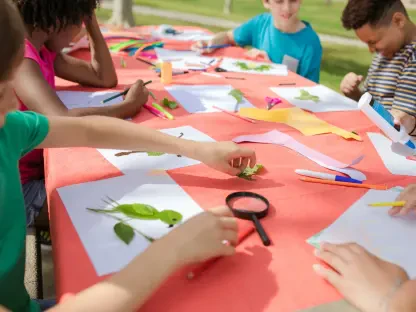
Transforming the classroom into a hub for ecological action begins with the integration of practical projects that yield visible, immediate results for the students and their local community. In Manitoba, Suzanne Simpson, a dedicated teacher librarian, has pioneered a movement that replaces traditional lecture-based learning with “action pieces” that allow students to engage directly with the natural world. Instead of merely studying the biology of trees in a vacuum, students are taught to identify the specific elm trees lining their streets, fostering a neighborly responsibility toward these living entities. This approach is further reinforced through the establishment of school-based environmental clubs where students participate in diverse activities such as vermicomposting, the cultivation of organic herbs and vegetables, and even the traditional practice of tapping maple trees for syrup. These tangible experiences provide a constructive outlet for the restless energy that often accompanies climate anxiety, allowing children to see themselves as active participants in the restoration of their local environment rather than helpless observers of a global catastrophe.
The success of these initiatives often hinges on their ability to bridge the gap between school property and the wider neighborhood, turning educational projects into community assets. When a school garden produces fresh vegetables, it does more than teach a student about the nitrogen cycle; it provides a platform for families to participate in the maintenance and harvesting process, creating a shared space for intergenerational ecological dialogue. These gardens frequently serve as a source of fresh produce for local donations, reinforcing the idea that environmental stewardship is inextricably linked to social welfare and community resilience. By removing the barriers that traditionally separate academic learning from community service, educators like Simpson enable students to witness the ripple effects of their labor. This model of education suggests that when a child understands the specific needs of a local maple tree or a community garden plot, their perspective shifts from a generalized fear of the future to a focused commitment to the present, effectively grounding their education in the soil of their own backyard.
Strengthening the Educational Network for Climate Action
Recognizing that individual teachers cannot combat a systemic crisis in isolation, the formation of professional networks like the Educators for Climate Action of Manitoba (ECAM) has become essential for scaling local successes. This organization was established to fill a critical gap in professional development, providing a collaborative platform where teachers can exchange resources, plan Earth Day initiatives, and discuss strategies for integrating sustainable transportation into the curriculum. The primary objective of such a network is to empower educators with the tools necessary to address the psychological weight of the environmental crisis while maintaining a focus on hopeful, solution-oriented pedagogy. By sharing best practices for navigating sensitive topics like biodiversity loss and wildfire impacts, ECAM ensures that teachers are not just delivery systems for scientific data, but mentors who can guide students through the emotional complexities of the current era. This collective effort fosters a sense of professional solidarity, ensuring that the burden of innovation does not fall on a few individuals but is distributed across a robust community of practice.
The urgency of this collaborative work is underscored by the sobering fact that Manitoba has recently seen a significant portion of its forest cover impacted by wildfires, a reality that necessitates visible and decisive action from adult leaders. Educators within the ECAM network argue that the most effective way to provide students with a sense of hope is to demonstrate that the adults in their lives are actively working to mitigate environmental risks and adapt to changing conditions. This involves not only teaching about sustainability but also modeling it through institutional changes, such as advocating for better cycling infrastructure and reducing the carbon footprint of school operations. When students see their teachers and administrators taking professional risks to advocate for the planet, it validates their concerns and provides a roadmap for their own future advocacy. The goal is to move the educational system toward a model of collective responsibility, where the school serves as a catalyst for broader societal transformation by demonstrating that local actions, when coordinated and sustained, can lead to significant ecological and social benefits.
Implementing Strategic Frameworks for Future Stewardship
The integration of nature-based connections and local action into the daily curriculum proved to be a successful strategy for mitigating climate anxiety and fostering ecological literacy among the student population. Educational leaders discovered that by prioritizing hands-on stewardship over abstract theory, they provided students with the psychological resilience needed to face environmental challenges. Moving forward, school boards were encouraged to formalize these initiatives by allocating specific budget lines for community gardens, composting infrastructure, and professional development through organizations like ECAM. It was recommended that curriculum planners continue to emphasize the identification and protection of local flora and fauna to deepen the bond between students and their immediate surroundings. Furthermore, schools sought to expand partnerships with local environmental organizations to ensure that school projects remained aligned with broader regional conservation goals. These actionable steps transformed schools into vital hubs of community-led climate adaptation, ensuring that the next generation was equipped with both the practical skills and the emotional fortitude to lead ongoing restoration efforts.