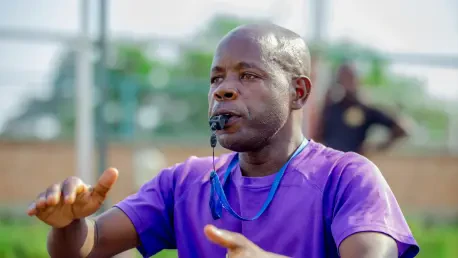

The traditional image of a gymnasium often excludes those with physical limitations, yet the modern educational landscape demands that physical education teachers possess the skills to integrate every student regardless of their mobility. Students enrolled in the Physical Education Teacher Education program at the University of North Georgia recently confronted this challenge through a rigorous, hands-on immersion into the world of adapted athletics. By partnering with the Houston County Sharks and the American Association of AdaptED Sports Programs, these future educators stepped out of the lecture hall and into specialized team wheelchairs to engage in sports like football and basketball. This initiative was designed to move beyond theoretical discussions of disability, forcing participants to navigate the physical realities of the court from a seated perspective. Such training is becoming a cornerstone of teacher preparation, as it bridges the gap between basic awareness and the high-level technical proficiency required to foster truly equitable learning environments in modern schools. This specialized training allows candidates to witness firsthand how mechanical constraints influence athletic performance, ensuring that when they enter the professional workforce, they are not merely observers of disability but active facilitators of athletic achievement for all. Through these collaborations, the program highlights the necessity of adaptive equipment and expert coaching in the development of a comprehensive and diverse physical education curriculum.
Technical Mastery and the Complexity of Adaptive Movement
Managing a sports-specific wheelchair while simultaneously handling a ball requires a level of coordination that many able-bodied athletes often underestimate until they are placed in a competitive setting. Participants in the University of North Georgia program quickly discovered that the mechanics of maneuvering, pivoting, and accelerating in a chair add layers of complexity to familiar games like basketball. Cora Pickett and her peers observed that the physical demands of adapted sports are not a “watered down” version of athletics but a distinct discipline requiring significant upper-body strength and spatial awareness. This realization is crucial for future teachers, as it shifts the narrative from one of accommodation to one of genuine athletic respect. By experiencing the friction of the wheels and the weight of the frame, these students gained the technical insights needed to modify their future lesson plans. Understanding these nuances allows educators to provide better feedback to students with disabilities, ensuring that their instruction is both safe and challenging rather than merely a way to keep students occupied during class.
Senior Lecturer Brook Shurley and Associate Professor Warren Caputo noted that such immersive sessions are vital for mastering instructional strategies that cannot be fully conveyed through textbooks alone. When future teachers engage in these drills, they begin to see the gymnasium through a different lens, identifying potential barriers to movement that might otherwise go unnoticed. This perspective enables them to design drills that are inherently inclusive, where every student can participate in high-intensity activity simultaneously. The collaboration with the Houston County Sharks provided access to professional-grade equipment, illustrating how high-quality resources can transform a student’s experience from isolation to full participation. By synthesizing these practical sessions with academic theory, the program ensures that its graduates are prepared to lead diverse classrooms. This approach fosters a culture of innovation where teachers are encouraged to experiment with equipment modifications and game rules to suit various needs, ultimately raising the standard for what constitutes a high-quality physical education program in today’s diverse school systems.
Empathy and the Future of Inclusive Curriculum Design
Beyond the mechanical challenges, the emotional and social impact of adapted sports training plays a pivotal role in shaping the professional identity of upcoming physical education teachers. Junior Rodriquez Thomas highlighted how this experience resonated on a personal level, noting that his own family members with autism and cerebral palsy stand to benefit from educators who understand the value of inclusive play. The courage and athleticism displayed by wheelchair athletes serve as a powerful motivator for teachers to champion accessibility in every aspect of their work. This empathetic connection is not just a soft skill; it is a professional necessity that drives the creation of a supportive classroom environment where every child feels capable of pursuing their athletic passions. When teachers internalize the resilience required to excel in adapted sports, they become better advocates for the funding and facilities necessary to support these programs. This training helps to dismantle the biases that often limit the expectations placed on students with physical disabilities, replacing them with a focus on high-level engagement and competitive spirit.
To ensure the long-term success of these initiatives, educational institutions must continue to cultivate partnerships with external organizations that specialize in adaptive athletics. The successful collaboration between the university and the American Association of AdaptED Sports Programs established a functional blueprint for integrating specialized training into the standard teaching curriculum. Faculty members realized that providing students with direct access to experts and specialized equipment was the most effective way to produce competent, inclusive instructors. Moving forward, it became clear that teacher preparation programs should prioritize regular hands-on workshops and networking events that connect candidates with the broader adaptive sports community. This strategy allowed future educators to build a professional support network they could rely on once they entered the workforce. By making adapted sports a core component of the PETE program, the university successfully equipped its graduates with the tools to lead the charge for equity in school gyms. These teachers were then prepared to implement comprehensive programs that recognized the diverse capabilities of every student, ensuring that physical activity remained a universal right rather than a privilege.