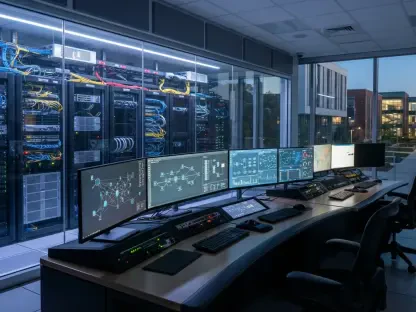

Prospective students entering a university campus today evaluate the institution not merely by its historical architecture or the prestige of its faculty, but by the invisible digital infrastructure that supports every facet of their academic and social lives. High-performance connectivity has evolved from a luxury perk into a foundational requirement that directly influences where students choose to apply and, eventually, where they enroll for their undergraduate degree programs. When a high school senior visits a campus, the speed at which their smartphone connects to the guest network often serves as a proxy for the administrative efficiency and technological forwardness of the entire organization. If the network is sluggish or prone to dead zones in common areas, the silent message sent to the applicant is one of obsolescence rather than innovation. Universities now recognize that robust Wi-Fi 7 deployments and multi-gigabit backbones are just as essential as laboratory equipment or library resources in the competitive landscape.
Impact on Recruitment and Retention
Digital experiences significantly dictate the success of modern enrollment strategies as institutions struggle to differentiate themselves in a saturated market. Prospective learners increasingly prioritize campuses that offer seamless integration between physical spaces and digital services, ranging from mobile-first registration to augmented reality campus tours that require high-density wireless coverage. A network that fails to maintain stability during peak times, such as open house events or orientation weeks, creates a lasting negative impression that often leads to lower conversion rates among high-value applicants. Institutions that have invested in AI-driven network management systems are finding they can provide a personalized onboarding experience that begins the moment a visitor steps onto the grounds. This level of responsiveness demonstrates a commitment to the student lifecycle, suggesting that the university is prepared to support the rigorous demands of modern study.
Beyond the initial recruitment phase, the quality of the campus network plays a vital role in student retention by fostering a sense of community and providing the tools necessary for academic success. Students who struggle with unreliable internet access in their dormitories or study halls report higher levels of stress and academic frustration, which can ultimately lead to transfer requests or early withdrawal from the university. In contrast, institutions that provide ubiquitous and secure access to cloud-based research tools, collaborative platforms, and streaming educational content see higher engagement levels across the board. The digital divide within a single campus can be just as damaging as the divide between regions, making it imperative for administrators to ensure equitable access for all learners regardless of their location on campus. Investing in fiber-optic expansions and software-defined networking helps bridge these gaps and reinforces the student’s sense of belonging.
Technological Infrastructure and Strategic Resilience
The rapid proliferation of data-intensive educational technologies like generative artificial intelligence and immersive virtual reality has fundamentally altered the bandwidth requirements for modern academic buildings. Traditional networking solutions are no longer sufficient to handle the concurrent streams of high-definition video, real-time collaboration, and massive dataset transfers that occur in specialized research labs and lecture halls. By implementing edge computing and high-capacity wireless access points, universities enable students to engage with sophisticated simulations and remote laboratories that would otherwise be inaccessible. This technological prowess attracts top-tier talent who are looking for environments that mirror the cutting-edge tools they will eventually encounter in the workforce. Faculty members also benefit from these advancements, as they can integrate more interactive and resource-heavy pedagogy into their curricula without worrying about system latency or annoying connectivity lag.
Institutions that prioritized network modernization throughout 2026 successfully positioned themselves as leaders in the highly competitive higher education market. These organizations recognized that a robust digital infrastructure served as the backbone for both student satisfaction and operational excellence, directly impacting enrollment numbers. Strategic investments in high-density wireless technologies and secure cloud integration allowed these universities to meet the evolving demands of a tech-savvy student body. Moving forward, the focus shifted toward refining these systems to provide even more granular personalization and support for emerging pedagogical models. Decisions made during this period established a clear roadmap for how technology could bridge the gap between administrative goals and student needs. Ultimately, the integration of advanced networking into the core institutional strategy proved to be a decisive factor in maintaining relevance and fostering a vibrant campus community.