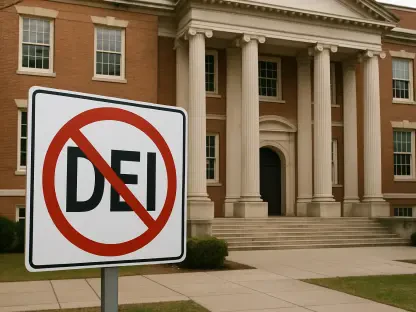

The landscape of federal financial assistance is facing an unprecedented transformation as the General Services Administration introduces a sweeping regulatory proposal designed to dismantle diversity, equity, and inclusion frameworks across more than 222,000 entities. This administrative shift signifies a departure from decades of established policy by requiring every recipient of taxpayer dollars, from elite research universities to local K-12 school districts, to formally certify the absence of specific programs deemed discriminatory by the current administration. By leveraging the expansive reach of the GSA—an agency traditionally focused on government procurement and property management—the executive branch is effectively centralizing its ideological agenda within the very machinery of federal contracting. This move forces thousands of institutional leaders to choose between maintaining their long-standing social equity initiatives and retaining the critical federal funding that sustains their operational budgets and research capabilities.
The Scope of New Compliance Requirements
Under the proposed guidelines, organizations must attest that they have eliminated race-based scholarship programs and the use of diversity statements in their hiring and admissions processes. The GSA specifically targets “cultural competence” training, which has become a staple in modern corporate and academic environments, reclassifying such curricula as potential contributors to a hostile environment. This strategy represents a significant expansion of federal oversight into the internal pedagogical and administrative choices of private and public institutions alike. For a university, this could mean the end of holistic admissions practices that consider a student’s background as a factor for entry, while for a federal contractor, it might necessitate a complete purge of human resources materials that mention systemic equity. The policy also introduces a secondary layer of enforcement by requiring funding recipients to verify the legal immigration status of all staff members, effectively merging the administration’s anti-DEI goals with its broader border security and labor enforcement platforms.
Beyond the immediate administrative hurdles, the GSA proposal seeks to redefine the legal boundaries of workplace conduct and educational instruction. By characterizing DEI-related training as a violation of civil rights, the administration is attempting to flip the traditional application of workplace harassment laws to protect those who oppose diversity initiatives. This creates a complex legal environment where institutions must navigate conflicting definitions of a “hostile environment” while ensuring they do not inadvertently trigger a funding freeze. The inclusion of the “overcoming obstacles” narrative ban is particularly impactful for admissions officers who have traditionally used such essays to identify resilient candidates from disadvantaged backgrounds. Without these tools, institutions argue they will struggle to fulfill their missions of social mobility, yet the GSA maintains that such narratives serve as proxies for prohibited racial preferences. The sheer scale of this mandate ensures that no corner of the federal grant or contract ecosystem remains untouched by these new ideological requirements.
Strategic Shifts in Regulatory Enforcement
The decision to utilize the General Services Administration as the primary vehicle for this ban reflects a tactical pivot following previous legal setbacks encountered by the Department of Education. Throughout early 2026, various attempts to restrict DEI practices through educational mandates were stalled by federal courts, leading to a period of regulatory uncertainty. However, a pivotal February 2026 ruling by the 4th U.S. Circuit Court of Appeals vacated a temporary pause on executive orders aimed at dismantling DEI, providing the administration with the necessary legal momentum to try a more centralized approach. By moving enforcement to the GSA, the administration can bypass the specific legal protections afforded to educational institutions and apply a uniform set of restrictions to all federal funding recipients, including those in the technology, defense, and healthcare sectors. This maneuver effectively broadens the battlefield, making it much harder for individual sectors to mount a cohesive legal defense against the new certification mandates.
This shift also highlights a radical reinterpretation of Title VI of the Civil Rights Act, which has historically been the cornerstone for protecting minority groups from exclusion in federally funded programs. The current administration has pivoted this framework to focus on the protection of White and Asian individuals, arguing that DEI programs inherently discriminate against these groups by prioritizing equity over traditional meritocracy. This reversal has sent shockwaves through the legal community, as it challenges decades of judicial precedent regarding affirmative action and diversity in the public square. Institutional leaders now find themselves in a precarious position, tasked with defending programs that were once mandated by federal guidelines but are now viewed as legal liabilities. The ambiguity surrounding the enforcement of these rules has led to a cautious atmosphere where organizations are proactively self-censoring their public-facing diversity goals to avoid the risk of being debarred from future federal contracts or losing vital research grants.
Institutional Impacts and Future Considerations
For higher education institutions, the stakes of this proposal are existential, as the potential loss of federal financial aid and research funding could lead to the collapse of many departments and programs. To remain compliant, universities are already beginning to conduct exhaustive audits of their internal policies, from faculty recruitment handbooks to student organization charters. The requirement to eliminate “diversity, equity, and inclusion” from the institutional lexicon is not merely a branding change; it requires a fundamental restructuring of how these organizations interact with their communities. Advocates for the ban argue that this will restore a sense of fairness and institutional neutrality, ensuring that federal funds are used solely for their intended purposes without the influence of social engineering. However, critics contend that the loss of these programs will result in less inclusive environments that fail to prepare students or employees for a globalized world, ultimately harming the competitiveness of the American workforce in the long term.
The GSA has established a public comment window that remains open until March 30, 2026, allowing for a final period of discourse before the rules are finalized and implemented across the federal government. This phase has become a focal point for intense debate, with civil rights organizations preparing massive legal filings to challenge the constitutionality of the mandate while conservative think tanks provide the intellectual framework for its defense. As institutions prepare for the post-comment era, many are developing contingency plans that involve diversifying their funding sources to reduce reliance on federal dollars, though this is often an impossible task for larger research entities. The path forward will likely involve a series of high-profile legal battles as the first wave of non-compliant organizations faces enforcement actions. Ultimately, the resolution of this conflict will redefine the relationship between the federal government and the thousands of organizations that operate under its financial umbrella, setting a new precedent for how ideological priorities are integrated into the administration of public funds.