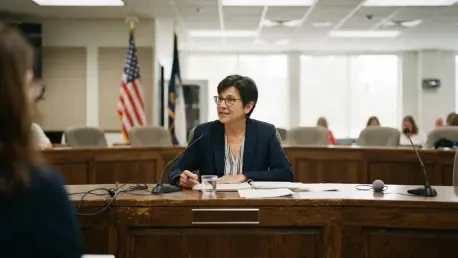

Internal board tensions have surfaced as President Xóchitl Gaytán publicly questions the influence of dark money in the search for a new representative. This controversy unfolds against the backdrop of a critical vacancy in District 3, a region representing the diverse central-east corridor of the city. The opening was triggered by the sudden departure of DJ Torres, who vacated his seat following allegations of policy violations leveled by Gaytán, though Torres has consistently maintained his innocence throughout the fallout. As the board moves to stabilize its leadership, the narrowing of the field to three distinct finalists—Caron Blanke, P. Barclay Jones, and Verónica Figoli Fleischer—has only intensified the ideological friction within the chamber. These internal fractures threaten to overshadow the selection process itself, revealing a governing body deeply divided over its relationship with Superintendent Alex Marrero and the role of external financial contributions in local education politics.
Community Engagement and Candidate Profiles
Caron Blanke has emerged as a frontrunner among several community segments, largely due to her established reputation as a leadership consultant and her prior history as a candidate for this very seat. Supporters have flooded recent public forums to praise her collaborative demeanor and what many describe as a gentle, unifying leadership style that could potentially soothe the current board’s volatility. However, this groundswell of grassroots support has met significant resistance from President Gaytán, who has voiced sharp concerns regarding the financial backing of Blanke’s previous campaigns. Specifically, the President highlighted independent expenditures from special interest groups, labeling them “dark money” that could compromise the independence of the board. This conflict underscores a broader debate within Denver about whether past political alliances should disqualify technically capable candidates or if such scrutiny is merely a tool used to sideline ideological opponents.
Providing a distinct contrast to the more administrative or politically seasoned candidates is P. Barclay Jones, whose platform is deeply rooted in the principles of social justice and community equity. As a local leader with the Chinook Fund, Jones brings a unique perspective on how systemic funding and community-led initiatives can reshape the educational landscape for marginalized students. His candidacy is further bolstered by his personal connection to the district as both a Denver Public Schools alumnus and a current parent, providing him with firsthand understanding of the daily challenges faced by families in the central-east region. This lived experience serves as a cornerstone of his appeal, suggesting a representative who would prioritize the voices of residents over the institutional status quo. While Jones may lack the high-level administrative experience of his peers, his focus on systemic change and community advocacy offers a different path for a board often caught in bureaucratic gridlock.
Institutional Experience and Future Governance
The third finalist, Verónica Figoli Fleischer, brings perhaps the most extensive resume of direct district involvement, having served as a high-ranking official within the Denver Public Schools system and as the CEO of the Denver Public Schools Foundation. Despite her deep institutional knowledge and executive experience, her candidacy has become a primary flashpoint for the board’s internal infighting. President Gaytán has expressed notable disapproval of Figoli Fleischer, citing alleged negative comments made by the candidate regarding Superintendent Alex Marrero’s performance and leadership. This friction has sparked a wider debate among board members about the necessity of a critical versus a supportive relationship with the district’s top executive. Some members argued that Figoli Fleischer’s willingness to question current administrative strategies would be a vital asset for accountability, while others feared such a dynamic would only exacerbate the existing dysfunction within the district’s leadership.
The board prioritized a selection process that emphasized transparency and public accountability through the implementation of standardized interview protocols. Members recognized that the appointment of a representative through November 2027 necessitated a candidate who could bridge the gap between administrative oversight and community advocacy. By adhering to the strict legal deadline of November 29, the leadership avoided the risk of state-mandated intervention and secured a path toward organizational stability. Stakeholders identified that future success depended on the new member’s ability to navigate the complex relationship between the superintendent and the board’s broader policy goals. This transition moved the district toward a more collaborative governance model that sought to resolve ideological disputes through structured dialogue and evidence-based decision-making. Ultimately, the process established a precedent for how the board manages vacancies under intense public scrutiny and ensured that student outcomes remained the central focus.