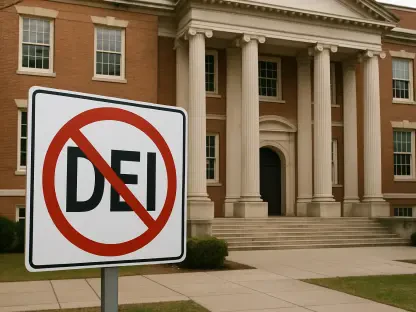

A university’s survival should never depend on the shifting direction of a political pendulum, yet San José State University finds itself at the epicenter of a federal storm that threatens its very foundation and the future of its diverse student body. What happens when a prominent institution is forced to choose between its established inclusive policies and the federal funding that keeps its doors open for thousands of low-income students? This is the stark reality currently facing the California State University (CSU) system, as a dispute over a single volleyball player has escalated into a high-stakes federal lawsuit. The Department of Education’s demand for a public apology and the revocation of athletic awards, issued under the threat of pulling essential financial aid, has transformed a localized campus controversy into a national legal showdown.
The High-Stakes Financial Ultimatum Threatening Public Higher Education
The federal government recently presented San José State University with an ultimatum that university officials have characterized as nothing short of extortion. By demanding that the institution formally adopt binary definitions of sex and publicly apologize to cisgender athletes for the inclusion of a transgender teammate, the administration has placed the university in an impossible position. For an institution like San José State, where a significant majority of the student body relies on federal financial aid to afford tuition, the loss of these funds would be catastrophic. The threat to withhold such resources effectively uses the financial well-being of thousands of students as a bargaining chip to force compliance with a specific ideological agenda.
This aggressive approach represents a significant departure from traditional administrative corrections. Typically, federal oversight involves a period of negotiation and remediation; however, the current demands include the retroactive stripping of awards and titles from athletes who competed under the rules established at the time. The CSU system argues that these punitive measures are designed not to ensure compliance, but to humiliate the institution and its students. By drawing a line in the sand against what they view as a predatory use of executive power, the CSU leadership is attempting to protect the university’s mission from being dismantled by federal financial pressure.
Tracing the Evolution of Title IX from Protection to Political Battlefield
Originally designed as a straightforward civil rights law to prevent sex-based discrimination in education, Title IX has recently become the center of a “regulatory see-saw” that leaves schools in constant limbo. For decades, the law provided a stable framework for athletic participation and campus safety. However, the definition of “sex” has shifted dramatically between successive administrations, creating a climate of total uncertainty for administrators. While previous federal guidance expanded protections to include gender identity, the current administration has pivoted back to a strict biological binary, leaving public institutions like CSU in a precarious position.
This volatility is especially pronounced in California, where schools must navigate a complex landscape of state-level judicial precedents and federal mandates. The 9th U.S. Circuit Court of Appeals has previously upheld protections that conflict with the new federal orders, creating a legal paradox. Universities are now caught between a federal mandate that demands exclusion and state-level legal protections that mandate inclusion. This constant shifting of the goalposts makes it nearly impossible for institutions to maintain long-term policies, as a rule that is mandatory one year might become grounds for a federal investigation the next.
Core Allegations of Lawless Overreach and the Fight for Regulatory Stability
The lawsuit filed by the CSU system centers on the fundamental argument that the executive branch cannot retroactively punish an institution for following the legal standards that were in place during the events in question. Between 2022 and 2024, San José State University operated under federal guidance and NCAA regulations that explicitly permitted transgender women to compete in female athletics. The university system contends that the Trump administration is attempting to bypass the legislative process by using executive fiat to override established statutes. This legal battle highlights the existential risk posed to universities when federal policy shifts are applied backwards.
Furthermore, the lawsuit alleges that the Department of Education has exceeded its constitutional authority by attempting to dictate university policy through settlement terms that ignore existing law. By characterizing the inclusion of transgender athletes as a violation of the rights of cisgender students, the administration is seeking to redefine the scope of Title IX without an act of Congress. CSU argues that such a significant change in the law requires legislative action rather than an administrative decree. This case serves as a critical test of whether a new administration can effectively “erase” previous compliance efforts through the sheer pressure of withholding federal financial aid.
Clashing Interpretations of Fairness and the Limits of Executive Fiat
The narrative of this conflict is defined by a fundamental disagreement over the meaning of fairness in sports and the scope of presidential authority. SJSU President Cynthia Teniente-Matson has emphasized that the university cannot agree to federal findings that are unmoored from the facts and laws as they existed during the period of the alleged violations. While the administration argues its orders restore fairness for biological women, civil rights organizations and the scientific community point to the potential for harm and exclusion. This clash illustrates how different interpretations of “equality” can lead to radically different policy outcomes, leaving universities as the primary battleground for these ideological disputes.
Unlike some private institutions that chose to settle quickly to avoid financial ruin, the CSU system has opted for a public legal defense. This decision reflects a commitment to the principle that federal agencies must operate within the bounds of the law, regardless of the political climate. The university system maintains that a finding of non-compliance is only valid if it is based on the rules that were active at the time of the alleged infraction. By challenging the administration’s findings, CSU is seeking a definitive ruling on whether an executive order can override the administrative history and judicial precedents that have shaped Title IX for the last several years.
Strategic Frameworks for Universities Caught in Federal Policy Shifts
Educational institutions must develop robust strategies to navigate the current era of extreme regulatory volatility and financial vulnerability. A proactive approach involves maintaining meticulous records of compliance with the guidance provided by the Department of Education at any given time to defend against future retroactive claims. This level of documentation is becoming a necessity for survival, as schools must be able to prove they were following the “law of the land” even when that law is later overturned by a subsequent administration. Legal departments are now prioritizing the creation of compliance trails that can withstand the scrutiny of hostile federal audits.
Moreover, universities are increasingly looking toward state-level legal protections and judicial injunctions to provide a shield against federal overreach. By positioning themselves as defenders of legal stability rather than just participants in a social debate, institutions can better protect their student bodies from the sudden withdrawal of essential support. The strategy involves building a coalition of public universities that can collectively challenge federal mandates that threaten their institutional autonomy. Through these strategic frameworks, higher education leaders hope to create a buffer that allows them to focus on their primary mission of education rather than constant legal defense.
The legal maneuvers initiated by the university system offered a roadmap for navigating the volatile intersection of federal aid and social policy. Institutions discovered that the most effective way to weather regulatory shifts was to anchor their policies in judicial precedent rather than executive whims. By challenging the retroactive application of new rules, public universities successfully advocated for a more stable and predictable environment for all students. This outcome encouraged a national dialogue on the necessity of legislative clarity to prevent the frequent reinterpretation of fundamental civil rights laws. Leaders eventually prioritized long-term legal strategy over short-term political compliance to ensure that educational opportunities remained accessible regardless of the federal climate.