
The Wake County Public School System currently faces a precarious situation where the combination of state-level funding delays and crumbling physical infrastructure threatens to destabilize North Carolina’s largest educational district during a critical period of academic assessment. As administrators navigate the complexities of planning for the 2026 to 2027 academic year, they find themselves trapped in a state of administrative limbo. This paralysis stems from the North Carolina General Assembly’s failure to provide finalized funding figures, leaving local officials unable to solidify their financial commitments to staff and students. Consequently, the district has been forced to approach county commissioners with an urgent request for an additional twenty-five million dollars. This funding is intended to bridge a widening fiscal gap that, if left unaddressed, could compromise the essential services and educational standards that families in the Raleigh-Durham area have come to expect from their schools. The Board of Education must now act before the looming June 1 deadline to secure the necessary resources for operations.
Fiscal Uncertainty and Administrative Deadlocks
Personnel Management: Impact on the Workforce
The frustration among educators is palpable as the lack of financial clarity directly impacts their personal livelihoods and professional stability. Representatives from the Wake North Carolina Association of Educators have voiced significant concerns regarding the delayed distribution of bonuses and the implementation of much-needed cost-of-living raises. In an increasingly expensive metropolitan region, these financial adjustments are not merely perks but essential components of a competitive compensation package required to retain high-quality teaching talent. When the state legislature delays its budget decisions, it sends a ripple effect through every classroom, creating an atmosphere of uncertainty that undermines staff morale. Parents and advocacy groups like the Wake PTA have joined the call for swift action, arguing that the legislative stalemate in Raleigh creates an unnecessary level of instability for families who rely on the district’s consistency. The ability to support a dedicated workforce remains the cornerstone of regional success.
The Legislative Stalemate: The Role of Local Governance
Local governance structures are under immense pressure to compensate for the deficiencies in state-level appropriations. The request for an additional twenty-five million dollars from the county commissioners serves as a desperate measure to ensure that the district remains operational despite the ongoing political friction in the General Assembly. This fiscal maneuvering highlights the delicate balance between local tax bases and state mandates, where any disruption in the flow of state funds necessitates immediate local intervention. Officials are currently scrutinizing every line item to determine where cuts can be made or where funds can be diverted to cover the most pressing administrative needs. This process is complicated by the fact that the district cannot accurately forecast its revenue streams without a final budget from state lawmakers. As the deadline for the local budget approval approaches, the conversation has shifted toward the sustainability of this funding model. Relying on emergency local supplements to cover basic state obligations is a strategy that many fear is reaching its breaking point for taxpayers.
Infrastructure Degradation and Operational Challenges
Systems Failure: Environmental Hazards in the Classroom
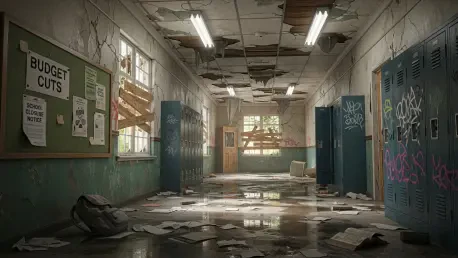
Beyond the financial constraints, the physical condition of school buildings has reached a point of critical concern as aging infrastructure begins to fail under the strain of modern environmental demands. Recent incidents at Reedy Creek and Salem Elementary have brought these issues to the forefront, where significant malfunctions in cooling systems occurred during a period of intense heat with temperatures reaching the mid-90s. These HVAC failures created hazardous learning environments, forcing staff to implement emergency measures such as providing constant water supplies and rearranging schedules to keep students safe. While district leadership has commended the resilience of school employees in managing these crises, the recurring nature of these failures points to a deeper systemic problem. In some instances, infrastructure decay has even limited access to essential facilities like restrooms, further complicating the daily operations of these institutions. These conditions are particularly detrimental when they coincide with end-of-grade testing, a time when students require a focused and comfortable setting to succeed.
Strategic Planning: Pathways Toward Sustainable Solutions
The recurring infrastructure failures and budgetary gaps were ultimately recognized as the direct result of long-term underinvestment in both maintenance and staffing. District leaders acknowledged that while specific problematic systems were repaired throughout the previous year, the sheer scale of the aging facility inventory required a more comprehensive and proactive approach. Moving forward, it was clear that the district needed to prioritize a multi-year capital improvement plan that synchronized state funding cycles with local maintenance schedules. Establishing a dedicated reserve fund for emergency HVAC repairs and plumbing overhauls became a primary recommendation for future fiscal planning. Furthermore, professionalizing the maintenance staff and increasing their numbers was seen as a necessary step to prevent minor issues from escalating into school-wide closures. By shifting from a reactive crisis-management model to a predictive maintenance strategy, the district sought to ensure that every student had access to a safe and functional learning space. Local leaders finally committed to a more transparent communication channel between Raleigh and the county.