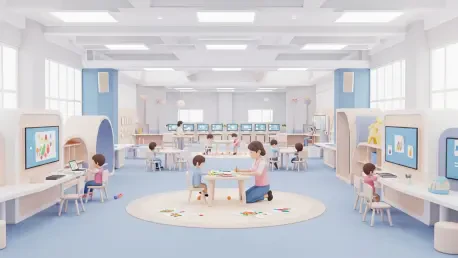

The realization that a nation’s prosperity depends more on the cognitive development of its youngest citizens than on its physical infrastructure marks a fundamental shift in Southeast Asian economic strategy. Cambodia has positioned early childhood education not as a supplementary social service but as a critical economic engine capable of driving long-term resilience and workforce readiness. This strategic pivot was recently underscored during a major international forum, where the focus shifted toward the immense potential of the formative years to break cycles of poverty. By viewing early learning through the lens of human capital investment, the government seeks to foster a generation that is both adaptable and intellectually capable of navigating a complex global market. This approach requires a synthesis of public policy, financial commitment, and a deep understanding of developmental science to ensure that every child, regardless of socioeconomic status, can contribute to the future stability of the nation. The goal is to move beyond basic literacy toward a comprehensive model of development.
The Biological Foundation of National Productivity
Scientific research indicates that approximately eighty percent of neural connections are established within the first three years of a child’s life, creating a window of opportunity that cannot be replicated later. During this period, the brain undergoes rapid architecture building that determines future intellectual capacity, emotional regulation, and social competence. Cambodian education officials emphasize that missing this window results in significant long-term costs for the economy, as remedial efforts in later stages of schooling are often less effective and more expensive. Quality preschooling provides the stimulation necessary for developing foundational cognitive skills such as problem-solving and critical thinking. By focusing on these early biological milestones, the nation aims to cultivate a population of lifelong learners who are equipped with the resilience needed to face unpredictable economic shifts. This emphasis on neurodevelopment aligns with global standards seen in other developing nations that prioritize early intervention.
International experts from various regions have reached a consensus that early intervention is the most effective way to reduce the high rates of grade repetition and school dropouts. When children enter primary school with a solid foundation in literacy and numeracy, they are far more likely to remain engaged and successfully complete their secondary education. This structural improvement in the educational pipeline creates a more efficient system where resources are not wasted on repeating curricula for students who fell behind early on. Furthermore, the development of social competencies, including communication and self-confidence, during the preschool years allows students to navigate the collaborative environments of the modern workplace. The focus remains on bridging the gap between early care and formal schooling to create a seamless transition that benefits the entire academic ecosystem. Reducing these systemic inefficiencies is a primary goal for the current administration as it seeks to optimize the existing educational budget for better outcomes.
Structural Pillars for a Resilient Workforce
Building a robust early childhood education framework requires more than just classrooms; it necessitates a specialized workforce of well-trained professionals who understand child psychology. The Cambodian strategy prioritizes the professionalization of teachers to ensure that the quality of instruction remains consistent across both urban and rural settings. Alongside human capital, the implementation of play-based and culturally relevant curricula ensures that learning is engaging and appropriate for the local context. Rather than relying on rote memorization, these modern pedagogical approaches encourage curiosity and active participation, which are essential for developing the soft skills required in a digital economy. By integrating traditional cultural values with contemporary teaching methodologies, the educational system can provide a learning environment that feels both familiar and forward-thinking. This balance is crucial for maintaining student interest and ensuring that the knowledge gained is practical and applicable to real-world scenarios in the local labor market.
Current data reflects a clear upward trend in the accessibility of early childhood programs, with enrollment for children aged three to five showing substantial progress across the country. During the 2025–2026 academic term, the enrollment rate reached seventy-seven point nine percent, a significant rise from the levels observed a decade ago. This translates to approximately four hundred and forty thousand children currently benefiting from organized preschool education, compared to just over three hundred thousand in the middle of the previous decade. This expansion indicates that the strategic shift toward early education is gaining momentum and receiving broader acceptance among the general population. The increase in numbers was matched by a focus on quality, ensuring that the surge in participation led to tangible improvements in student readiness for primary school. Stakeholders recognized that the path to national prosperity began with the care of the youngest citizens, leading to a significant reallocation of resources toward foundational learning.