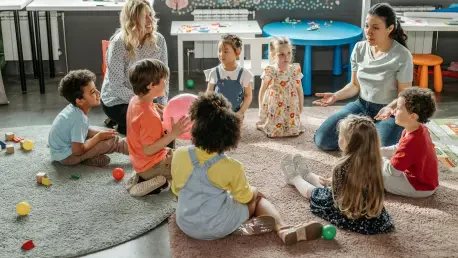

The landscape of early childhood education in Florida is currently undergoing a radical transformation as districts like Leon County Schools fight to reverse a sustained decline in pre-kindergarten enrollment that has persisted since the turn of the decade. While the shift toward private childcare and community-based programs initially seemed like a temporary reaction to global instability, the long-term data suggests a more permanent migration of families away from the public school system. To counter this trend, Leon County Schools has launched an ambitious initiative centered on a play-based learning philosophy, moving away from the rigid academic structures of the past to embrace a model that prioritizes the developmental needs of three- and four-year-olds. By establishing the Leon County Schools Early Learning Center as a flagship for this modern pedagogical approach, the district is working to demonstrate that public pre-K provides a sophisticated foundation for cognitive and social growth that far exceeds the capabilities of standard daycare services.
Redefining Instruction Through Intentional Play
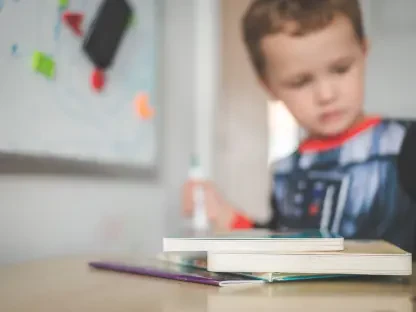
The implementation of play-based learning represents a significant departure from traditional classroom models that often emphasize rote memorization and the mechanical repetition of letters and numbers. Educators in Leon County are now trained to facilitate student-led activities that, while appearing spontaneous to an outside observer, are carefully designed to stimulate high-level cognitive development and complex language acquisition. When a child engages in building a structure or participating in a creative role-play scenario, they are actually practicing narrative construction, motor skill refinement, and critical thinking. This methodology recognizes that at the age of three or four, the brain is most receptive to learning when it is allowed to explore and experiment within a supportive environment. The goal is to move beyond the “pre-academic” focus of the past and instead cultivate a genuine curiosity and a love for discovery that will serve as the engine for all future academic pursuits as these students progress through the elementary grades.
Beyond the acquisition of vocabulary and basic logic, this play-centric approach serves as a critical laboratory for the development of social-emotional intelligence, which many experts now view as the most vital component of early education. In a classroom where children must negotiate for shared resources or wait for their turn to use a specific toy, every interaction becomes a teachable moment for self-regulation and conflict resolution. Teachers act as facilitators rather than just instructors, guiding students through these “micro-crises” to help them articulate their feelings and understand the perspectives of their peers. By mastering these social dynamics early on, children develop the emotional maturity necessary to function effectively in a communal setting, reducing behavioral issues in later years. This emphasis on the “whole child” ensures that by the time a student enters kindergarten, they possess the resilience and communication skills required to handle more rigorous academic demands without becoming overwhelmed by the social pressures of a larger school environment.
Addressing the Reality of Declining Enrollment
The strategic pivot toward play-based learning is driven by the stark reality of Florida’s current educational landscape, where public school pre-K programs have seen a steady exodus of students toward private alternatives. Recent data indicates that state-wide enrollment has dropped by thousands of students over the last few years, a trend that is particularly pronounced in districts where families perceive public options as less specialized or flexible. In Leon County, only about 20% of eligible four-year-olds were enrolled in district-run programs at the start of the current cycle, signaling an urgent need for reform and rebranding. The district has responded by aggressively expanding its footprint, ensuring that every elementary school now hosts at least one pre-K or Voluntary Pre-Kindergarten class. This expansion is designed to remove the geographic and logistical barriers that previously pushed parents toward closer private centers, effectively integrating early childhood education into the heart of the neighborhood school experience.
To further compete with the private sector, Leon County Schools has added nearly 1,000 new seats across its network, emphasizing that its programs are led by certified educators who follow a rigorous developmental curriculum. This move is not just about increasing capacity; it is about shifting the public perception of what a public pre-K program can offer. By rebranding these classrooms as centers for specialized early instruction rather than simple childcare, the district aims to regain the trust of local families who are seeking high-quality, evidence-based environments for their children. The success of this effort depends on the district’s ability to communicate the unique benefits of its play-based model, which combines the resources of a large public system with the intimate, focused attention of a specialized learning center. This dual focus on accessibility and quality is intended to create a sustainable pipeline of students who will remain within the public school system from their first day of pre-K through high school graduation.
Fostering Inclusivity and a Family Classroom Culture
A central tenet of the revitalized Leon County pre-K model is the creation of a classroom culture that functions more like a family unit than a formal instructional space. For many three-year-olds, entering the public school system represents their first significant period of separation from their primary caregivers, which can be a source of intense anxiety for both the child and the parent. Veteran educators within the district prioritize the establishment of a safe, nurturing environment where every student feels a sense of belonging and security. This is achieved through the use of inclusive classrooms, where neurotypical children and those with developmental differences learn and play side-by-side. This integrated setting is intentional, as it encourages students to develop compassion and patience from a very young age. By normalizing diverse ways of learning and interacting, the district is building a generation of students who view differences not as obstacles, but as a natural part of their community, fostering a more empathetic school culture.
Daily routines in these classrooms are carefully structured to reinforce this communal focus and emphasize the importance of the “greater good” over individual impulses. From morning meetings where children sing together and discuss the day’s activities to collaborative physical exercises that promote teamwork, the focus is consistently on mutual support and group success. Teachers are deliberate about modeling kind behaviors and publicly praising students who show empathy, such as helping a peer who is struggling with a task or sharing a limited resource. The logic behind this approach is that a child’s intellectual potential cannot be fully realized if they lack the social competency to cooperate with others. By prioritizing self-esteem and emotional health, the district is creating a foundation where academic success follows naturally. This cultural shift ensures that the classroom is a place of joy and discovery, which is essential for maintaining student engagement and preventing the early burnout that can occur in more high-pressure environments.
Building Parent Partnerships Through Early Intervention
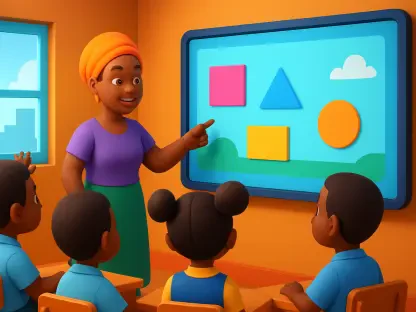
The first interaction between a family and the school district often takes place during the developmental screening process, which serves as a critical gateway for establishing a professional partnership centered on the child’s needs. These screenings are designed to be gamified and stress-free, using activities like building with blocks or identifying shapes to assess cognitive, motor, and communication milestones. For many parents, this process provides the first comprehensive look at their child’s progress and offers immediate peace of mind by identifying areas where additional support may be required. By conducting these assessments in a play-based, low-stakes environment, the district demonstrates its commitment to individualized care from the very beginning. This thorough approach transforms the enrollment process from a series of bureaucratic steps into a meaningful dialogue between educators and families, ensuring that every child is placed in an environment where they can thrive regardless of their starting point.
The success of Leon County’s initiative was ultimately defined by its ability to synthesize rigorous diagnostic tools with a gentle, child-centered classroom philosophy. By investing in the expansion of physical facilities and the specialized training of educators, the district provided a viable solution to the enrollment crisis that had plagued the state. This strategy emphasized that the future of public education relied on meeting families where they were and offering a specialized service that prioritized the emotional and social resilience of the youngest learners. Moving forward, the district focused on maintaining these high standards by continuously adapting its play-based curriculum to reflect the latest research in child development. This proactive approach ensured that every student entering the elementary system was equipped with the foundational tools necessary for long-term success. The commitment to early intervention and inclusive culture served as a blueprint for other districts looking to revitalize their own programs and secure the future of public early childhood education.