
Camille Faivre is a seasoned education expert who has spent years navigating the complexities of institutional management and the evolving landscape of digital and open learning. Her work has become particularly vital in the post-pandemic era, where she guides colleges through the difficult process of modernizing their academic delivery and operational structures to meet new economic realities. Today, she joins us to analyze the survival strategy of the newly renamed Northpoint School of the Bible. This discussion centers on the institution’s radical shift away from traditional degree-granting status following a series of financial setbacks and a dramatic loss of student enrollment. We explore the broader implications of vocational pivots, the feasibility of deep tuition cuts, and the vital role of credit-transfer partnerships in maintaining student interest within the religious education sector.
The shift from a traditional, accredited degree-granting college to a three-year nondegree vocational model is a rare and risky maneuver. How do you interpret this strategic rebranding into the Northpoint School of the Bible as a means of survival?
This move is a desperate but necessary evolution for an institution that had reached a breaking point. By shedding the college title and moving to a ministerial preparation focus, the administration is essentially stripping away the heavy regulatory and financial burdens that come with formal accreditation. We are seeing a pivot toward a more agile, mission-centric model that prioritizes core vocational training over the prestige of a four-year degree. While it feels like a retreat, it actually allows them to focus their dwindling resources—revenue fell by 17.1% last year—on their primary strength of religious instruction. The hope is that by September, this lean approach will attract a niche group of students who are more concerned with their calling than with a standard diploma.
A 65% decline in student headcount over just five years is a staggering statistic for any campus. What does this loss of nearly 225 students suggest about the operational challenges the school was facing?
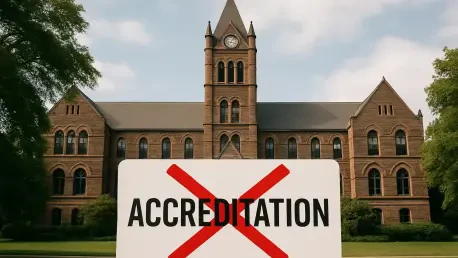
A drop from 347 students to a mere 122 in such a short window signals a profound loss of confidence and institutional stability. This kind of collapse creates a vicious cycle where a shrinking student body cannot support the overhead costs of a traditional campus, leading to the operational issues cited by the Association for Biblical Higher Education. When you see federal data showing such a sharp downward trend, it often points to a failure to adapt to changing student expectations regarding value and career outcomes. The atmosphere on a campus that has lost more than half its population can feel hollow, making it incredibly difficult to maintain the vibrant community life that religious colleges typically promise. This instability was a primary factor in the decision by the ABHE to revoke their accreditation this past May.
President Tiff Shuttlesworth mentioned the need to ‘slay a Goliath’ of up to $3 million to find sustainability despite a $2.5 million net operating loss. Given the precarious financial state of the institution, how can they hope to bridge this gap?
The financial hurdles here are immense, especially considering that cash holdings have plummeted by 68.5% recently. To slay this Goliath, the school will need to rely heavily on donor support and a radical reduction in operating expenses, which is clearly the driver behind the new nondegree model. They are operating in an environment where fiscal 2025 revenue sat at only $2.6 million, meaning every dollar spent on non-essential administrative tasks is a threat to their existence. The goal is to move the needle toward sustainability by focusing only on the essentials of ministerial training rather than full-scale collegiate operations. It is a high-stakes gamble that requires the leadership to stabilize the ship while simultaneously asking for significant investment during a period of immense transition.
Reducing yearly tuition from roughly $28,000 to just $7,700 is an aggressive attempt to reclaim market share. How does this price adjustment change the value proposition for potential students entering the program this fall?
This price drop is a direct response to the enrollment and financial pressures that have already forced other institutions like Providence Christian College to shutter. By offering a three-year program at less than a third of the previous cost, Northpoint is positioning itself as an affordable alternative for those who find the traditional $28,000 price tag insurmountable. It changes the conversation from one of debt and accreditation to one of accessibility and practical ministerial preparation. However, the school must be careful; lower tuition means they need higher volume to meet their goals, and they must convince students that the seamless path to partner institutions is legitimate. If students believe their credits will truly transfer to accredited, degree-granting religious colleges, the $7,700 price point becomes a very attractive entry point into higher education.
What is your forecast for small, faith-based institutions like Northpoint that are struggling to maintain their accreditation and financial viability in today’s economy?
I expect we will see a significant wave of similar transformations or closures as the financial pressures of debt and declining enrollment continue to strike. We have already seen institutions like Anna Maria College and Lourdes University facing intense pressure, and Northpoint’s move to a nondegree model may become a blueprint for others. The survival of these schools will depend entirely on their ability to create low-cost, high-impact vocational pathways that provide clear value without the overhead of traditional accreditation. While the loss of a degree-granting status is painful, those that can successfully partner with larger, more stable institutions to offer transfer pathways will have the best chance at remaining relevant. The future of the sector is likely one of specialization and collaboration rather than the isolated, broad-based liberal arts models of the past.