
Public schools that lack sanitation facilities and modern pedagogical equipment are fundamentally unable to meet the global standards defined by international bodies like UNESCO and the World Bank. The educational landscape in Nigeria currently stands at a critical crossroads, defined by a widening chasm between official government rhetoric and the sobering reality of public school decay. While the administration promotes a vision of “Renewed Hope,” the physical and systemic state of basic education suggests a national developmental crisis that requires immediate intervention. Addressing this disparity is not merely a matter of administrative policy but a necessity for the country’s long-term survival and social stability. The current trajectory indicates that without a radical shift in how resources are allocated and managed, the foundational skills of the next generation will continue to erode, leaving millions of citizens unprepared for the demands of the modern economy.
Historical precedents from the mid-20th century show that Nigeria once possessed a clear blueprint for success through the free primary education schemes of its founding fathers. Leaders like Chief Obafemi Awolowo and Dr. Nnamdi Azikiwe viewed education as a “ladder out of poverty” that could define the national identity and foster industrial growth. Today, however, these ladders are crumbling, replaced by a system where quality learning is increasingly becoming a luxury reserved for the elite. The year 2026 represents a vital milestone for the Nigerian government to transition from political promises to tangible educational outcomes. To achieve a meaningful rescue of foundational learning, the state must confront systemic corruption, bridge the gap between budget appropriation and implementation, and align its pedagogical standards with global benchmarks. This effort requires a total overhaul of infrastructure and teaching standards to prevent a total collapse of human capital in the coming years.
The Disparity: Policy and Infrastructure
The Contrast: Private Privilege and Public Decay
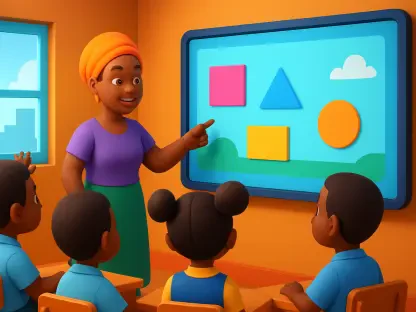
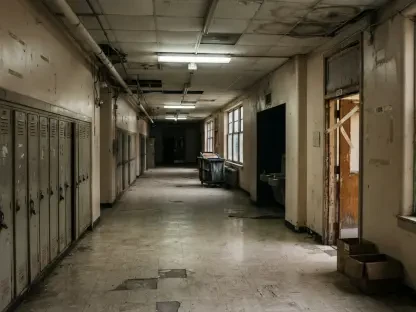
A visual survey of the Nigerian educational landscape reveals a stark contrast between modern private institutions and dilapidated public schools. In urban hubs like Lagos and Abuja, one can witness children entering gated campuses equipped with interactive digital whiteboards and climate-controlled classrooms. These environments are designed to foster curiosity and high-level cognitive development, mirroring the standards of the most advanced nations. In contrast, only a few miles away, students in public institutions often sit on cold concrete floors in structures that lack roofs, windows, and basic desks. This visual and structural disparity creates a psychological barrier for the nation’s youth, signaling that the quality of one’s future is determined entirely by the economic status of their parents rather than their innate potential.
This systemic neglect represents a direct violation of the legal framework of the Federal Republic of Nigeria, which requires foundational learning environments to meet global best practices. Under the Universal Basic Education Act, the state is legally mandated to provide a conducive environment for every child, yet the reality in 2026 suggests that these legal obligations are frequently bypassed. When a school lacks a perimeter fence or clean drinking water, it ceases to be a sanctuary of learning and becomes a site of physical and moral endangerment. Moving toward a standardized quality of infrastructure is the only way to ensure that the constitutional right to education is more than just a theoretical concept. The current state of public facilities mocks the idea of equal opportunity and serves as a constant reminder of the state’s failure to maintain its most vital institutions.
The Rhetoric: Renewed Hope and Reality
President Bola Ahmed Tinubu has publicly championed qualitative and free foundational learning, yet his “Renewed Hope Agenda” faces significant skepticism as the year progresses. Although the administration claims to have doubled the basic education budget and mobilized over $1 billion in development finance, the visible state of schools tells a vastly different story. High-level financial figures often fail to translate into tangible changes at the classroom level, leading to a disconnect between executive pronouncements and the daily experiences of twenty million children. This gap suggests that while the political will to speak about education exists, the mechanisms to deliver that vision are deeply flawed. Without a transparent tracking system for these funds, the promise of “Renewed Hope” remains an elusive dream for the majority of the population.
The administration also highlights its efforts to train 500,000 teachers, with an ultimate goal of reaching one million professionals by the end of the current cycle. While these numbers are impressive on paper, the impact on learning outcomes has been difficult to verify in rural and underserved areas. Skeptics argue that these training sessions are often short-lived and lack the sustained mentorship required to change pedagogical habits. For foundational learning to truly be rescued, the government must move beyond quantitative targets and focus on the qualitative improvement of student-teacher interactions. The disconnect between high-level financial mobilization and the grassroots reality suggests a failure in the transmission of resources, which must be addressed if the 2026 targets are to be met with any degree of success.
The Crisis: Budgetary Implementation and Gaps
A major hurdle in Nigerian governance is the “open secret” of non-implementation, where appropriated funds rarely reach their intended targets. For years, the gap between what the National Assembly approves and what the Ministry of Finance actually releases has stifled development in critical sectors. For instance, recent reports show that some vital social welfare components received only a tiny fraction of their allocated capital budgets, leaving infrastructure projects stalled indefinitely. This fiscal failure undermines the oversight role of the legislature and leaves the Universal Basic Education (UBE) framework chronically underfunded at the local level. When capital components of the budget suffer from extreme delays, the opportunity to build and renovate schools during the dry season is lost, leading to a perpetual cycle of decay.
This lack of budget liquidity is particularly damaging to foundational learning because early childhood development cannot wait for administrative bottlenecks to be cleared. The delay of even a single year in providing literacy materials or repairing a collapsing classroom can result in a permanent loss of learning potential for a child. To rescue the system by 2026, there must be a fundamental reform in how education funds are disbursed, moving away from a discretionary release model to a guaranteed, performance-based allocation system. Without ensuring that every naira appropriated for a school actually reaches that school, the “Renewed Hope” agenda will continue to face the same implementation hurdles that have plagued previous administrations. Transparency in the actual expenditure of capital funds is the only way to restore public trust in the state’s educational promises.
Regional Failures: Global Learning Standards
A Case Study: Regional Neglect
In regions like Delta State, which receives significant revenue from the Federation Account due to its oil production, “schools of sorrow” persist as a testament to regional failure. Despite the high revenue profile, many children are still forced to learn in overcrowded, unsafe environments with cracked walls and no sanitation facilities. These students often sit on bare floors to receive instruction, a situation that is fundamentally incompatible with modern pedagogy. Such conditions highlight the urgent need for political will at the state level to move beyond superficial rehabilitation promises toward the actual modernization of the school system. The existence of these dilapidated structures in a wealthy state suggests that the problem is not a lack of funds, but a lack of priority and effective management of public resources.
The local government’s recent promises to renovate schools across various districts are a positive sign, but the timeline remains a point of contention for parents and educators. Children currently trapped in these environments are losing precious developmental time that cannot be recovered through future projects. The physical state of these classrooms often leads to high dropout rates, as parents are reluctant to send their children to buildings that appear on the verge of collapse. For the 2026 rescue mission to succeed, state governors must be held accountable for the state of primary education within their jurisdictions. The contrast between the luxurious lifestyles of regional political elites and the “schools of sorrow” where the next generation is expected to learn is a social contradiction that threatens the very stability of the region and the nation at large.
The Science: Foundational Learning Basics
According to UNESCO, foundational learning is a neurological necessity that combines literacy, numeracy, and social-emotional skills. The early years of a child’s life are a critical window for brain development, specifically regarding executive functions and self-regulation. When a system fails to provide these building blocks through high-quality early childhood education, it denies children the ability to eventually navigate a digital or technical workforce. Research in 2026 continues to emphasize that the neural pathways formed during primary school are the basis for all future learning. Without a strong foundation in reading and basic mathematics, students are likely to struggle through secondary school and eventually drop out, cementing an intergenerational cycle of poverty that is nearly impossible to break.
The science of learning also suggests that the environment plays a crucial role in cognitive retention. Noise, heat, and physical discomfort in dilapidated classrooms directly impair a child’s ability to focus and process new information. In Nigeria, the lack of modern pedagogical tools means that many children are still relying on rote memorization rather than critical thinking and problem-solving skills. To align with global standards, the Nigerian education system must integrate social-emotional learning into the curriculum, helping children develop the resilience and adaptability needed for the 21st-century economy. Ignoring these scientific principles results in a “learning poverty” that affects not just the individual, but the overall economic productivity and innovation capacity of the entire country.
Global Statistics: Comparative Benchmarks
The global education crisis is immense, with millions of children failing to reach minimum proficiency in reading by the end of primary school. Recent data indicates that approximately 58% of students worldwide lack basic literacy skills, a figure that is significantly higher in sub-Saharan Africa. Nigeria can look to successful models, such as the United Kingdom’s systematic approach to early reading and phonics screening, to find a path forward. In the UK, the “Year 1 phonics screening check” has been instrumental in identifying children who are falling behind early enough to provide targeted intervention. Adopting a “keep up, not catch up” philosophy ensures that disadvantaged children are not permanently marginalized by a system that only rewards those who already have external support.
Furthermore, international benchmarks show that the most successful educational systems are those that prioritize teacher quality and standardized assessment. Countries that have successfully rescued their foundational learning systems often implement rigorous tracking of student progress in real-time, allowing for rapid adjustments to the curriculum. In contrast, Nigeria’s current reliance on infrequent and often outdated testing methods makes it difficult to gauge the true extent of the learning crisis until it is too late. By adopting the systematic approaches used in higher-performing jurisdictions, Nigeria can begin to close the gap between its current outcomes and global expectations. The goal for 2026 must be to reach a level of proficiency that allows Nigerian youth to compete on a global stage, rather than being relegated to the bottom of international league tables.
Strategies: A National Educational Rescue
Standardization: Quality and Infrastructure
To rescue foundational learning by 2026, the government must move beyond superficial repairs to a total standardization of facilities. Every public school should meet a specific baseline for safety, sanitation, and technology to ensure that learning occurs in an environment of dignity. This involves creating a national “Minimum School Standard” that dictates the number of students per classroom, the availability of clean water, and the presence of functional laboratory equipment. Infrastructure is the physical foundation of education, and without it, even the best curriculum cannot be effectively delivered to the nation’s youth. A standardized approach would also help eliminate the regional disparities that currently see some states providing much better facilities than others, ensuring a level playing field for every Nigerian child.
Furthermore, the integration of technology into the standard school model is no longer optional in 2026. Schools must be equipped with basic digital infrastructure to prepare students for a world that is increasingly reliant on technology. This does not necessarily mean expensive laptops for every child, but rather the provision of shared digital resources and a curriculum that incorporates digital literacy from the earliest stages. Standardizing infrastructure also means ensuring that schools are resilient to environmental challenges, such as extreme heat or flooding, which are becoming more common. By building schools that are safe, modern, and well-equipped, the government can restore the prestige of public education and encourage more families to re-engage with the state-run system, ultimately driving up enrollment and literacy rates.
Professionalization: The Teaching Workforce
Teacher quality is a non-negotiable component of educational reform, requiring more than just basic training sessions. Nigeria must compete globally by professionalizing its teaching sector, ensuring that educators are well-compensated, highly qualified, and supported by modern pedagogical tools. Currently, the profession suffers from a lack of prestige, often attracting individuals who view teaching as a last resort rather than a primary calling. Addressing the teacher shortage while raising the standards for entry into the profession is essential for improving student outcomes across the federation. This requires a new social contract for teachers, offering them competitive salaries and clear paths for career advancement that are tied to student performance and professional development.
In addition to better pay, teachers need ongoing support and access to the latest educational research and technology. The government’s goal of training one million teachers must include a focus on “mentorship loops” where experienced educators guide newer staff in modern classroom management and instructional techniques. Professionalization also means holding teachers accountable through transparent evaluation systems that recognize excellence and provide support for those who are struggling. By treating teachers as the high-level professionals they are, the state can transform the classroom experience from one of passive instruction to one of active engagement. A highly motivated and well-trained teaching workforce is the single most important factor in rescuing foundational learning and ensuring that children actually acquire the skills they need to succeed.
Oversight: Real-Time Assessment Tools
The government must exercise strict oversight not only over its own public schools but also over high-fee private institutions to ensure they are delivering justified results. In 2026, the proliferation of private schools has created a fragmented system where quality varies wildly. By adopting proven models of standardized assessments, such as early numeracy and literacy checks, Nigeria can track student progress in real-time across both sectors. This data-driven approach allows for immediate intervention when schools fail to meet the “building blocks” of early education. Regulatory bodies should have the power to sanction schools—public or private—that consistently fail to meet literacy targets, ensuring that the focus remains on the child’s learning outcome rather than just administrative compliance.
Real-time assessment also empowers parents to make informed decisions about their children’s education. When data on school performance is publicly available, it creates a healthy level of competition and accountability within the system. This oversight should be supported by a digital dashboard that tracks school attendance, teacher presence, and student test scores at a granular level. Such technology allows central authorities to identify “red flag” schools that require emergency intervention before a whole generation of students falls behind. By moving away from a system of periodic inspection to one of continuous monitoring, Nigeria can ensure that its educational investments are yielding the desired results. Oversight is the mechanism that turns policy into practice, ensuring that the standards set in Abuja are actually being met in the most remote villages.
The Imperative: Economic and Social Stability
Education: A Matter of National Security
Foundational learning is increasingly recognized by experts as a national security imperative and a primary engine for economic growth. A workforce that is fundamentally illiterate or innumerate is unemployable in the global market, which exacerbates national insecurity and social unrest. When millions of young people grow up without the skills to participate in the formal economy, they become vulnerable to recruitment by extremist groups and criminal organizations. In 2026, the link between educational failure and regional instability has never been clearer. Protecting the right to education is therefore an investment in the long-term stability and sovereignty of the Nigerian state, as a literate and skilled population is the best defense against internal and external threats to the nation’s peace.
Moreover, the economic cost of “learning poverty” is staggering, potentially leading to billions of dollars in lost productivity over the lifetime of the current student population. A nation cannot transition to a high-value, service-oriented economy if its citizens cannot read a basic instruction manual or perform simple calculations. Education is the foundation upon which all other sectors—from healthcare to manufacturing—are built. By prioritizing foundational learning, Nigeria is essentially investing in its own future resilience and prosperity. The current administration must view the rescue of the school system not just as a social service, but as a critical component of its national security strategy. Stability in the 21st century is built in the classroom, and any failure to educate the youth is a direct threat to the survival of the republic.
The Covenant: Honoring the Founders
The current state of public education is a breach of the social contract established by the nation’s founders decades ago. In the mid-20th century, the promise of free and quality education was the cornerstone of the independence movement, intended to empower every Nigerian to contribute to the new nation. To honor that legacy, the modern government must ensure that every child, regardless of their background, has access to the tools of success. Transitioning from political slogans to evidence-based reform is the only way to ensure the covenant of free, quality education is finally fulfilled for the next generation. This requires a return to the visionary leadership of the past, where education was seen as the primary vehicle for social mobility and national unity.
Restoring this covenant also means addressing the deep-seated inequalities that have allowed a two-tier system to flourish. The founders did not envision a Nigeria where only the wealthy could afford to have their children learn to read. By reinvesting in the public school system, the government can begin to heal the social divisions that have been exacerbated by decades of educational neglect. This is not just about buildings and books; it is about restoring the belief that the state can and will provide for its citizens. Honoring the foundational covenant is a moral obligation that transcends current political cycles and requires a long-term commitment to the dignity of every Nigerian child. The survival of the national identity depends on the state’s ability to deliver on this original promise of empowerment and equality.
The Future: The Path to Success
The timeline leading to 2026 is a pivotal window for Nigeria to reverse decades of neglect and corruption within its school system. By focusing on the transmission of funds, the dignity of the classroom, and the quality of instruction, the nation can begin to bridge the gap between private privilege and public decay. The current year has seen some initial steps toward this goal, but the pace of reform must be accelerated to match the scale of the crisis. Success will be measured not by the amount of money spent, but by the percentage of children who can read and write fluently by the end of primary school. The children currently sitting on the floors of “schools of sorrow” are the citizens of tomorrow, and their rescue is the most urgent mission facing the country today.
The path forward requires a unified effort from all levels of government, the private sector, and civil society. This is a moment for radical transparency and bold action, where the needs of the child are placed above political considerations. As Nigeria moves through 2026, the focus must remain on the “building blocks” of literacy and numeracy, ensuring that every school is a place of genuine learning. If the nation can successfully rescue its foundational learning system, it will unlock a massive reservoir of human potential that can drive economic growth for decades to come. The window of opportunity is narrow, but with the right priorities and a commitment to implementation, a transformed educational landscape is within reach. The destiny of the nation is being written in its primary schools, and the time for decisive action has arrived.
Achieving Tangible Educational Milestones
The efforts to rescue foundational learning throughout 2026 resulted in several critical adjustments to the national educational strategy. Policymakers recognized that the previous reliance on rhetoric without fiscal transparency had reached a point of diminishing returns. Consequently, the government implemented a more rigorous tracking system for the Universal Basic Education funds, ensuring that capital releases were tied directly to verifiable project milestones at the local level. This shift in administrative procedure allowed for the rehabilitation of thousands of classrooms that had previously been left in a state of decay. The focus on budget liquidity and project oversight provided a more stable environment for students, who previously faced the constant threat of collapsing structures.
In addition to physical infrastructure, the professionalization of the teaching workforce saw the introduction of a national certification standard that prioritized pedagogical skills over mere academic qualifications. These reforms included a significant increase in rural teaching allowances, which helped reduce the teacher shortage in underserved areas. By the end of this period, the implementation of systematic phonics screening had begun to provide a clearer picture of student progress, allowing for earlier interventions for those at risk of falling behind. These actionable steps moved the conversation from abstract goals to concrete outcomes, laying a more resilient foundation for the next phase of national development. The transition toward a data-driven and transparent system demonstrated that the challenges of foundational learning were solvable with sustained political will and fiscal discipline.